
A brain chemical called SGK1 may explain why childhood trauma increases depression risk. Blocking it could lead to better antidepressants.
Neuroscientists from Columbia University and McGill University have identified a brain chemical that may explain why people who experienced trauma or adversity in childhood are more prone to depression and suicidal thoughts.
Their findings reveal that elevated levels of a stress-related chemical called SGK1 contribute to these mental health risks. The discovery opens the door to a new kind of antidepressant that targets and inhibits SGK1, offering potential relief for individuals who suffered abuse or neglect early in life. Studies show that about 60% of U.S. adults with major depression and nearly two-thirds of those who attempt suicide report some form of childhood adversity or trauma.
“Current antidepressants are often less effective for people with a history of childhood adversity, who represent a large proportion of adults with depression,” says the study’s leader, Christoph Anacker, assistant professor of clinical neurobiology in the Department of Psychiatry at Columbia University Vagelos College of Physicians and Surgeons. “What’s exciting about our study is that it raises the prospect of quickly developing new treatments, as SGK1 inhibitors are in development for other conditions, and gives us a screening tool to identify people at greatest risk.”
Depression triggered by early life adversity is different
Experiencing hardship in childhood—from family dysfunction to physical abuse—is among the strongest predictors of depression in adulthood.
Although SSRI antidepressants are widely used and effective for many individuals with depression or anxiety, they often fall short in treating those with a history of early trauma. “This suggested to us that the biological processes that lead to depression and suicidality in general may differ from those with less stressful childhoods,” Anacker notes.
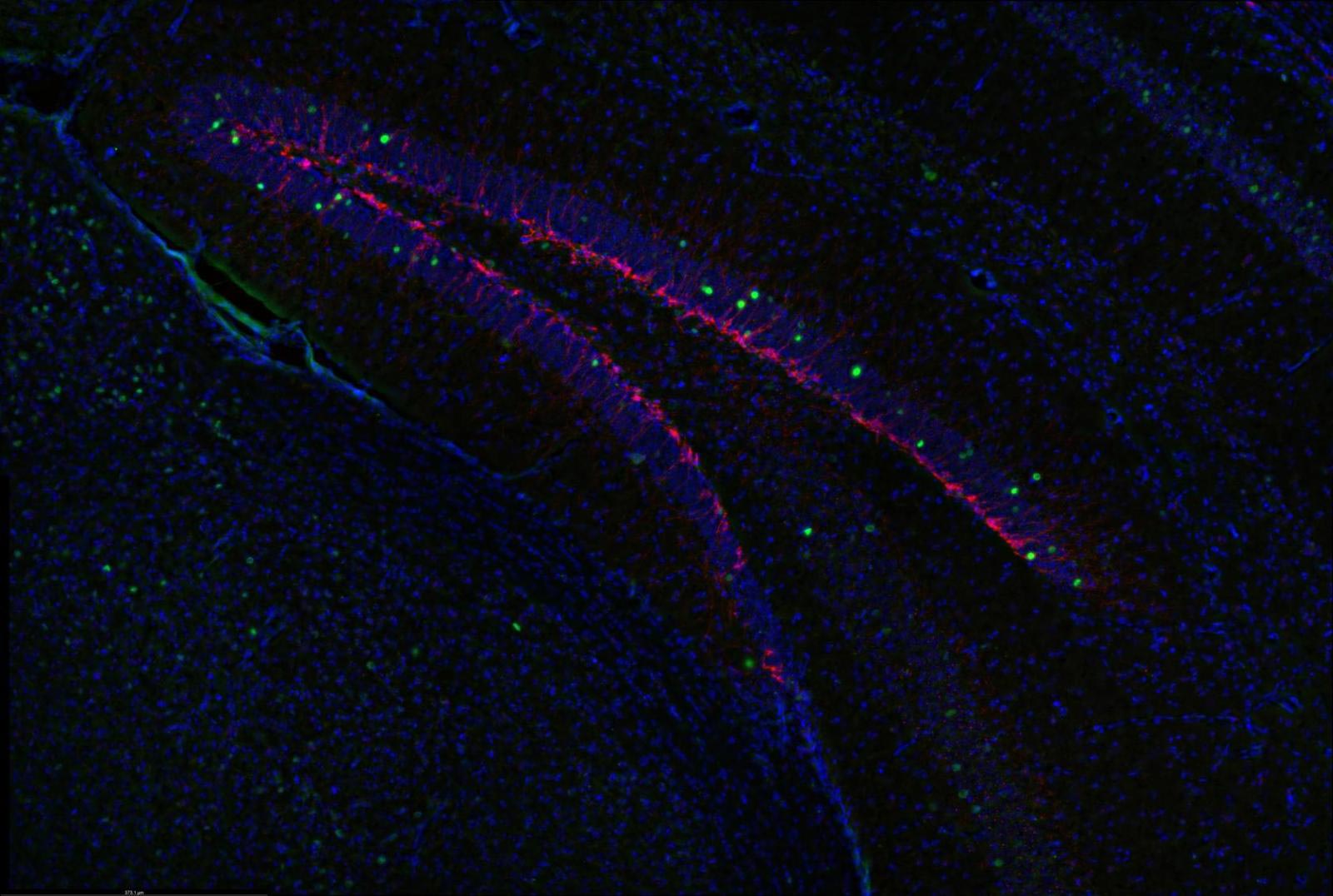
Roughly a decade ago, while investigating the biological mechanisms behind this difference, Anacker and his colleagues discovered elevated SGK1 levels in the blood of patients with depression who had not yet received medication.
In the new study, the researchers found high levels of the chemical in the brains of adults who died by suicide, with the highest levels (up to twice as much as other patients who died by suicide) in those who had experienced childhood trauma. They also found that children exposed to early life adversity who possessed gene variants that increase SGK1 in the brain were more likely to develop depression as teenagers, suggesting that the chemical is a catalyst for depression and suicidal behavior.
A new antidepressant?
Anacker says drugs that inhibit SGK1 may have the potential to prevent or treat depression in people exposed to childhood trauma, based on the study’s findings in mice. In those experiments, an SGK1 inhibitor injected into the bloodstream prevented the development of depressive behaviors in mice experiencing chronic stress.
SGK1 inhibitors are being tested in people with atrial fibrillation and other conditions, and Anacker’s team is now looking to begin testing SGK1 inhibitors in people with depression and a history of childhood adversity. The study also suggests that individuals with depression and early life trauma could undergo genetic screening to determine if they may be most likely to benefit from an SGK1 antidepressant.
“There’s an urgent need to identify and treat people with the greatest risk of depression and suicide after exposure to early life adversity and SGK1 is a promising avenue to explore,” Anacker says.
Reference: “Hippocampal SGK1 promotes vulnerability to depression: the role of early life adversity, stress, and genetic risk” by Amira Millette, Milenna T. van Dijk, Irina Pokhvisneva, Yifei Li, Rory Thompson, Sachin Patel, Rosemary C. Bagot, Aniko Naray-Fejes-Toth, Geza Fejes-Toth, Patricia Pelufo Silveira, Gustavo Turecki, Juan Pablo Lopez and Christoph Anacker, 31 September 2025, Molecular Psychiatry.
DOI: 10.1038/s41380-025-03269-6
The study was supported by a NARSAD Young Investigator award from the Brain & Behavior Research Foundation and the Columbia University Department of Psychiatry.
Never miss a breakthrough: Join the SciTechDaily newsletter.
Follow us on Google and Google News.
4 Comments
So, I was wondering exactly how the scientific method was applied ethically to reach their conclusions in this experiment… did they abuse 100 baby mice to cause the genetic variant that increased the SKG1 level in their sample goup of mice and then give the inhibitor to half the group to see if the experimental group had less suicidal mice than the control group? I think someone should call PETA and rethink it before Big Pharma starts human trials…
It seems easier to create new antidepressants and remove the syptoms, instead of improving economical conditions for the people at large and remove the cause.
Money won’t fix dysfunctional families or abusive or neglectful parents. Some, if not most, people should simply not have children.
Money itself won’t buy happiness, that’s true, but the lack of it buys one a lot of misery. So, the improvement of economical conditions at large would go a long way to alleviate a lot of suffering. The rest is up to the individual then.
But I completely agree with you that most people should not have children, myself included. We’re simply unequipped emotionally, morally and – let’s face it – financially for such an endeavour.