
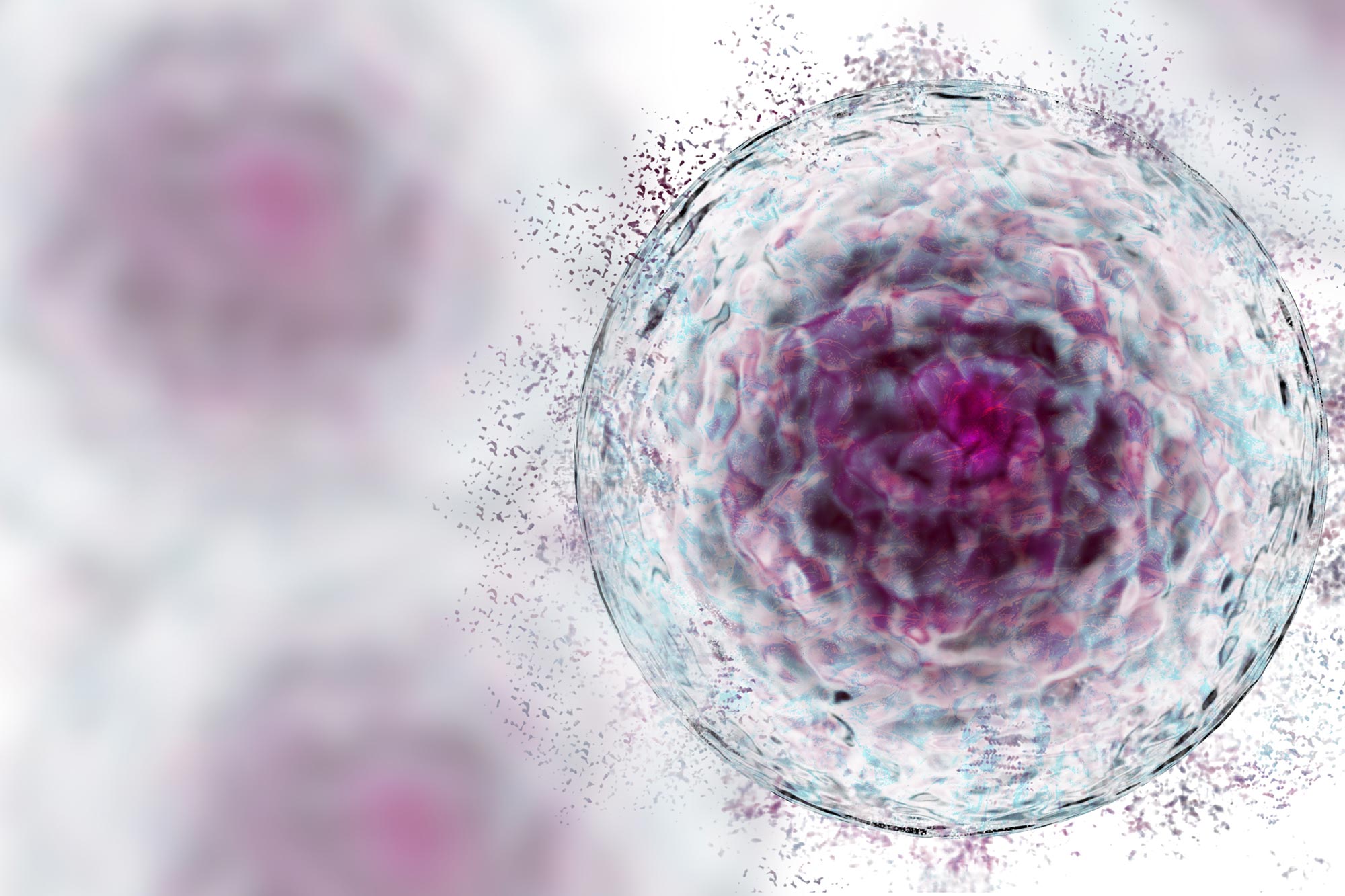
Scientists have uncovered a previously unknown feature of cell death that reshapes how the immune system identifies and clears dying cells.
Scientists at La Trobe University have identified a previously unknown way viruses may spread through the body, a finding that could inform the development of more effective treatments.
The study, published in Nature Communications, offers new insight into how cells die and are renewed.
The work was led by PhD candidate Stephanie Rutter in Professor Ivan Poon’s lab at the La Trobe Institute for Molecular Science (LIMS). It shows that cell death is a highly organized process, where each stage plays an essential role in breaking down the dying cell and enabling the immune system to remove it.
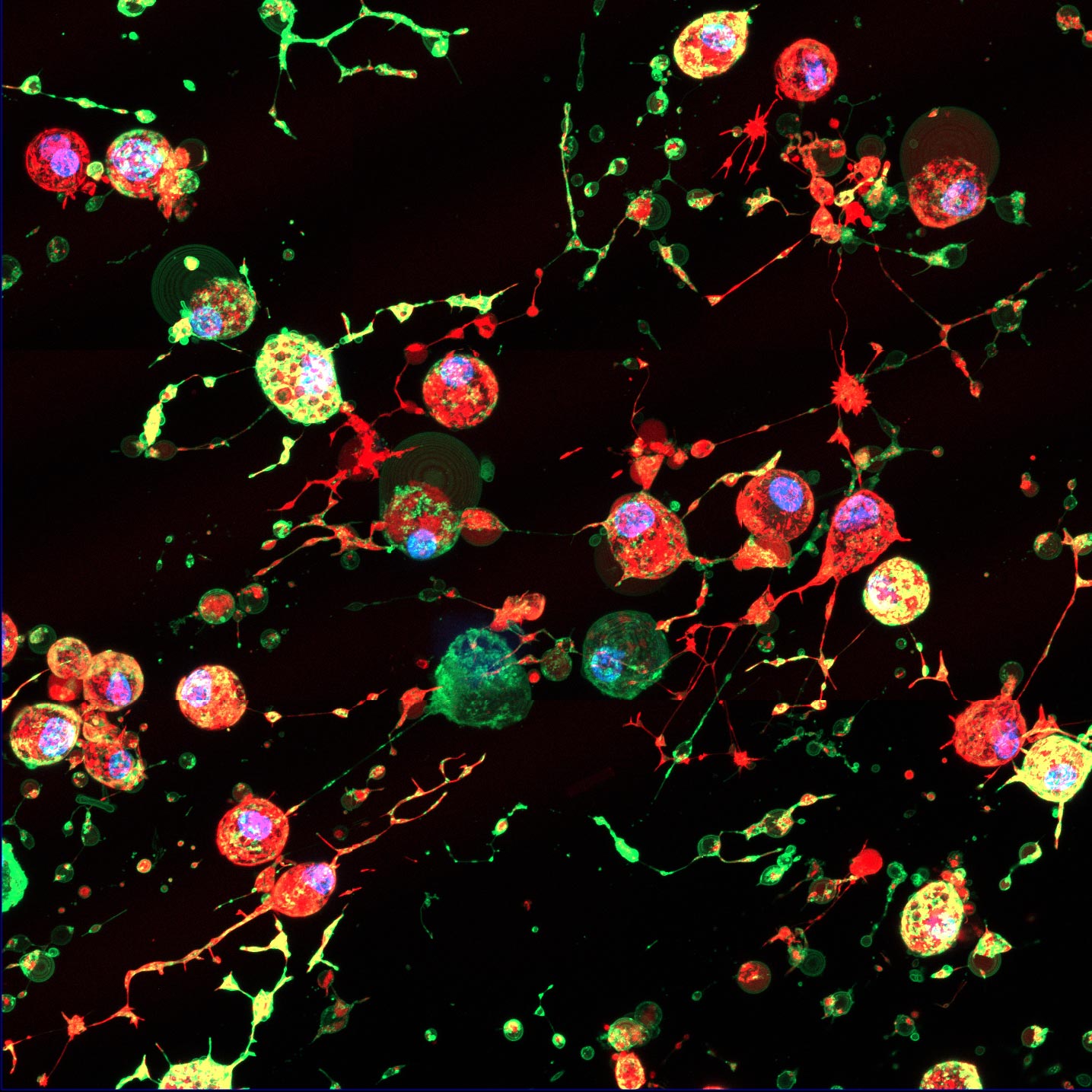
As cells undergo self-destruction, they change shape, detach from surrounding tissue, and leave behind a residue the researchers call “the footprint of death.” This material contains a newly identified type of extracellular vesicle (EV).
EVs are tiny particles released by cells that carry proteins, lipids, DNA, and RNA to other cells. They are a key part of how cells communicate.
Discovery of “Footprints of Death”
The newly identified vesicles, called F-ApoEVs, mark where a cell has died. They act like signals that guide the immune system to locate and clear away cellular debris, helping prevent inflammation.
However, early lab tests revealed a surprising effect. When dying cells are infected with influenza, the virus can exploit this cleanup system by hiding inside F-ApoEVs. This may help the virus spread to nearby cells.
Professor Poon, Director of the Research Centre for Extracellular Vesicles (RCEV), said the discovery could influence future drug development.
“Understanding this basic biological process could open new avenues of research to develop new treatments that harness these steps and help the immune system better fight disease,” Professor Poon said.
“Billions of cells are programmed to die each day as a part of normal turnover and disease progression, and until now, it was believed that the cell fragmentation process during cell death was random and fairly simple. Our findings demonstrate the complexity of this process and highlight how each step in the process is actually critical to help the dying cell break down efficiently and to be cleared away by the immune system.”
Viral Exploitation of Cellular Processes
Rutter said the findings highlight how important cell-to-cell communication is for maintaining health, and how viruses can take advantage of these systems.
“We know that the body clears away dead cell fragments to prevent them lingering and causing inflammation and autoimmune diseases such as Systemic Lupus Erythematosis (SLE), and we saw F-ApoEVs are readily cleared from the site of cell death,” Rutter said.
“What we didn’t expect was how viruses can also take advantage of this process and cause infection by hiding in F-ApoEVs.”
The team believes the discovery could improve understanding of both infectious and autoimmune diseases, and eventually lead to better treatments.
“The more we can understand about cell death and what happens to cells after they die, the better we can understand disease pathologies and find new treatments,” Rutter said.
Co-leader Dr. Georgia Atkin-Smith from WEHI emphasized the broader significance of the findings.
“This study has revealed that dying cells can continue to communicate from the grave and may impact immune function,” Dr. Atkin-Smith said.
Reference: “The formation of the ‘footprint of death’ as a mechanism for generating large substrate-bound extracellular vesicles that mark the site of cell death” by Stephanie F. Rutter, Taeyoung Kang, Gemma F. Ryan, Bo Shi, Caitlin L. Vella, Pradeep Rajasekhar, Sean W. Cutter, Amy L. Hodge, Dilara C. Ozkocak, Ching-Seng Ang, Julian Ratcliffe, Katrina J. Binger, Pamali Foneska, Suresh Mathivanan, Niall D. Geoghegan, Kelly L. Rogers, Michael F. Olson, Georgia K. Atkin-Smith and Ivan K. H. Poon, 15 October 2025, Nature Communications.
DOI: 10.1038/s41467-025-64206-3
This research was conducted by scientists at La Trobe University’s RCEV, LIMS, and the School of Agriculture, Biomedicine and Environment (SABE). The study was conducted in collaboration with researchers at WEHI and Toronto Metropolitan University in Canada.
Never miss a breakthrough: Join the SciTechDaily newsletter.
Follow us on Google and Google News.
1 Comment
good article