
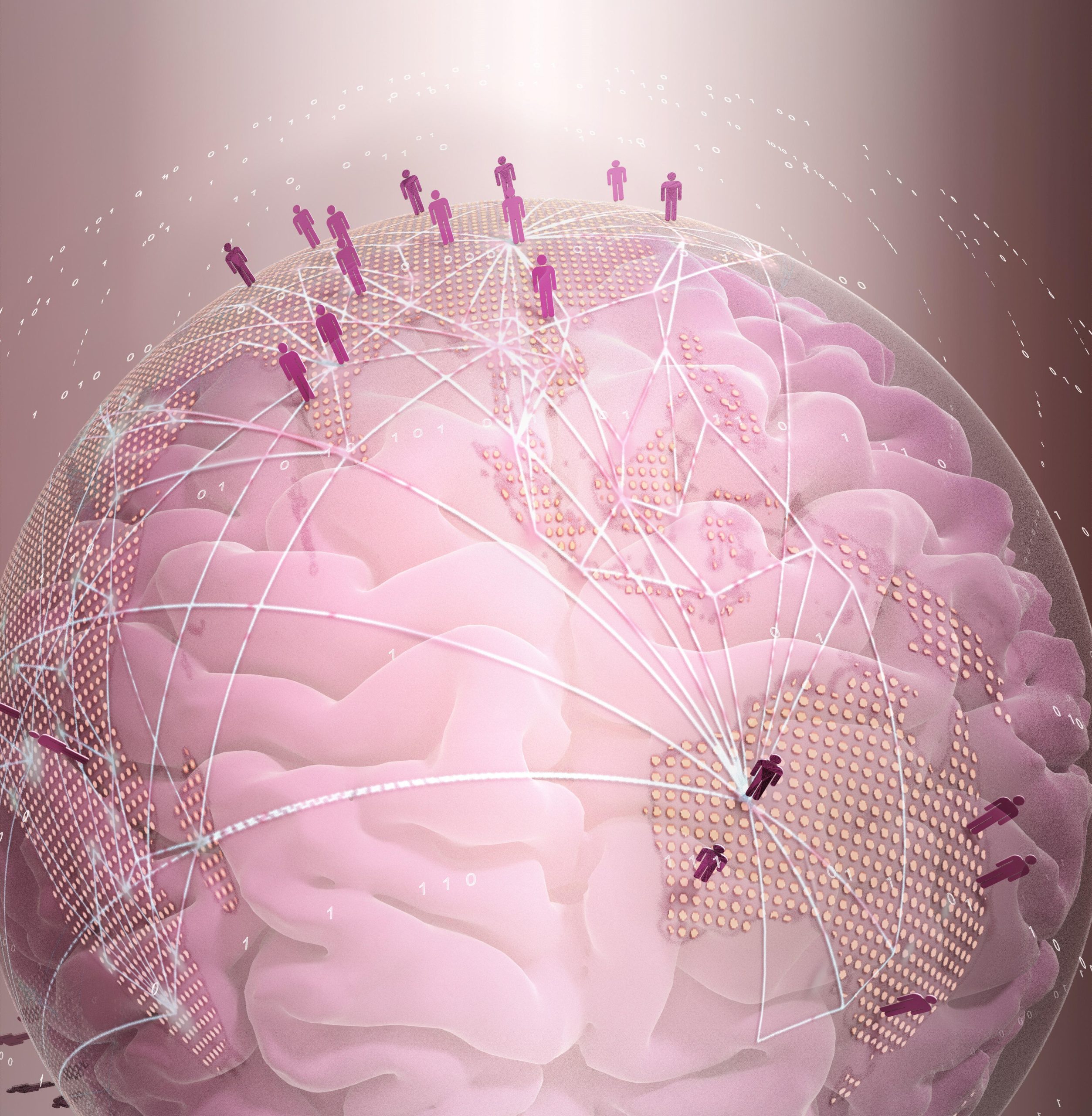
A New Study Has Discovered Subtle Structural Brain Changes in Young People With Suicidal Behaviors
Suicide is the second greatest cause of mortality among young people aged 10 to 33 in the United States. Tragically, despite local, national, and worldwide preventative efforts, the number of attempts at suicide among kids and teenagers has continued to rise. Collaborative research involving professionals from throughout the globe is required to increase our knowledge of the complex nature of suicidal thoughts and actions, and, ultimately, to create better interventions and preventions.
A recent study by an international team of scientists, including Neda Jahanshad, Ph.D., of the Mark and Mary Stevens Neuroimaging and Informatics Institute (Stevens INI) at the Keck School of Medicine of University of Southern California, has shown that young people with mood disorders and suicidal thoughts and behaviors have subtle alterations in the size of the prefrontal region of the brain. Their findings were recently published in the journal Molecular Psychiatry.
“Along with my colleagues at the Stevens INI, an international team of neuroscientists, psychologists, and psychiatrists came together under the ENIGMA Suicidal Thoughts and Behaviors (ENIGMA-STB) working group, a National Institute of Mental Health-funded part of the ENIGMA Consortium, in order to pool together the amount of data this type of study requires. Suicidal behaviors occur across many mental illnesses, so instead of focusing on a single illness in small samples, we pulled together researchers who had data on suicidal behaviors in young people and coordinated a large-scale team science initiative to compare data across the disorders, here, with a focus on youth,” said Jahanshad.
Subtle Alterations in the Prefrontal Brain Region
“Benefitting from the large dataset that we had available, we were able to perform analyses in multiple subsamples,” detailed Laura van Velzen, Ph.D., a postdoctoral research fellow at the Centre for Youth Mental Health, the University of Melbourne and first author on the study. “We started with data from a smaller group of young people with mood disorders for whom very detailed information about suicide was available. Next, we were able to look at larger and more diverse samples in terms of the type of diagnosis and the instruments which were used to assess suicidal thoughts and behaviors. Our results show subtle alterations in the size of the frontal pole, a prefrontal region, in this first sample of young people, and suggest that these associations may be absent or more difficult to identify in more diverse samples. Besides revealing subtle alterations in prefrontal brain structure associated with suicidal behavior in young people, our study shows the strength of combining data from 21 international studies and the need for carefully harmonizing data across studies.”
The Significance of Subtle Brain Structure Differences
“The structural brain differences that we found were very subtle, which means that most people with a history of suicidal behaviors have brains that are not very different from people without a history of suicidal behaviors, which is reassuring,” van Velzen added. “However, the subtle differences that we found do provide us with a better understanding of the mechanisms involved in suicidal behaviors and may eventually provide important targets for the next generation of more effective suicide prevention strategies.”
Equipped with these results, the research team is calling attention to the pressing need for more studies of this scope. Ongoing work by the same group will include expanded analysis, with the goal of including additional age groups and exploring other features, such as brain connectivity.
“The study provides evidence to support a hopeful future in which we will find new and improved ways to reduce the risk of suicide. It is especially hopeful that scientists, such as our co-authors on this paper, are coming together in larger collaborative efforts that hold terrific promise,” said Lianne Schmaal, Ph.D., Associate Professor, University of Melbourne, and a co-author of the study.
Combining Research with Social Support Initiatives
In addition to her research work for the ENIGMA consortium at the Stevens INI, Jahanshad also takes a social approach to her work on mental illness. She serves as the faculty sponsor for Trojan Support, a peer organization providing an opportunity for students to connect with trained fellow Trojans for support and thoughtful conversation to promote mental and emotional wellness. Jahanshad mentored Trojan Support President and Founder Armand Amini, while he researched brain mapping to better understand suicide risk factors at the Stevens INI. Amini decided to create the organization after recognizing the need for a peer group for those uncomfortable with seeking professional help.
“This study exemplifies the power of researchers like Dr. Jahanshad and her colleagues, who seek to unite with specialists across the globe to better understand and amass significant amounts of data,” says INI Director, Arthur W. Toga, Ph.D. “The goal of the ENIGMA Consortium is to bring researchers together from around the world so that we can combine existing data samples and really improve our power to examine the brain in these potentially devastating mental illnesses. Additionally, the collaborative efforts of our faculty and former students like Armand Amini show our commitment to putting our research to practical use to benefit the USC community and beyond.”
If you or someone you know is experiencing suicidal thoughts or a crisis, please reach out immediately to the Suicide and Crisis Lifeline by dialing 988.
Reference: “Structural brain alterations associated with suicidal thoughts and behaviors in young people: results from 21 international studies from the ENIGMA Suicidal Thoughts and Behaviours consortium” by Laura S. van Velzen, Maria R. Dauvermann, Lejla Colic, Luca M. Villa, Hannah S. Savage, Yara J. Toenders, Alyssa H. Zhu, Joanna K. Bright, Adrián I. Campos, Lauren E. Salminen, Sonia Ambrogi, Rosa Ayesa-Arriola, Nerisa Banaj, Zeynep Başgöze, Jochen Bauer, Karina Blair, Robert James Blair, Katharina Brosch, Yuqi Cheng, Romain Colle, Colm G. Connolly, Emmanuelle Corruble, Baptiste Couvy-Duchesne, Benedicto Crespo-Facorro, Kathryn R. Cullen, Udo Dannlowski, Christopher G. Davey, Katharina Dohm, Janice M. Fullerton, Ali Saffet Gonul, Ian H. Gotlib, Dominik Grotegerd, Tim Hahn, Ben J. Harrison, Mengxin He, Ian B. Hickie, Tiffany C. Ho, Frank Iorfino, Andreas Jansen, Fabrice Jollant, Tilo Kircher, Bonnie Klimes-Dougan, Melissa Klug, Elisabeth J. Leehr, Elizabeth T. C. Lippard, Katie A. McLaughlin, Susanne Meinert, Adam Bryant Miller, Philip B. Mitchell, Benson Mwangi, Igor Nenadić, Amar Ojha, Bronwyn J. Overs, Julia-Katharina Pfarr, Fabrizio Piras, Kai G. Ringwald, Gloria Roberts, Georg Romer, Marsal Sanches, Margaret A. Sheridan, Jair C. Soares, Gianfranco Spalletta, Frederike Stein, Giana I. Teresi, Diana Tordesillas-Gutiérrez, Aslihan Uyar-Demir, Nic J. A. van der Wee, Steven J. van der Werff, Robert R. J. M. Vermeiren, Alexandra Winter, Mon-Ju Wu, Tony T. Yang, Paul M. Thompson, Miguel E. Rentería, Neda Jahanshad, Hilary P. Blumberg, Anne-Laura van Harmelen, ENIGMA Suicidal Thoughts and Behaviours Consortium and Lianne Schmaal, 7 September 2022, Molecular Psychiatry.
DOI: 10.1038/s41380-022-01734-0
The study was funded by the National Institute of Mental Health and an MQ Brighter Futures Award MQBFC/2.
Never miss a breakthrough: Join the SciTechDaily newsletter.
Follow us on Google and Google News.