

Penn State scientists discovered that slightly spicier meals make people eat slower and less.
Adding a little spice to your meal may be an effective way to reduce calorie intake, according to a new study from Penn State.
Researchers at the university’s Sensory Evaluation Center investigated how increasing “oral burn”—the tingling heat from chili peppers and similar ingredients—affects how much people eat during a meal. Their findings, published online and forthcoming in the October issue of Food Quality and Preference, suggest that slightly spicier meals prompted participants to eat less and consume fewer calories overall.
“We know from previous studies that when people slow down, they eat significantly less,” said Paige Cunningham, a postdoctoral researcher and lead author on the study who earned her doctorate in nutritional sciences from Penn State in 2023. “We suspected that making a meal spicier might slow people down. We thought, let’s test, under controlled experimental conditions in the lab, if adding a small amount of spice, but not so much that the meal is inedible, will make people eat slower and therefore eat less.”
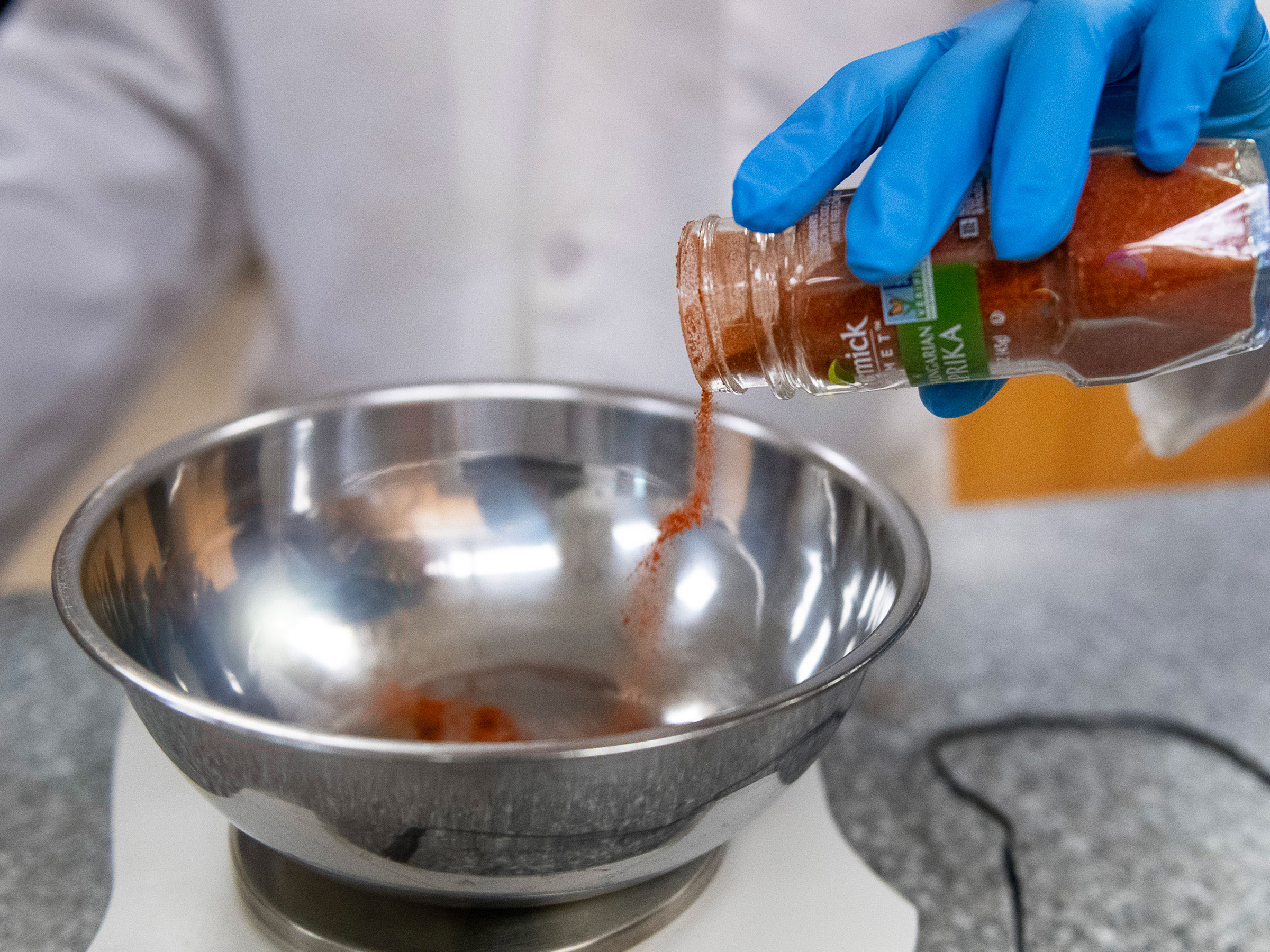
The researchers found that increasing spiciness slightly using dried chili pepper slowed down eating and reduced the amount of food and energy consumed at a meal, all without negatively affecting the palatability of the dish.
Potential for Portion Control
“This points to added chilies as a potential strategy for reducing the risk of energy overconsumption,” said John Hayes, Penn State professor of food science and corresponding author on the paper. “While portion control wasn’t the explicit goal of this study, our results suggest this might work. Next time you’re looking to eat a little less, try adding a blast of chilies, as it may slow you down and help you eat less.”
The team conducted three related experiments in a total of 130 adults who were served one of two lunch meals — beef chili or chicken tikka masala — in one of two versions: mild or spicy. The spiciness level was controlled by carefully varying the ratio of hot versus sweet paprika added to the dishes to vary the heat while keeping chili flavor constant.
The researchers then recorded participants on high-definition video while they ate their meals to monitor their eating behaviors. From the videos, Hayes’ team measured the amount of food and water consumed, meal duration, eating speed of grams per minute, bite rate, bite size, and collected ratings on appetite, liking, and spiciness before and after the meal.

“Formulating the recipes took a long time for the chicken tikka,” Cunningham said. “It took so many rounds of testing that my lab mates were sick of it. But science is about trial and error. I’d make a recipe, see how far I could push the spiciness, and we’d taste it. We did that until we reached a level where palatability was matched even when spiciness increased.”
Why Spicy Meals Reduce Intake
The study suggests the reduction in intake is driven by changes in oral processing behaviors, she explained. Specifically, participants ate the spicier meals more slowly. She explained that a slower eating rate often means food is in the mouth longer, which can help signal fullness and lead to eating less. Other studies that slow the eating rate by manipulating texture have shown similar effects, she said.
“What’s critical here is that the reduction in intake occurred without negatively impacting how much participants liked the food,” Hayes said.
He added that water intake didn’t differ significantly between spicy and mild meals, suggesting that one seemingly obvious explanation, that people drank more water and filled up faster, was not the primary reason people ate less.
“This is why we need to do empirical studies of behavior, because what you might intuitively expect is often not the case,” he said.
Hayes also noted that appetite ratings made before and after the meals were similar, suggesting participants still felt full after the spicy meal, despite eating less of it. Looking ahead, the team is now focused on understanding how oral burn can impact other eating behaviors, like snacking.
Reference: “Increasing the spiciness of a lunch meal influences oral processing behaviors and decreases food and energy intake” by Paige M. Cunningham, Isaiah M. Smith and John E. Hayes, 28 April 2025, Food Quality and Preference.
DOI: 10.1016/j.foodqual.2025.105566
Isaiah Smith, a Penn State undergraduate from West Chester, also contributed to this work as part of an Undergraduate Research Internship Program from the NASA Pennsylvania Space Grant Consortium. This work was supported by a gift from the McCormick Science Institute and federal appropriations under the Hatch Act from the U.S. Department of Agriculture’s National Institute of Food and Agriculture.
Never miss a breakthrough: Join the SciTechDaily newsletter.
Follow us on Google and Google News.
6 Comments
Well, starving is quite effective, I hear…
Tell that to Mexican Americans who have the highest obesity rate in the US, fixed your junk science for you!
should use the word ‘latinos’ instead of Mexican Americans. this isn’t being woke, it is about being correct.
An interesting article. Yes, when I add spice to a meal I find I often eat less. I didn’t see a quantitative value of how much less is eaten of the spicy food in the article. For myself the difference could be about 10%, so a useful difference.
Makes sense if some spice slows a person down. For those who eat extremely spicy food though, I wouldn’t expect this to have much, if any impact, without using enough spice to significantly alter the meal.
Looking forward to denomination percentages of Carolina Reaper Paprika in with the rest, I suppose… Caring about food again (having got off semaglutides) seems to run right into needing to watch it?