
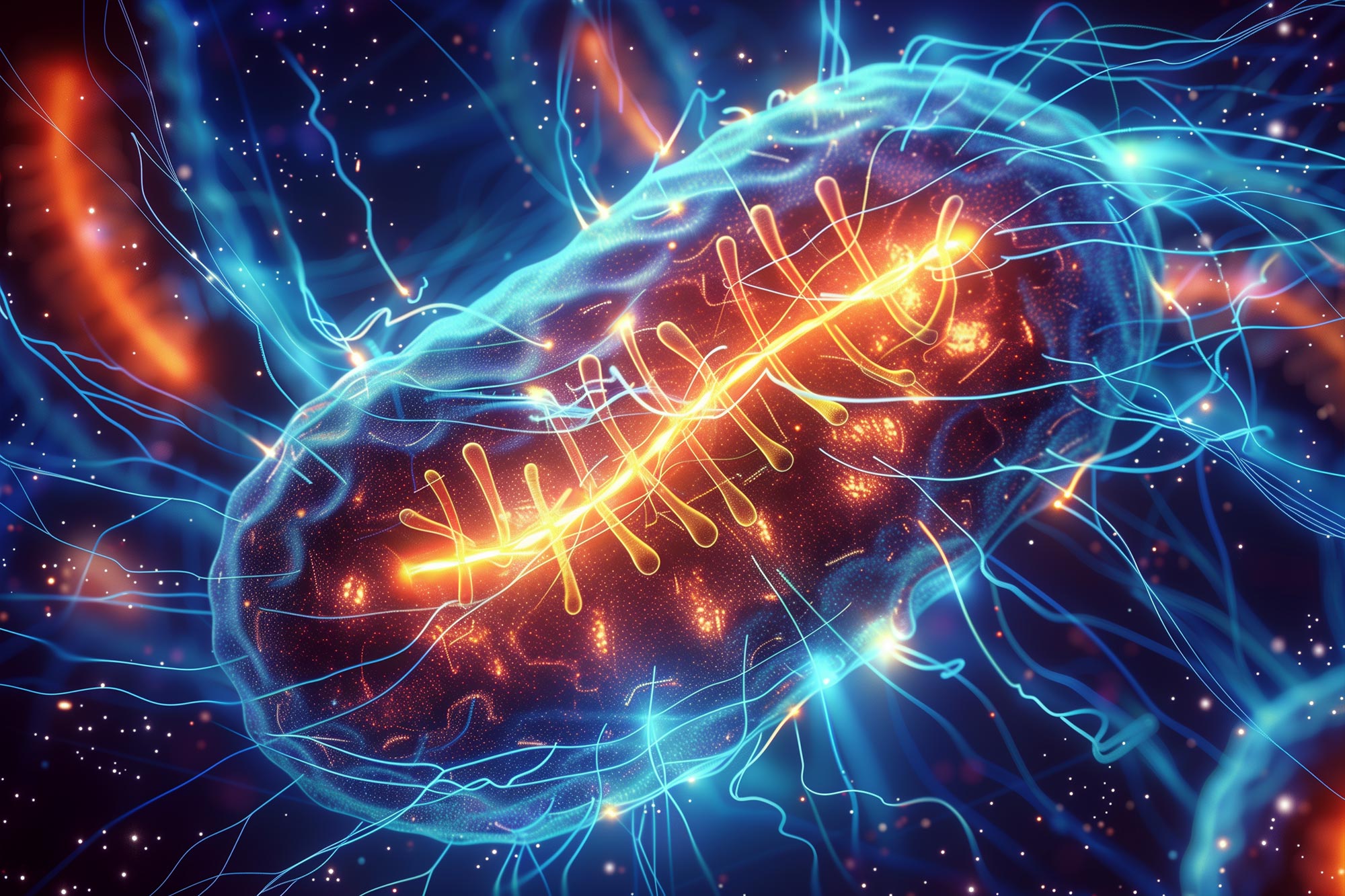
By combining MERFISH imaging with expansion microscopy, researchers have unlocked a new way to study bacteria at the single-cell level.
This allows them to see how bacteria activate different genes in response to their environment, offering insights into microbial behavior, antibiotic resistance, and infection strategies.
How Bacteria Organize Their Activities
How do bacteria — whether beneficial ones in our bodies or harmful disease-causing strains — coordinate their activities? A recent study has provided new insights by combining advanced genomic-scale microscopy with an innovative technique to track which genes bacteria activate in different conditions and environments. Published recently in the journal Science, this breakthrough is set to advance bacterial research significantly.
Jeffrey Moffitt, PhD, and his colleagues at the Program in Cellular and Molecular Medicine (PCMM) at Boston Children’s Hospital used MERFISH, a molecular imaging technique Moffitt helped develop, to analyze messenger RNAs (mRNAs) in thousands of individual bacteria at once. This method not only mapped gene expression on a massive scale but also revealed how spatial factors influence which genes bacteria turn on — something never before achieved.

Overcoming the Challenges of Imaging Bacteria
However, the team first had to overcome a major challenge: bacterial RNAs, or the bacterial transcriptome, are densely packed inside tiny cells, making them difficult to distinguish and image. “It was a complete disaster, we couldn’t see anything,” says Moffitt.
Borrowing a technique developed in the laboratory of Ed Boyden, PhD, at MIT— expansion microscopy — they embedded the samples in a special hydrogel. They anchored the RNAs to this gel and changed the chemical buffer in the gel. This triggered it to swell, expanding the sample 50- to 1000-fold in volume. “All the bacterial RNAs become individually resolvable,” Moffitt says.
Why Measure Bacterial Gene Expression?
Until now, scientists have averaged bacterial behavior across a given bacterial population. The ability to determine what genes individual bacteria are using can give powerful new insights into bacterial interactions, virulence, stress responses, the ability to resist antibiotics, the ability to form biofilms like those in catheters and more.
“We now have the tools to answer fascinating questions about host-microbe and microbe-microbe interactions,” Moffitt says. “We can explore how bacteria might communicate and compete for spatial niches and define the structure of microbial communities. And we can ask how pathogenic bacteria adjust their gene expression as they infect mammalian cells.”
Bacterial-MERFISH can also provide insights into bacteria that are difficult to grow in a culture dish. “Now we don’t have to culture them, we can just go image them in their native environment,” Moffitt says.
Single-Cell Insights into Bacterial Survival Strategies
Several experiments the team performed illustrate the kinds of questions that bacterial-MERFISH can answer. For example, Moffitt and colleagues were able to show that individual E. coli, when starved of glucose, try utilizing alternative food sources one after another, altering their gene expression in a specific sequence. Taking a series of genomic snapshots over time enabled the team to piece together this survival strategy.
The team also got insights into how bacteria organize their RNAs within their cells, which may be important in how different aspects of gene expression are regulated. Finally, they showed that intestinal bacteria tap different genes depending on their physical location in the colon.
A New Era in Bacterial Research
“The same bacteria could be doing very different things over a space of tens of microns,” Moffit says. “They’re seeing different environments and responding differently to them. It was very difficult to address such variation before, but now we can answer the types of questions people have been dreaming about.”
Reference: “Highly multiplexed spatial transcriptomics in bacteria” by Ari Sarfatis, Yuanyou Wang, Nana Twumasi-Ankrah and Jeffrey R. Moffitt, 24 January 2025, Science.
DOI: 10.1126/science.adr0932
The paper’s coauthors were Ari Sarfatis, Yuanyou Wang, PhD, and Nana Twumasi-Ankrah in the Moffitt Lab.
Never miss a breakthrough: Join the SciTechDaily newsletter.
Follow us on Google and Google News.
36 Comments
What, it’s 1000 times more deadly now?
Exactly they need to stop messing with humans to get sicker why do that why
it called inflamtionfrom what takin tab or inhalers
It’s an IMAGING TECHNIQUE. How dense can you people be. Did you even read the article or did you sound out the title and go straight to the comments?
Yeh good point
This does not seem like a good thing to do!
Genetic scale observation will help study their survival strategy, how they adept to the environment.
@skab – Wasn’t that what they were doing at the Wuhan Institute of Virology?
If so, seems to me, we didn’t learn a darn thing from COVID PANDEMIC.
No.
Need to focus on the viruses. Influenza, bird flu, (still in animals) they are also the big killers in older people.
Well, the same eugenicists @ the very tip top agave definitley gotten a great return on the US tax payer $ they’ve invested. What’s ironic is I would of thought they’d appreciate a natural evolurion of our species not this forced evolution.
Oops excuse the spelling errors ! I have to start editing b4 I post! Gheez lol
We don’t want another Wuhan incident. I hope they know what they doing and have a control measure if those bacteria get loose.
Fantastic! Great work. This will lead to many cures. I will study it until I can explain it to my kids
To put ot very simply, as the gel it is in is expanded by a different th8ng ised to see in a microscope, it sort of pulls the densely packed bacteria apart some- making seeing it individually possible. Think of the hospital benefits this could have. I’ve been thinking a pathology dept. that is working during long surgeries might be better able to distinguish problems during surgeries or procedures- at least before the body is closed up and might require a second surgery. This could be the first steps for a real time saver on one aspect of test analysis. It is a good advancement & nothing to do with viral gain of function, but rather a way to peer into the inner workings of bacteria. It will have many amazing applications. No risk to humans – only more specific treatments in a faster time frame.
Yeah, peering into the inner workings of bacteria as the gel slowly and agonizingly pulls the little blighters apart.
Fire them, the gel and the God playing scientists into the nearest black hole, why doncha ?
Yeah, and how times have we thought we were doing the thing, only to have it blow-up in our faces? Sometimes we go places we really shouldn’t, because we feel we have to do it first, or before “they” do.
That sort of research will be the death of us all, one of these days.
I thank JEHOVAH GOD that I probably won’t live to see the catastrophes we blindly encounter all because “we” have to be first.
Ah well,Cheers to ĥavin the balls to go for it!!
So many paranoid Jeebus literalist, anti-science jack boots on the comments section.
Got better things to do than harass a science journal comments section? the scientists who did this experiment don’t read the comments. 😆😆
how times have we thought we were doing the right thing, only to have it blow-up in our faces ?
We will never know the exact total, The headless remains of careless scientists tell no tales, What I do know is that it caused the deaths of many a brave, colorblind, IRA Volunteer on the bomb making evening course that eh James used to run during the troubling war.
Well, like, no.
It’s in a controlled environment, so can’t escape.
It had no means to reproduce or survive if it did escape.
There’s a reason bacteria is meant to be small. Smaller things survive better in harsh environments, large bacteria requires too much sustanance to live.
Also, they destroy the sample after the data has been documented.
What? You think Megablob is in some secret Antartic base, eating scientists and shape shifting as we speak?
Get a life outside the internet. 😆😆😆
It’s a new imaging technique, ya goobers. IMAGING. Did any of you even read the bloody article?
Thanks Iwas trying to not be mean but u summed it up nicely and not to meanly
Please excuse my ignorance. Socks
, but I don’t think I’ve ever heard
of a “goober “before. Are they related to the infamous ,”Gobdaws ” by any chance ?
No they are just fundementalist anti-science conspiraloons, probably Discovery Institute trolls.
They must be in sore, getting their backsides slapped by Professor Dave Explains all the time. 😅😅
To bad the funding for this will dry up in our new economical tragedy. more NON CENTS .
Typical comment section baboons. It’s like all you people do is read the title and go straight to the content section. THIS IS AN IMAGING TECHNIQUE. What a sad world we live in that basic comprehension skills are rare nowadays.
We don’t need to read it to know, the usual Kar azey scientists are poking their noses into places they shouldn’t.
There are some things we are better of not knowing and I’ve a feeling this is one of them.
You haven’t a clue what the experiment was about.
Not as if you take vaccines anyway?So stop whinging and die young as nature intended.
I can only hope Trump gets them so dumbed down that they can’t operate mobile phones and they leave humanity alone, just live in their trailers/caves beating each other with clubs.
great they are making bacteria 1000x bigger. we already have superbugs, now we’re going to have ultrabugs that consume us in one bite. No wonder we have fake pandemics that are made in China of 1000x bacterias this is all Bill Gates fault vote trump inject bleach eat dog wormers and testosterone tablets and never get sick you’ll never take away my guns vaccines have rfid dribble dribble…
They’ll probably make everything 1000 x bigger now, to hide their handiwork. lol Spell check -Stand down ,damn you . I’l call it “handy work” if I effing feel like it.
Adaptations coming gene expression such as bacterial resistance takes on the correct intelligent design model of it. Not the spinned wrong evolution one. This includes the adaptations of the Darwin Finch or the physical characteristics difference between OUR FELLOW HUMAN NEANDERTHALS. Evolution is not happening. We are a creation.
Don’t become the creation of people who do not have the welfare of you or your family in mind.
Hello Kent Hovind 😆🤚🏻
You file your taxes yet?