
Close Menu
    Facebook X (Twitter) Instagram
    SciTechDaily
    • Biology
    • Chemistry
    • Earth
    • Health
    • Physics
    • Science
    • Space
    • Technology
    Facebook X (Twitter) Pinterest YouTube RSS
    SciTechDaily
    Home»Biology»Scientists Solve a 100-Year Mystery: Breathing Affects Your Pupils
    Biology

    Scientists Solve a 100-Year Mystery: Breathing Affects Your Pupils

    By Karolinska InstitutetFebruary 26, 2025No Comments3 Mins Read
    Facebook Twitter Pinterest Telegram LinkedIn WhatsApp Email Reddit
    Share
    Facebook Twitter LinkedIn Pinterest Telegram Email Reddit
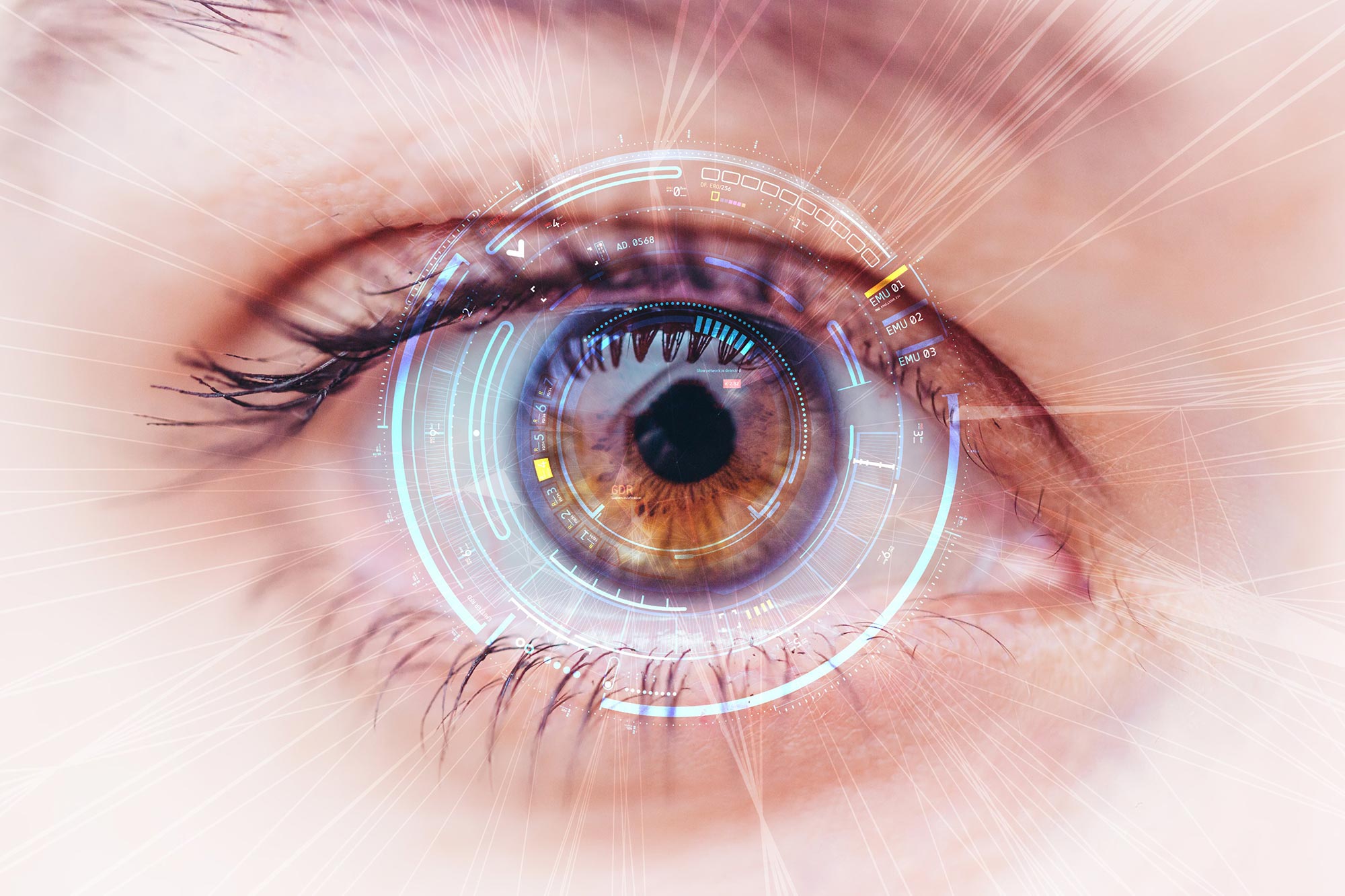
    Bionic Eye Scan Technology Concept
    Researchers at Karolinska Institutet found that breathing affects pupil size, with pupils being smallest during inhalation and largest during exhalation. This discovery, which suggests a brainstem-controlled mechanism, could improve understanding of vision, attention, and potential clinical applications for neurological disorders.

    Breathing influences pupil size, with contraction during inhalation and dilation during exhalation. This effect, controlled by the brainstem, may enhance vision and has potential clinical applications, including neurological diagnostics.

    Researchers at Karolinska Institutet in Sweden have identified a fundamental mechanism that influences pupil size: breathing. Their study, published in The Journal of Physiology, reveals that the pupil contracts during inhalation and dilates during exhalation, a discovery that could impact our understanding of vision.

    Like a camera aperture, the pupil regulates how much light enters the eye, playing a crucial role in vision and perception. For over a century, scientists have recognized three primary factors that affect pupil size: light exposure, focal distance, and cognitive influences such as emotions or mental effort. Now, researchers have identified a fourth factor—breathing. Their findings show that the pupil is smallest at the start of inhalation and largest during exhalation.

    “This mechanism is unique in that it is cyclical, ever-present, and requires no external stimulus,” explains Artin Arshamian, associate professor at the Department of Clinical Neuroscience, Karolinska Institutet, who led the research. “Since breathing affects brain activity and cognitive functions, the discovery may contribute to a better understanding of how our vision and attention are regulated.”

    Extensive Testing Confirms the Effect

    The researchers conducted five experiments with over 200 participants, examining how breathing affects pupil size under different conditions. The results showed that the effect persisted whether participants breathed quickly or slowly, through their nose or mouth, if lighting conditions or fixation distance varied, if they were resting or performing visual tasks. The difference in pupil size between inhalation and exhalation was large enough to theoretically affect vision.

    The study also showed that the function is intact in people born without the olfactory bulb, a brain structure that is activated by nasal breathing. This suggests that the mechanism is controlled by the brainstem, a fundamental and evolutionarily conserved part of the brain.

    The researchers are now investigating whether changes in pupil size during breathing also affect vision. Previous research shows that smaller pupils make it easier to see details, while larger pupils help us find hard-to-see objects.

    “Our results suggest that our vision may switch between optimizing for distinguishing small details when we inhale and detecting faint objects when we exhale, all within a single breathing cycle,” says Martin Schaefer, a postdoctoral researcher at the same department at Karolinska Institutet and the study’s first author.

    There may also be clinical applications, according to the researchers.

    “One potential application is new methods to diagnose or treat neurological conditions such as Parkinson’s disease, where damage to pupil function is an early sign of the disease,” says Artin Arshamian. “This is something we want to explore in the future.”

    Reference: “The pupillary respiratory-phase response: pupil size is smallest around inhalation onset and largest during exhalation” by Martin Schaefer, Sebastiaan Mathôt, Mikael Lundqvist, Johan N. Lundström and Artin Arshamian, 21 February 2025, The Journal of Physiology.
    DOI: 10.1113/JP287205

    The research was funded by the Swedish Research Council and the European Research Council (ERC). There are no reported conflicts of interest.

    Never miss a breakthrough: Join the SciTechDaily newsletter.
    Follow us on Google and Google News.

    Karolinska Institutet Neuroscience Physiology Vision
    Share. Facebook Twitter Pinterest LinkedIn Email Reddit

    Related Articles

    Why Food Tastes Better When We’re Hungry – Researchers Find Neural Circuit in the Hypothalamus

    Neuroscientists Show High-Fructose Diet Hampers Brain Recovery

    Bioengineers Make “Mini-Brains” of Neurons and Supporting Cells

    Researchers Use Stem Cells from Teeth to Grow Brain-Like Cells

    Prosthetic Retina Are Experimentally Able to Restore Sight in Mice

    Imbalance Between Neuronal Excitation and Inhibition May Account for Seizure Susceptibility in Angelman Syndrome

    Scientists Restore Basic Elements of Vision in Live Mice

    PAPupuncture Offers Long-Lasting Pain Relief

    Neuroscientists Study Cortical Areas Specialized in Processing Visual Inputs in Mice

    Leave A Reply Cancel Reply

    • Facebook
    • Twitter
    • Pinterest
    • YouTube

    Don't Miss a Discovery

    Subscribe for the Latest in Science & Tech!

    Trending News

    Scientists Uncover Potential Brain Risks of Popular Fish Oil Supplements

    Scientists Discover a Surprising Way To Make Bread Healthier and More Nutritious

    After 60 Years, Scientists Uncover Unexpected Brain Effects of Popular Diabetes Drug Metformin

    New Research Uncovers Hidden Side Effects of Popular Weight-Loss Drugs

    Scientists Rethink Extreme Warming After Surprising Ocean Discovery

    Landmark Study Links Never Marrying to Significantly Higher Cancer Risk

    Researchers Discover Unknown Beetle Species Just Steps From Their Lab

    Largest-Ever Study Finds Medicinal Cannabis Ineffective for Anxiety, Depression, PTSD

    Follow SciTechDaily
    • Facebook
    • Twitter
    • YouTube
    • Pinterest
    • Newsletter
    • RSS
    SciTech News
    • Biology News
    • Chemistry News
    • Earth News
    • Health News
    • Physics News
    • Science News
    • Space News
    • Technology News
    Recent Posts
    • Scientists Discover Hidden Pathway Inside Catalysts That Defies Decades of Assumptions
    • Scientists Finally Crack Decades-Old Mystery of “Breathing” Lasers
    • “Like Liquid Metal”: Scientists Create Strange Shape-Shifting Material
    • Early Warning Signals of Esophageal Cancer May Be Hiding in Plain Sight
    • Researchers Have Discovered a THC-Free Cannabis Compound That May Replace Opioids
    Copyright © 1998 - 2026 SciTechDaily. All Rights Reserved.
    • Science News
    • About
    • Contact
    • Editorial Board
    • Privacy Policy
    • Terms of Use

    Type above and press Enter to search. Press Esc to cancel.