
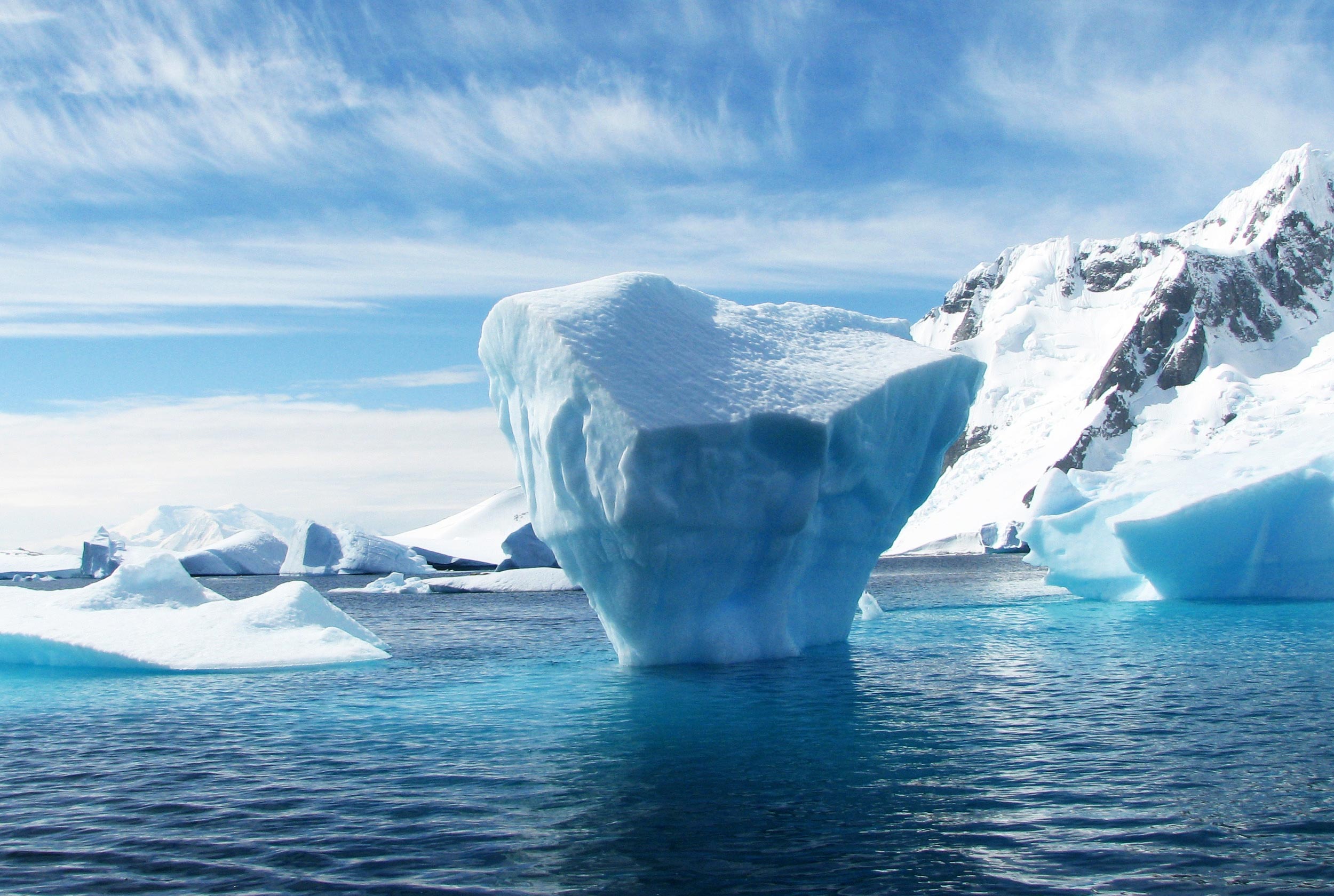
New research reveals that Arctic sea ice loss can disrupt weather worldwide, making California drier while increasing winter humidity in parts of Europe.
Using advanced models, scientists isolated this effect, showing how melting ice alters atmospheric circulation. These findings could explain past extreme weather events and improve future climate forecasts.
Unraveling the Arctic’s Influence on Climate
Researchers from the Barcelona Institute for Global Health (ISGlobal), supported by the “la Caixa” Foundation, have developed a new approach to studying how Arctic sea ice loss affects the planet’s climate. Their method isolates the impact of melting ice from other climate change-related factors, providing a clearer picture of its influence.
Published today (March 11) in Communications Earth and Environment, the study reveals that over several decades, the loss of Arctic ice contributes to drier conditions in the southwestern United States, particularly in California, especially during winter. Meanwhile, Spain and Portugal may experience wetter winters, though the effect there appears weaker.
A New Approach to an Ongoing Debate
“There is much scientific disagreement about the remote effects of Arctic sea ice loss. So far, many studies have focused on the long-term effects, on a scale of centuries. Others have investigated the response to sea ice loss with modeling setups that artificially impose heat to melt the sea ice, potentially affecting the simulated response. Some studies have been changing Antarctic and Arctic sea ice cover at the same time, making it difficult to discern their individual contributions. In our study, we have developed a methodology to assess the impact of Arctic ice loss without adding any heat fluxes, and we focused on the impacts developing within a few decades,” explains Ivana Cvijanovic, ISGlobal researcher and lead author of the study.
To test their findings, the research team used three climate models of varying complexity. In each of them, they ran two sets of simulations — one with historical levels of Arctic ice and another with significantly reduced ice cover — allowing them to observe how the loss of sea ice directly affects climate patterns.
The Domino Effect of Melting Ice
The disappearance of sea ice changes the surface albedo, i.e. the reflectivity of the Arctic Ocean, but also removes the insulation between the atmosphere and the ocean surface and affects salinity profiles. These local changes in turn drive a variety of atmospheric and oceanic teleconnections that can propagate far from the Arctic.
“It should be made clear that the conclusion is not necessarily that it will rain less in California and more in the Western Mediterranean in the coming years. In addition to the ice cover loss in the Arctic, there are many other factors responding to greenhouse gas emissions and affecting the climate (atmospheric and oceanic feedbacks and circulation changes, Antarctic sea ice loss, vegetation feedbacks, etc.). In any case, understanding the influence of this phenomenon separately will help us to refine global predictions,” says Desislava Petrova, ISGlobal researcher and last author of the study.
Real-World Evidence: Past Climate Patterns
“Despite all the different influences in our planet’s climate system, it is interesting to note that the anomalies in the atmospheric circulation patterns of the last few decades show some striking similarities to the patterns simulated in our study — especially events such as the Californian drought of 2012-2016,” observes Ivana Cvijanovic.
Reference: “Arctic sea-ice loss drives a strong regional atmospheric response over the North Pacific and North Atlantic on decadal scales” by Ivana Cvijanovic, Amelie Simon, Xavier Levine, Rachel White, Pablo Ortega, Markus Donat, Donald D. Lucas, John C. H. Chiang, Anne Seidenglanz, Dragana Bojovic, Arthur Ramos Amaral, Vladimir Lapin, Francisco Doblas-Reyes and Desislava Petrova, 11 March 2025, Communications Earth & Environment.
DOI: 10.1038/s43247-025-02059-w
Never miss a breakthrough: Join the SciTechDaily newsletter.
Follow us on Google and Google News.
5 Comments
Let me guess, NYC will be underwater by 2040. Obesity and violence are connected to this, and of course, populism and the election of men who don’t like progressive policies will also increase?
Anything is plausible as the human imagination is near limitless.
Of course these scientists are more “qualified” so their imagination should be taken seriously.
Just follow the money and it will always explain the motivations behind a scientists conclusion.
Humans, with their limitless imagination, can even conceive of things that are implausible.
The researchers may be highly qualified, but that doesn’t prevent them from sometimes making mistakes, such as overlooking something of importance. That is why research like this should be read with a critical eye, to be sure that something obvious hasn’t been overlooked and that the conclusions make sense in the context of everything else that is known. That is REAL peer review, not the gate-keeping activity that is preliminary to publication and commonly called “peer review.”
“To test their findings, the research team used three climate models of varying complexity. In each of them, they ran two sets of simulations — one with historical levels of Arctic ice and another with significantly reduced ice cover — allowing them to observe how the loss of sea ice directly affects climate patterns.”
Do the models use Fresnel’s Equation for calculating the specular reflectivity of the ice-free water? Is so, there is no mention of it in the article. There is not even a mention of the assumptions for the average specular reflectivity of the open water versus the diffuse reflectivity of the snow-covered ice. This has to be done with high spatial resolution because the typical specular reflection in the Arctic varies from about 10% to 100%; see Figure 1 in the link at the bottom.
They employ very sophisticated statistical analyses of their modeling runs, but appear to leave out something of sufficient importance that it raises the question of whether the models are even close to reality. If they don’t know how their models work, then they are working blind.
https://wattsupwiththat.com/2016/09/12/why-albedo-is-the-wrong-measure-of-reflectivity-for-modeling-climate/
All models are wrong; just interesting