

Researchers have identified antibodies that could lead to a broadly protective norovirus vaccine and new treatment options.
Scientists at The University of Texas at Austin, in partnership with researchers from the University of North Carolina at Chapel Hill and the National Institutes of Health, have discovered a promising new approach to fight norovirus, a leading global cause of gastroenteritis. Their findings, published in Science Translational Medicine, reveal a set of powerful antibodies that can neutralize a wide variety of norovirus strains. This advance may lead to the development of an effective universal vaccine, as well as new antibody-based treatments for norovirus infections.
Norovirus infects more than 700 million people each year, often causing intense diarrhea and vomiting. Although most cases resolve without complications, the virus poses serious risks for young children, older adults, and individuals with weakened immune systems. Developing a vaccine has been particularly difficult due to the virus’s high genetic variability and rapid mutation rate, which help it evade immune defenses and reduce long-term herd immunity in populations.
Harnessing the Immune System for a Vaccine
Through advanced molecular analysis, the research team examined immune responses in participants who received an experimental oral norovirus vaccine developed by Vaxart. They found that some individuals produced broadly neutralizing antibodies that effectively targeted multiple norovirus strains, including both historical and emerging variants. These antibodies also cross-neutralized multiple norovirus types responsible for approximately 75% of global outbreaks, offering promising insights for future vaccine development.
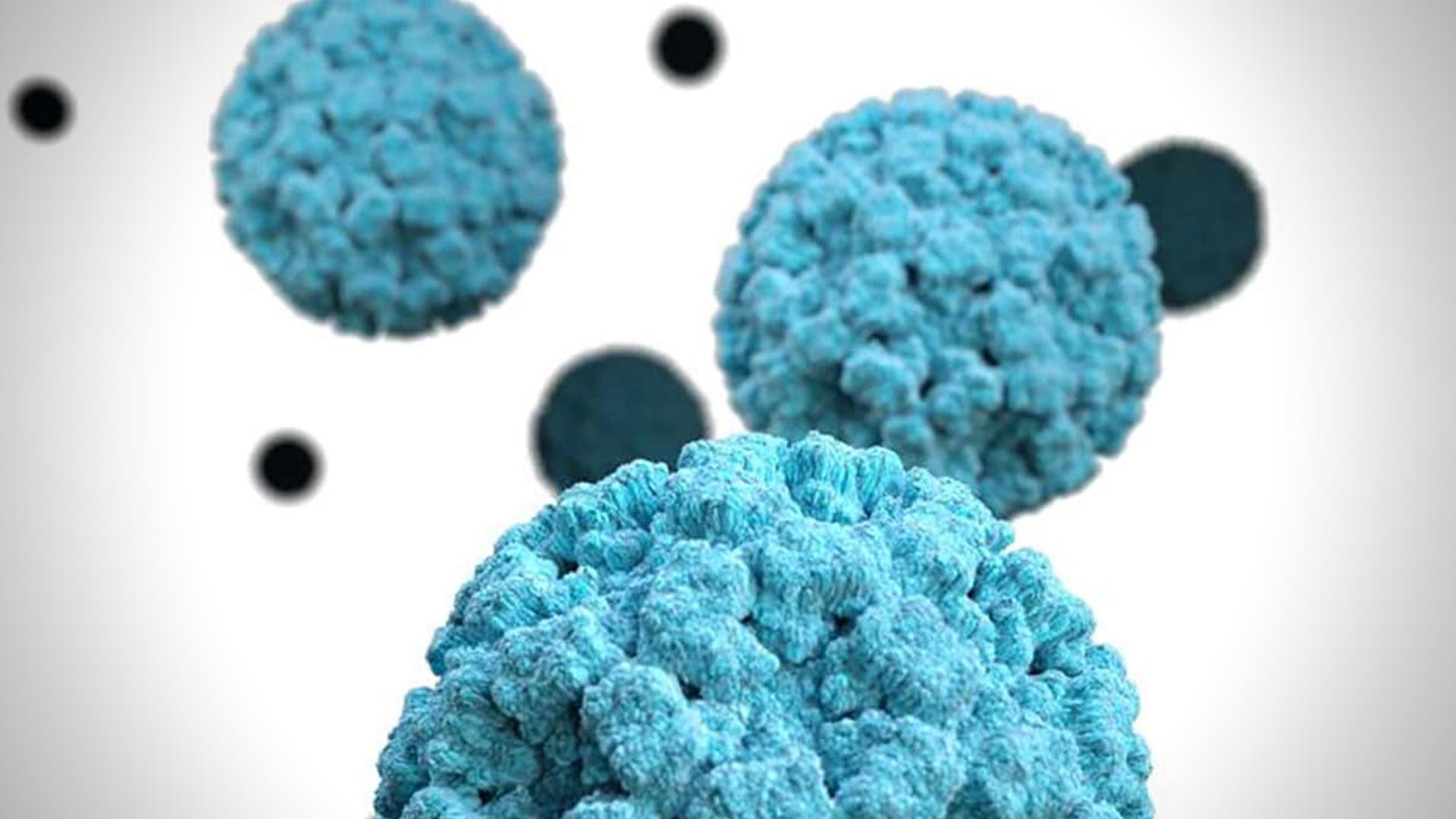
“These findings provide critical insights into how the immune system responds to norovirus and pave the way for designing a vaccine that offers broad, long-lasting protection,” said George Georgiou, co-corresponding author and professor of molecular biosciences and in the McKetta Department of Chemical Engineering at UT Austin. “We found antibodies that are very broad in terms of being able to neutralize many different variants that have circulated or are circulating now.”
Discovery of a Powerful Antibody: VX22
One of the most promising antibodies identified, VX22, targets a previously unknown weak spot in the virus’s structure. Unlike typical antibodies that attack only one or two strains, VX22 neutralizes noroviruses from multiple genotypes by binding to a highly conserved region in the virus particles, making it a strong candidate for vaccine development.
“Norovirus cases this winter have surged to twice the two previous annual peaks, which really underscores the fact that norovirus is both prevalent and rapidly evolving, and we need a vaccine against it to reduce the global burden of diseases associated with norovirus,” said Juyeon Park, first author, and postdoctoral researcher at UT Austin. “Our findings can better inform the future design of vaccine development against norovirus.”
Norovirus spreads easily through contaminated food, water, and surfaces, often causing outbreaks in schools, cruise ships, and healthcare facilities. A vaccine that protects against multiple strains could drastically reduce infections, hospitalizations, and the economic burden of the disease.
The recently identified antibodies could also be used to develop a post-infection therapy that could be useful in treating immunocompromised people who cannot fight off the infection on their own, Georgiou said.
“This discovery brings us closer to a vaccine that could provide lasting protection and prevent the devastating effects of norovirus outbreaks, as well as potential treatment for those already infected,” Georgiou said.
The research team is now working on refining the vaccine’s design and testing the relevance of these findings in broader populations, such as elderly people and young children.
Reference: “Broadly neutralizing antibodies targeting pandemic GII.4 variants or seven GII genotypes of human norovirus” by Juyeon Park, Lisa C. Lindesmith, Adam S. Olia, Veronica P. Costantini, Paul D. Brewer-Jensen, Michael L. Mallory, Cynthia E. Kelley, Ed Satterwhite, Victoria Longo, Yaroslav Tsybovsky, Tyler Stephens, Jeffrey Marchioni, Christina A. Martins, Yimin Huang, Ridhi Chaudhary, Mark Zweigart, Samantha R. May, Yaoska Reyes, Becca Flitter, Jan Vinjé, Sean N. Tucker, Gregory C. Ippolito, Jason J. Lavinder, Joost Snijder, Peter D. Kwong, George Georgiou and Ralph S. Baric, 5 March 2025, Science Translational Medicine.
DOI: 10.1126/scitranslmed.ads8214
The research was funded by the National Institute of Allergy and Infectious Disease at the National Institutes of Health, the Dutch Research Council, the Institute for Chemical Immunology, and the Vaccine Research Center at NIH. George Georgiou holds the Dula D. Cockrell Centennial Chair in Engineering.
Several of the authors have filed patent applications on some of the broadly neutralizing antibodies identified in this research.
Never miss a breakthrough: Join the SciTechDaily newsletter.
Follow us on Google and Google News.