
Close Menu
    Facebook X (Twitter) Instagram
    SciTechDaily
    • Biology
    • Chemistry
    • Earth
    • Health
    • Physics
    • Science
    • Space
    • Technology
    Facebook X (Twitter) Pinterest YouTube RSS
    SciTechDaily
    Home»Science»Seaweed Could Be the Key to Environmentally Friendly Sunscreen
    Science

    Seaweed Could Be the Key to Environmentally Friendly Sunscreen

    By King’s College LondonDecember 5, 2017No Comments3 Mins Read
    Facebook Twitter Pinterest Telegram LinkedIn WhatsApp Email Reddit
    Share
    Facebook Twitter LinkedIn Pinterest Telegram Email Reddit
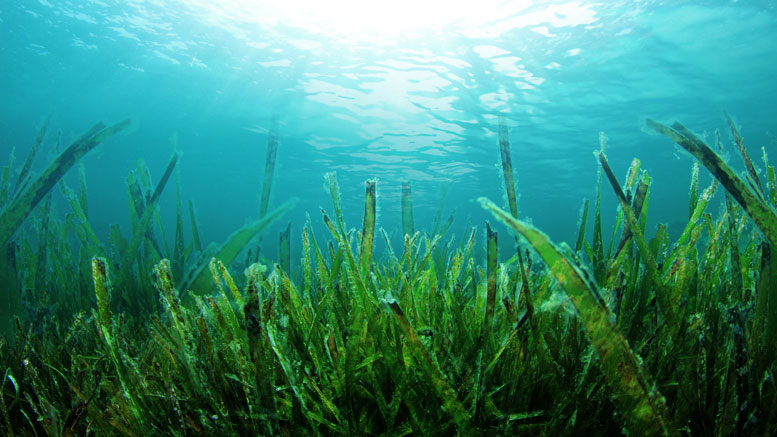
    Seaweed Could Hold the Key to Environmentally Friendly Sunscreen
    Seaweed-derived compounds have the potential to shield human skin from the harmful effects of the sun while posing no threat to marine ecosystems.

    A compound found in seaweed could protect human skin from the damaging impact of the sun without causing harm to marine ecosystems.

    The use of sunscreens is advocated to prevent sun damage, but most formulations contain synthetic UV radiation filters that can make their way into water systems. Many of these are not ecocompatible and may harm fragile marine life including coral, fish, and microorganisms.

    Scientists at King’s College London extracted a mycosporine-like amino acid (MAA), known as palythine, from seaweed to test its ability to protect against UV radiation in human skin cells. MAAs are natural compounds produced in organisms that live in sunlight-rich, shallow-water environments.

    Using human skin cells in a lab, researchers showed that even at very low concentrations MAA could effectively absorb harmful rays from the sun and protect the cells against UVR-induced damage. They also showed that palythine is a powerful antioxidant that could offer skin protection against oxidative stress, linked to cellular damage and photoaging.

    The paper, published in the British Journal of Dermatology, represents a breakthrough that could help move towards the development of an eco-compatible, non-toxic, natural sunscreen that protects human skin without negative environmental effects. Further research is required in order to prove that the compound has the same properties outside of the lab environment.

    The European Chemicals Agency and The Environmental Effects Assessment Panel (EEAP), part of the United Nations Environment Programme (UNEP), have expressed concern about the eco-toxic effects of eight out of the 16 commonly used sunscreen filters in Europe.

    Lead author, Dr. Karl Lawrence from St John’s Institute of Dermatology at King’s said: ‘MAAs, in addition to their environmental benefits, appear to be multifunctional photoprotective compounds. They work through the direct absorption of UVR photons, much like the synthetic filters. They also act as potent antioxidants, which is an important property as exposure to solar radiation induces high levels of oxidative stress and this is something not seen in synthetic filters.’

    Professor Antony Young, the senior author of the paper and member of the EEAP, said: ‘There are significant concerns that conventional sun protection products are having a negative impact on the environment. Our data show that, with further research and development, marine-derived sunscreens may be a possible solution that could have a significant positive impact on the health of our marine habitats and wildlife, whilst still providing the essential sun protection that human skin requires to guard against damage that causes diseases such as skin cancer.’

    Reference: Lawrence KP, et al., “Molecular photoprotection of human keratinocytes in vitro by the naturally occurring mycosporine-like amino acid (MAA) palythine” by K P Lawrence, R Gacesa, P F Long and A R Young, 1 June 2018, British Journal of Dermatology.
    DOI: 10.1111/bjd.16125.

    Never miss a breakthrough: Join the SciTechDaily newsletter.
    Follow us on Google and Google News.

    Dermatology King’s College London Seaweed Sunscreen
    Share. Facebook Twitter Pinterest LinkedIn Email Reddit

    Related Articles

    Scientists Discover Why We Know When To Stop Scratching an Itch

    UCLA Scientists Rethink Sunscreen To Eliminate the Dreaded White Cast

    Scientists Uncover a Never-Before-Seen Natural Sunscreen Molecule

    New Tech Slashes Kelp Production Costs by a Staggering 85%

    Top Dermatologists Agree: These Skin Care Ingredients Actually Work

    Study Finds Top TikTok Skincare Routines May Be Dangerous for Young Skin

    Treating Hair Loss Could Be As Simple as Flipping a Molecular “Switch”

    Seaweed Reduces Methane Emissions in Grazing Cattle by 40%

    Fact vs. Fiction – Scientists Debunk 6 Popular Hypnosis Myths

    Leave A Reply Cancel Reply

    • Facebook
    • Twitter
    • Pinterest
    • YouTube

    Don't Miss a Discovery

    Subscribe for the Latest in Science & Tech!

    Trending News

    One of the Universe’s Largest Stars May Be Getting Ready To Explode

    Scientists Discover Enzyme That Could Supercharge Ozempic-Like Weight Loss Drugs

    Popular Sweetener Linked to DNA Damage – “It’s Something You Should Not Be Eating”

    Ancient “Rock” Microbes May Reveal How Complex Life Began

    Researchers Capture Quantum Interference in One of Nature’s Rarest Atoms

    “A Plague Is Upon Us”: The Mass Death That Changed an Ancient City Forever

    Scientists Discover Game-Changing New Way To Treat High Cholesterol

    This Small Change to Your Exercise Routine Could Be the Secret to Living Longer

    Follow SciTechDaily
    • Facebook
    • Twitter
    • YouTube
    • Pinterest
    • Newsletter
    • RSS
    SciTech News
    • Biology News
    • Chemistry News
    • Earth News
    • Health News
    • Physics News
    • Science News
    • Space News
    • Technology News
    Recent Posts
    • Revolutionary Imaging Technique Unlocks Secrets of Matter at Extreme Speeds
    • Where Does Mass Come From? Scientists Find Evidence of a New Exotic Nuclear State
    • Quantum Breakthrough: Unhackable Keys Sent Over 120 km Using Quantum Dots
    • Researchers Discover Unknown Beetle Species Just Steps From Their Lab
    • Jellyfish Caught Feasting on Exploding Sea Worms for the First Time
    Copyright © 1998 - 2026 SciTechDaily. All Rights Reserved.
    • Science News
    • About
    • Contact
    • Editorial Board
    • Privacy Policy
    • Terms of Use

    Type above and press Enter to search. Press Esc to cancel.