
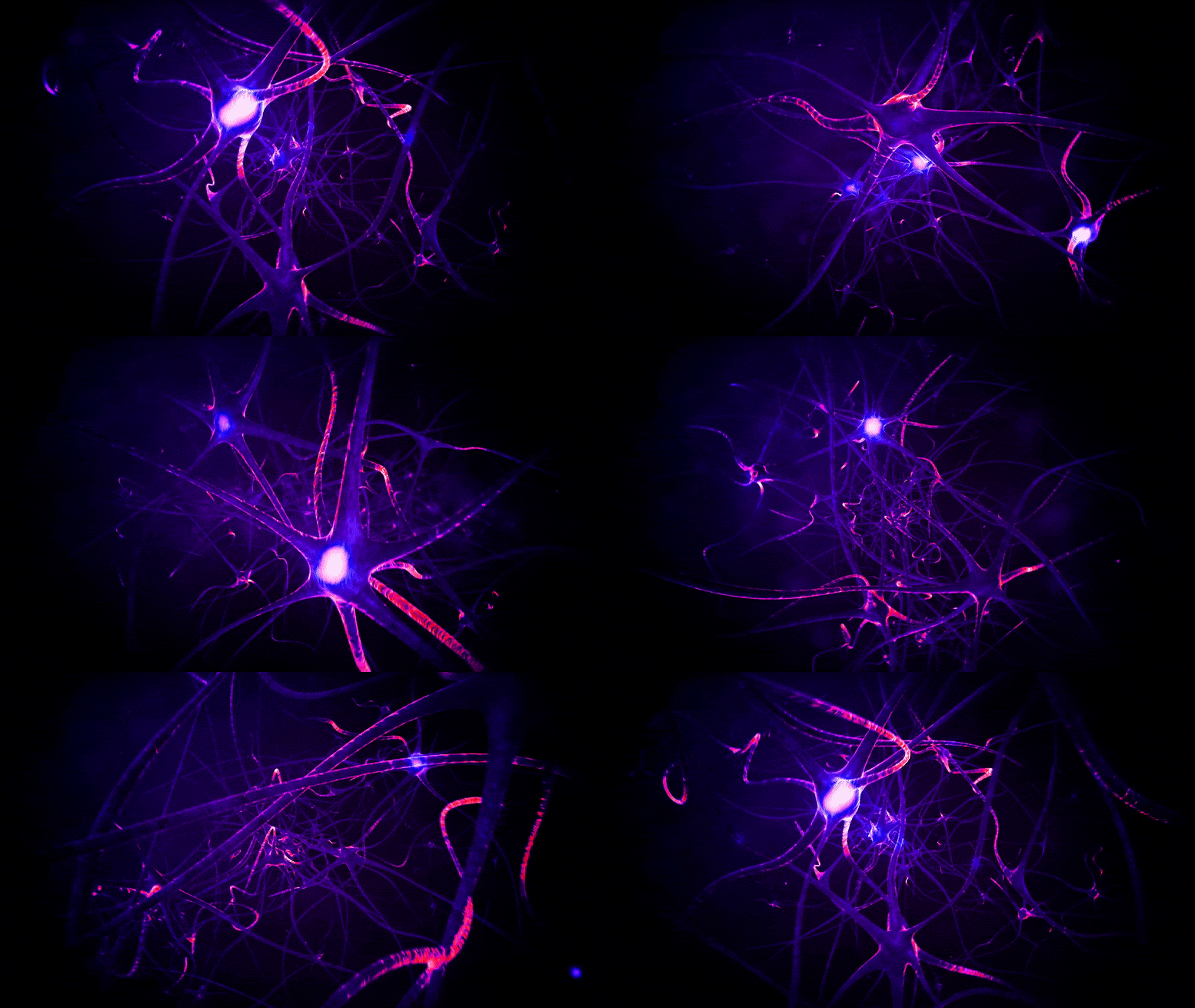
An Inflammatory Response in the Brain Is Brought On by the Sight of a Meal
The mere sight and smell of a meal cause the release of insulin even before carbohydrates enter the body. For the first time, scientists from the University of Basel and University Hospital Basel have shown that the insulin release under these conditions is reliant on a short-term inflammatory response. However, this inflammatory reaction is so over the top in obese people that it can actually reduce their ability to secrete insulin.
Even just thinking about food makes the body react in a variety of ways, the most well-known of which is perhaps the watering of the mouth. The blood sugar-regulating hormone insulin, however, also enters the picture before we ever take a bite of food. This phase of insulin secretion is known as the neurally mediated (or cephalic) phase.
Meal Stimulates Immune Defense
However, it wasn’t previously known how the sensory perception of a meal sent a signal to the pancreas to increase insulin production. Now, scientists from the University of Basel and University Hospital Basel have discovered a crucial piece of the puzzle: an inflammatory factor called interleukin 1 beta (IL1B), which is also involved in the immune response to infections or in tissue damage. The team’s findings were published in the journal Cell Metabolism.
“The fact that this inflammatory factor is responsible for a considerable proportion of normal insulin secretion in healthy individuals is surprising because it’s also involved in the development of type 2 diabetes,” explains study leader Professor Marc Donath from the Department of Biomedicine and the Clinic of Endocrinology.
Also known as “adult-onset diabetes,” this form of diabetes is caused by chronic inflammation that damages the insulin-producing cells of the pancreas, among other things. This is another situation in which IL1B plays a key role – in this case, it is produced and secreted in excessively large quantities. With this in mind, clinical studies are now examining whether inhibitors against this inflammatory factor are suitable for use as therapeutic agents for diabetes.
Short-Lived Inflammatory Response
Circumstances are different when it comes to neurally mediated insulin secretion: “The smell and sight of a meal stimulate specific immune cells in the brain known as the microglia,” says study author Dr. Sophia Wiedemann, resident physician for internal medicine. “These cells briefly secrete IL1B, which in turn affects the autonomic nervous system via the vagus nerve.” This system then relays the signal to the site of insulin secretion – that is, the pancreas.
In the case of morbid obesity, however, this neurally mediated phase of insulin secretion is disrupted. Specifically, by the initial excessive inflammatory response, as explained by doctoral candidate Kelly Trimigliozzi, who carried out the main part of the study in collaboration with Wiedemann.
“Our results indicate that IL1B plays an important role in linking up sensory information such as the sight and smell of a meal with subsequent neurally mediated insulin secretion – and in regulating this connection,” summarizes Marc Donath.
Reference: “The cephalic phase of insulin release is modulated by IL-1β” by Sophia J. Wiedemann, Kelly Trimigliozzi, Erez Dror, Daniel T. Meier, Jose Alberto Molina-Tijeras, Leila Rachid, Christelle Le Foll, Christophe Magnan, Friederike Schulze, Marc Stawiski, Stéphanie P. Häuselmann, Hélène Méreau, Marianne Böni-Schnetzler and Marc Y. Donath, 23 June 2022, Cell Metabolism.
DOI: 10.1016/j.cmet.2022.06.001
Never miss a breakthrough: Join the SciTechDaily newsletter.
Follow us on Google and Google News.