
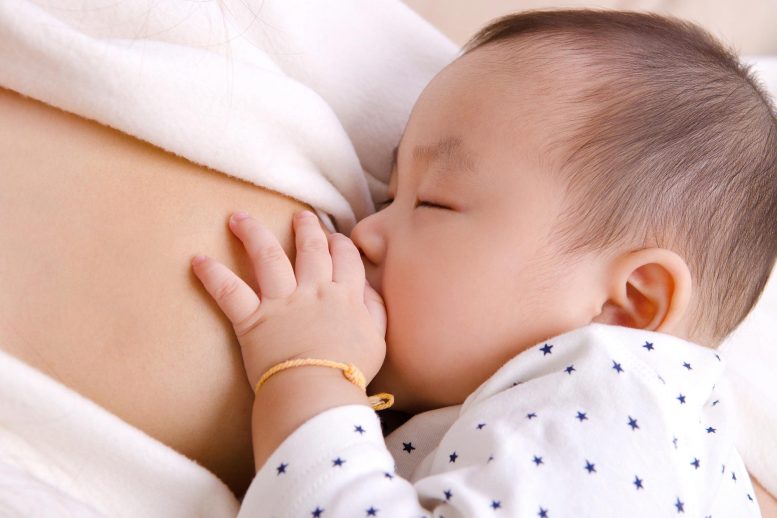
Breastfeeding Provides an Immune Boost to Infants
A recent study by Katherine Wander, an associate professor of anthropology at Binghamton University, suggests that breastfeeding strengthens a baby’s immune system and helps it resist infectious diseases.
She is the lead author of the study that was recently published in the journal Evolution Medicine and Public Health.
The study team examined over 100 mother and child pairs in rural Kilimanjaro for the investigation. In this group, prolonged nursing is typical, and infectious diseases during infancy are quite frequent, even when compared to other parts of East Africa. According to Wander, this makes Kilimanjaro a perfect place to start understanding how immune protection from milk can impact the risk of infectious diseases.
Milk’s Immune System: More Than Antibodies
“You most often hear about the immune system of milk in terms of transferring maternal antibodies to infants via milk — which is probably very important — but it seems there’s much more going on as well. The immune system of milk is a whole system, capable of mounting immune responses,” Wander said. “We’re only beginning to understand the full extent and role of the immune system of milk.”
Everything required to launch immune responses is present in mother’s milk, including antibodies and several immune cell types. These milk components come from the mother’s immune system, however, Wander states that the technique by which they are chosen from the mother’s blood seems to be curated rather than random. This mechanism is poorly understood, however.
The researchers mixed a few milliliters of milk with a small number of bacteria and incubated the combination overnight to evaluate how milk’s immune system influenced baby health. They then measured the growth of interleukin-6, an immune cell communication molecule that causes inflammation. This in-vitro reaction reveals how the milk’s immune system is expected to react to bacteria found in the baby’s body, such as the gut.
The research team also followed the Tanzanian infants to assess whether those who received milk that mounted stronger immune responses during the in-vitro tests were at lower risk for infectious diseases. That appeared to be the case: infants whose mothers’ milk mounted larger responses to Salmonella had fewer infectious diseases, particularly respiratory infections such as pneumonia.
The Downside of Milk’s Immune System Responses
But milk that mounted larger responses to Salmonella also tended to mount stronger responses to a benign strain of E. coli, which is common in the human intestinal tract, and these responses weren’t beneficial to infants. Infants who received milk that mounted stronger responses to E. coli were at higher risk for gastrointestinal infections.
This may indicate that inappropriate responses by milk’s immune system — for example, to bacteria normally present in the gut — can be disruptive. Gut bacteria play an important role in preventing diarrhea and other infectious diseases, the authors note.
While all immune responses have tradeoffs, the downside of milk — both immediate and common — was a surprising discovery.
Tradeoffs and Surprising Discoveries in Immune Responses
“With so much at stake, we really expected the immune system of milk to be very finely tuned to protecting infants against infection,” Wander said.
Researchers expected to see, at most, negative effects of inappropriate immune responses somewhere down the line, such as slower growth or less than ideal microbial flora. But differentiating between microbial friend or foe is a tricky business even for adults’ mature immune systems, as is eliminating an infection without damaging the person’s own tissues. So, the authors say, maybe they shouldn’t have been surprised to see these tradeoffs play out in infants, as well.
In addition to reducing the risk for respiratory infections, milk immune responses may help “train” the infant’s developing immune system to respond to dangerous bacteria. More research is needed to determine how immune development calibrates to input, such as experience with infectious diseases, microbial flora, and the immune system within milk.
“These findings are interesting, but the implications for public health and healthcare will only become clear with additional research,” said co-author Mmbaga of the Kilimanjaro Clinical Research Institute. “We need to understand how milk immune responses are affected by things we can design public health programs around, like HIV infection or malnutrition.”
This research may have applications that go beyond infancy and breastfeeding. Figuring out how the immune system has evolved to strike a balance between protection and harm could help shed light on health problems from infant diarrhea and pneumonia to autoimmune diseases.
“Too often, we implicitly assume that immune responses to separate stimuli are entirely separate — as though the immune system’s ability to respond to a dangerous infectious agent doesn’t have any implications for its ability to tolerate something that’s beneficial or benign, where the response is likely to do more harm than good,” Wander noted. “Clues that this isn’t the case are accumulating, though, including this study.”
Reference: “Tradeoffs in milk immunity affect infant infectious disease risk” by Katherine Wander, Masako Fujita, Siobhan M Mattison, Margaret Duris, Megan Gauck, Tessa Hopt, Katherine Lacy, Angela Foligno, Rebecca Ulloa, Connor Dodge, Frida Mowo, Ireen Kiwelu and Blandina T Mmbaga, 13 June 2022, Evolution, Medicine, and Public Health.
DOI: 10.1093/emph/eoac020
Never miss a breakthrough: Join the SciTechDaily newsletter.
Follow us on Google and Google News.