
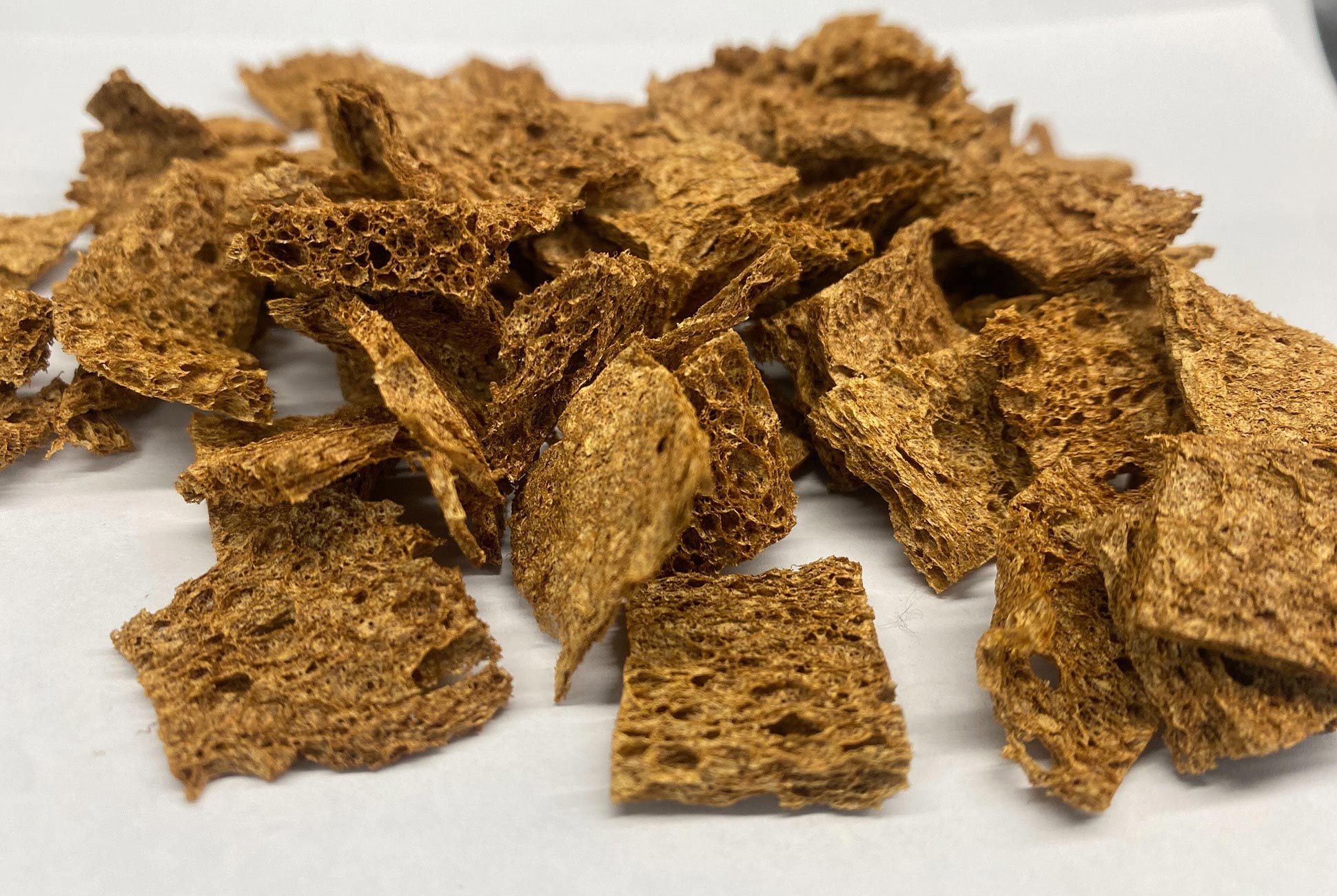
A specialized sponge absorbs pollutants and releases them for reuse—paving the way for cleaner waterways and resource recovery.
- Proven Contaminant Removal – The reusable sponge has successfully extracted oil, phosphate, and metals from polluted water.
- Enhanced Resource Recovery – A new breakthrough enables the sponge to capture valuable minerals like phosphate and metals while remaining reusable.
- Significant Pollution Reduction – Water contamination levels have dropped from 0.8 parts per million to undetectable levels using this technology.
New Solutions for Polluted Waterways
As waterways increasingly struggle with algae blooms and pollution from agricultural runoff and industrial waste, researchers are developing new ways to remove harmful substances like phosphate, copper, and zinc.
Existing solutions can be effective but are often expensive and single-use. However, scientists at Northwestern University have designed a specialized sponge that absorbs pollutants and then releases them when needed, offering a reusable and cost-efficient alternative.
This sponge is coated with nanoparticles that attract contaminants, allowing it to capture metals like zinc and copper, as well as phosphate. Previous versions have also successfully removed lead, microplastics, and oil from water. By adjusting pH levels, the sponge can release these captured materials, making it possible to recover valuable resources rather than simply disposing of them.
In a paper to be published today (February 5) in the American Chemical Society journal Environmental Science & Technology Water, researchers define a method to tailor their platform to specific Chicago pollutants and then selectively release them, giving resources that typically must be mined a potential for a second life.
A Versatile Cleanup Tool
“The technology can be used as a universal sorbent or ‘catch-all,’ or it can be tailored to certain groups of contaminants like metals, plastics or nutrients,” said principal investigator Vinayak Dravid.
Dravid is the Abraham Harris Professor of Materials Science and Engineering at Northwestern’s McCormick School of Engineering and a faculty affiliate of the Paula M. Trienens Institute for Sustainability and Energy. He is also the founding director of the Northwestern University Atomic and Nanoscale Characterization (NUANCE) Center as well as the Soft and Hybrid Nanotechnology Experimental (SHyNE) Resource, and also serves as the associate director for global programs at the International Institute of Nanotechnology.
What’s with the Sponge?
In its first iteration, the sponge platform was made of polyurethane and coated with a substance that attracted oil and repelled water. The newest version is a highly hydrophilic (water-loving) cellulose sponge coated with particles tailored to other pollutants. The sponge platform works so effectively because of its pores, providing lots of surface area where pollutants can attach.
Dravid has at times referred to the technology as a “Swiss Army knife” thanks to its versatility and ability to be used again and again. He founded NU startup Coral Innovations (formerly MFNS-Tech) to begin the process of commercializing the sponge-based technology for environmental remediation.
A One-Two P(h)unch Against Pollution
Stormwater treatment equipment manufacturer StormTrap, LLC learned about the platform and approached the team, asking about three specific pollutants heavily impacting Chicago. Hoping to add absorbent materials to their portfolio, StormTrap representatives asked if Dravid could get the concentration of pollutants down to untraceable amounts.
The Environmental Protection Agency sets levels for minerals based on human health that are at times higher than the amount considered safe from an environmental perspective, typically setting drinking water limits in the parts per million range when preventing algae blooms and other environmental impacts would require much smaller concentrations.
Extracting and Reusing Valuable Minerals
Developing the platform to capture copper, zinc, and phosphate was relatively easy, but then, Kelly Matuszewski, a Ph.D. student in the Dravid group and the paper’s first author, was tasked with determining a method to get the resources back. As stores of phosphate and metals in mines are depleted, this second step is becoming critical.
“We can’t just keep flushing these minerals down the toilet,” Matuszewski said. “We need to understand how they interact and find ways to actually utilize them.”
A Breakthrough in Pollutant Recovery
Matuszewski found that by lowering the pH, metals flush out of the sponge. Once copper and zinc are removed, the pH is then raised, at which point phosphate comes off the sponge. She found that even after five cycles of collecting and removing minerals, the sponge worked just as well, and she was able to deliver water with untraceable amounts of pollutants.
Matuszewski is a finalist in the FoundHer Spotlight, a competition for early career women scientists facilitated by Northwestern’s Querrey inQbation Lab. She will pitch on March 5 to the Northwestern Women’s Board, competing against seven other researchers.
Taking it to the Storm Drains
The partnership with StormTrap, LLC has allowed the team to assess the technology’s effectiveness and move quickly from the lab to the industry. Using the platform in real-life scenarios will be an important next step, as Matuszewski was working in a controlled environment in which each pollutant had the same relative concentration. The next phase will help them determine the amount of minerals a sponge can hold and allow them to partner with other Northwestern researchers working on creating cleaner waterways.
Reference: “Rinse, Recover, Repeat: pH-Assisted Selective Extraction of Phosphate and Metals with a Sponge Nanocomposite” by Kelly E. Matuszewski, Benjamin Shindel, Vikas Nandwana and Vinayak P. Dravid, 5 February 2025, ACS ES&T Water.
DOI: 10.1021/acsestwater.4c01234
The paper was funded by Trienens and StormTrap and is based on work related to The Great Lakes Water Innovation Engine supported by the National Science Foundation (grant number ITE-2315268).
Vinayak Dravid and Northwestern have financial interests (equities, royalties) in Coral Innovations.
Never miss a breakthrough: Join the SciTechDaily newsletter.
Follow us on Google and Google News.
1 Comment
BUT! What pollutants are produced, how much energy is used, in manufacturing this sponge? And what about disposal? Is it reusable? Just asking, because EV batteries, wind and solar have pretty high costs, though they are improving.