
Close Menu
    Facebook X (Twitter) Instagram
    SciTechDaily
    • Biology
    • Chemistry
    • Earth
    • Health
    • Physics
    • Science
    • Space
    • Technology
    Facebook X (Twitter) Pinterest YouTube RSS
    SciTechDaily
    Home»Space»Solar Power Satellite Hardware That Beams Energy to Earth Tested in Orbit
    Space

    Solar Power Satellite Hardware That Beams Energy to Earth Tested in Orbit

    By U.S. Naval Research LaboratoryJune 16, 2020No Comments3 Mins Read
    Facebook Twitter Pinterest Telegram LinkedIn WhatsApp Email Reddit
    Share
    Facebook Twitter LinkedIn Pinterest Telegram Email Reddit
    Photovoltaic Radio-frequency Antenna Module
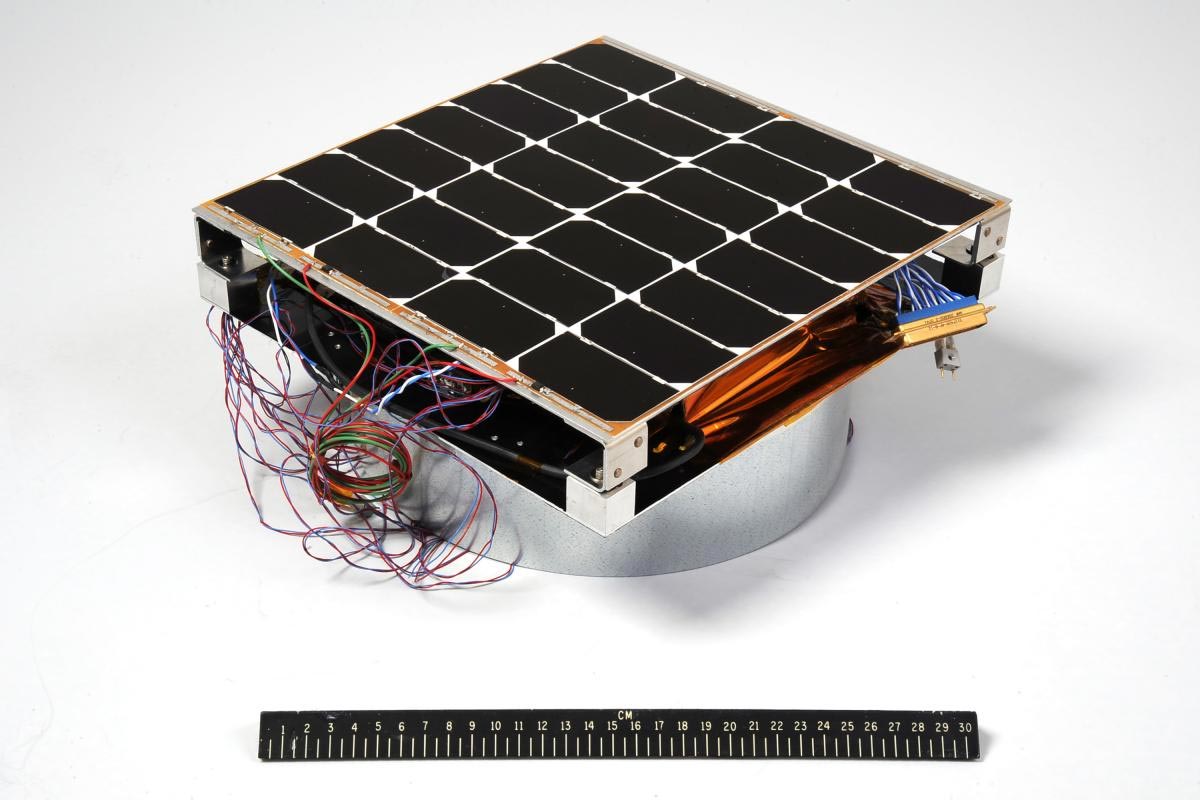
    Image of the Photovoltaic Radio-frequency Antenna Module (PRAM) with a 12-inch ruler for scale. The hardware is the first orbital experiment designed to convert sunlight for microwave power transmission for solar power satellites. Credit: U.S. Naval Research Laboratory

    U.S. Naval Research Laboratory engineers launched PRAM, the Photovoltaic Radio-frequency Antenna Module, aboard an Air Force X-37B Orbital Test Vehicle on May 17 as part of a comprehensive investigation into prospective terrestrial use of solar energy captured in space.

    “To our knowledge, this experiment is the first test in orbit of hardware designed specifically for solar power satellites, which could play a revolutionary role in our energy future,” said Paul Jaffe, PRAM principal investigator.

    The 12-inch square tile module will test the ability to harvest power from its solar panel and transform the energy to a radio frequency microwave.

    “PRAM converts sunlight for microwave power transmission. We could’ve also converted for optical power transmission,” said Chris Depuma, PRAM program manager. “Converting to optical might make more sense for lunar applications because there’s no atmosphere on the Moon. The disadvantage of optical is you could lose a lot of energy through clouds and atmosphere. “

    X-37B Orbital Test Vehicle
    The X-37B Orbital Test Vehicle sits on the runway during post-landing operations at Vandenberg Air Force Base, California. Technicians in self-contained atmospheric protective ensemble suits conducted initial checks on the vehicle and to ensure the area was safe. Credit: U.S. Air Force photo/Michael Stonecypher

    The use of solar energy to operate satellites began at the start of the space age with another NRL spacecraft: Vanguard I, the first satellite to have solar cells. This current experiment focuses on the energy conversion process and resulting thermal performance. The hardware will provide researchers with temperature data, along with PRAM’s efficiency in energy production. This information will drive the design of future space solar prototypes.

    Depending on the results, the team aims ultimately to build a fully-functional system on a dedicated spacecraft to test the transmission of energy back to Earth. The development of a space solar capability could potentially help provide energy to remote installations like forward operating bases and disaster response areas.

    This flight experiment enables researchers to test the hardware in actual space conditions. Incoming sunlight travels through the Earth’s atmosphere, both filtering the spectrum and reducing its brightness. A space solar system traveling above the atmosphere would catch more energy from each of the sunlight’s color bands.

    “There’s more blue in the spectrum in space, allowing you to add another layer to solar cells to take advantage of that,” Jaffe said. “This is one reason why the power per unit area of a solar panel in space is greater than on the ground.”

    The National Security Space Office recommended in a 2007 feasibility study to investigate solar power satellite technology. NRL’s expertise with solar-powered satellites since the late 1950s and long history as a pioneer in space, including in the development of GPS, led researchers to further explore this emergent field.

    Contributing and supporting partners for this effort included the Operational Energy Capability Improvement Fund in the Office of the Under Secretary of Defense for Research and Engineering, the U.S. Naval Research Laboratory, the Department of the Air Force Rapid Capabilities Office, the Department of Defense Space Test Program, Boeing, TSC Praxis Operations, Gulfview Research, Odin Engineering, and SpaceQuest.

    Never miss a breakthrough: Join the SciTechDaily newsletter.
    Follow us on Google and Google News.

    Energy Green U.S. Naval Research Laboratory
    Share. Facebook Twitter Pinterest LinkedIn Email Reddit

    Related Articles

    Massive Solar Storm Sparks Rare G4 Alert: What It Means for Earth

    DARPA’s Robots to the Rescue: Transforming Satellite Maintenance in Space

    Epic Comet Pass: Tsuchinshan-ATLAS Outshines Expectations With Brilliant Solar Passage

    Unlock the Sun’s Secrets: New Telescope Captures Jaw-Dropping Images

    A New Star on the Horizon: Intern Discovers Unknown Pulsar

    NASA’s Nuclear Horizons: Pioneering Fission Energy for the Moon, Mars, and Beyond

    Gamma Ray Breakthrough: Pulsars Propel Astrophysics Into a New Era

    Astonishing Magnetar Discovery Baffles Astronomers and Challenges Physics

    Nuclear Power on Moon: NASA Selects Design Concept for Fission Surface Power System

    Leave A Reply Cancel Reply

    • Facebook
    • Twitter
    • Pinterest
    • YouTube

    Don't Miss a Discovery

    Subscribe for the Latest in Science & Tech!

    Trending News

    289-Million-Year-Old Reptile Mummy Reveals Origin of Human Breathing System

    New Brain Discovery Challenges Long-Held Theory of Teenage Brain Development

    Scientists Discover Plants “Scream” – We Just Couldn’t Hear Them Until Now

    Scientists Discover a Surprising Reason Intermittent Fasting Extends Life

    This Simple Fruit Wash Could Make Produce Safer and Last Days Longer

    Scientists Say Adding This Unusual Seafood to Your Diet Could Reverse Signs of Aging

    Scientists Say a Hidden Structure May Exist Inside Earth’s Core

    Doctors Surprised by the Power of a Simple Drug Against Colon Cancer

    Follow SciTechDaily
    • Facebook
    • Twitter
    • YouTube
    • Pinterest
    • Newsletter
    • RSS
    SciTech News
    • Biology News
    • Chemistry News
    • Earth News
    • Health News
    • Physics News
    • Science News
    • Space News
    • Technology News
    Recent Posts
    • Scientists Propose Radical New Way To Detect Alien Life – Without Traditional Biosignatures
    • Scientists Just Discovered Light Can Actually Slow Plant Growth
    • Scientists Finally Solved One of Water’s Biggest Mysteries
    • 7,000-Year-Old DNA Rewrites the Story of the “Neolithic Revolution”
    • Missing Medieval Relic of Legendary English King Found After Being Missing for 40 Years
    Copyright © 1998 - 2026 SciTechDaily. All Rights Reserved.
    • Science News
    • About
    • Contact
    • Editorial Board
    • Privacy Policy
    • Terms of Use

    Type above and press Enter to search. Press Esc to cancel.