
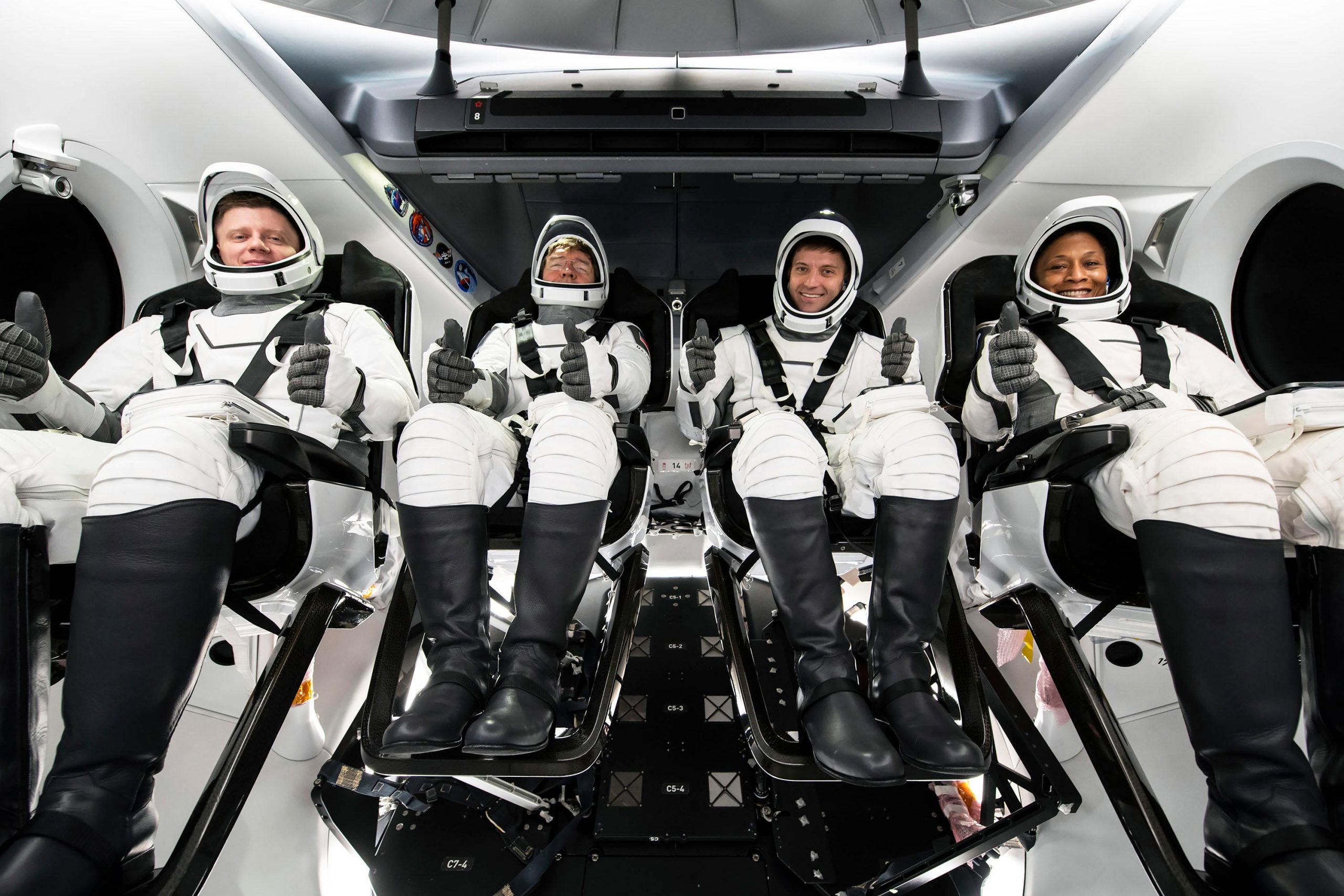
After seven months aboard the ISS, NASA’s Crew-8 has successfully returned, leaving behind significant contributions to space research including in-space manufacturing, cancer treatments, and genetic research.
After seven months aboard the International Space Station (ISS), NASA’s eighth rotational SpaceX crew mission, Crew-8, has returned safely, splashing down off the coast of Florida. This mission, part of NASA’s Commercial Crew Program, included NASA astronauts Matthew Dominick, Michael Barratt, and Jeanette Epps, along with Roscosmos cosmonaut Alexander Grebenkin. Throughout their time on the station, the Crew-8 astronauts contributed to numerous research investigations led by the ISS National Laboratory.
These investigations covered a wide range of topics, including in-space production applications (InSPA), life and physical sciences, and technology development. The InSPA program, sponsored by NASA and the ISS National Lab, explores space-based manufacturing and production to develop, test, and refine products and processes with potential economic impact. This research not only aims to bring practical value to humanity but also to stimulate a thriving market in low Earth orbit (LEO)—the region within 2,000 km (1,200 miles) of Earth’s surface, where the ISS orbits at about 250 miles.

Below are a few of the ISS National Lab-sponsored projects the Crew-8 NASA astronauts worked on during their mission.
- Several investigations focused on in-space production applications, an increasingly important area of emphasis for the ISS National Lab and NASA.
- A project from Cedars Sinai Medical Center aims to establish methods to support the in-space manufacturing of stem cells, which can be matured into a wide variety of tissues. These methods will be used for future large-scale in-space biomanufacturing of stem cell-derived products, which could lead to new treatments for heart disease, neurodegenerative diseases, and many other conditions.
- Redwire Corporation partnered with Eli Lilly and Company and Butler University on a series of investigations leveraging Redwire’s Pharmaceutical In-space Laboratory (PIL-BOX), a platform to crystallize organic molecules in microgravity. The condition of perceived weightlessness created when an object is in free fall, for example when an object is in orbital motion. Microgravity alters many observable phenomena within the physical and life sciences, allowing scientists to study things in ways not possible on Earth. The International Space Station provides access to a persistent microgravity environment.. Results from this research could lead to improved therapeutics to treat an array of conditions. These projects continue Eli Lilly’s space journey, as the company has launched multiple investigations to the orbiting laboratory over the years for the benefit of patient care on Earth.
- The astronauts supported the third experiment in a series of projects from the University of Notre Dame to improve ultra-sensitive biosensors. The biosensors can detect trace substances in liquids, including early cancer biomarkers. By using laser heating to control bubble formation in microgravity, the team improved particle collection—a key step in boosting sensor sensitivity. This research, funded by the U.S. National Science Foundation, could transform early and asymptomatic cancer detection and other medical diagnostics.
- The crew conducted phase two of a technology development project from Sphere Entertainment to test Big Sky—the company’s new ultra-high-resolution, single-sensor camera—on the space station. In the first phase of the project, which launched in November 2022, astronauts tested a commercial off-the-shelf camera on the ISS to collect baseline information. During the second phase, the astronauts tested Big Sky to validate the camera’s function, operations, and video downlink capabilities in microgravity. Big Sky is being developed by Sphere Entertainment to capture content for Sphere, the next-generation entertainment medium in Las Vegas.
- In the final days before their departure from the space station, the Crew-8 astronauts supported projects that recently launched on NASA’s ninth rotational crew mission (Crew-9).
- One is a student-led project from Isabel Jiang, a recent high school graduate from Hillsborough, CA, who is now in her first year at Yale. Jiang is the winner of the 2023 Genes in Space student research competition, founded by Boeing and miniPCR bio and supported by the ISS National Lab and New England Biolabs. Jiang’s experiment investigates the effect of radiation and the space environment on mechanisms for gene editing. Results could help develop methods to better protect astronauts and shed light on genetic risks for certain diseases during spaceflight.
- Another is an investigation from the U.S. Air Force Academy and Rhodium Scientific to compare the root growth of Arabidopsis plants, a member of the mustard family, at two different orbital altitudes. Plants grown on the space station in LEO for four to six days will be compared with similar plants grown on the recent Polaris Dawn mission, which flew in the same type of vehicle at a higher orbit for approximately the same amount of time. Results could provide insights into the production of crops for long-duration space missions and in high-radiation environments.
Never miss a breakthrough: Join the SciTechDaily newsletter.
Follow us on Google and Google News.