
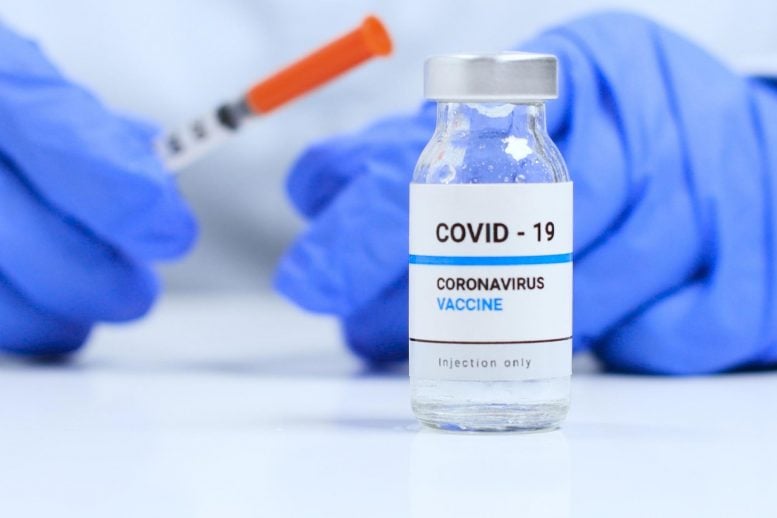
A Stanford-led study reveals that the second dose of the Pfizer COVID-19 vaccine dramatically boosts not just antibody levels but also T-cell and innate immune responses.
The second dose of a COVID-19 vaccine induces a powerful boost to a part of the immune system that provides broad antiviral protection, according to a study led by investigators at the Stanford University School of Medicine.
The finding strongly supports the view that the second shot should not be skipped.
“Despite their outstanding efficacy, little is known about how exactly RNA vaccines work,” said Bali Pulendran, PhD, professor of pathology and of microbiology and immunology. “So we probed the immune response induced by one of them in exquisite detail.”
The study, published July 12 in Nature, was designed to find out exactly what effects the vaccine, marketed by Pfizer Inc., has on the numerous components of the immune response.
The researchers analyzed blood samples from individuals inoculated with the vaccine. They counted antibodies, measured levels of immune-signaling proteins and characterized the expression of every single gene in the genome of 242,479 separate immune cells’ type and status.
“The world’s attention has recently been fixed on COVID-19 vaccines, particularly on the new RNA vaccines,” said Pulendran, the Violetta L. Horton Professor II.
He shares senior authorship of the study with Kari Nadeau, MD, PhD, the Naddisy Foundation Professor of Pediatric Food, Allergy, Immunology, and Asthma and professor of pediatrics, and Purvesh Khatri, PhD, associate professor of biomedical informatics and of biomedical data science. The study’s lead authors are Prabhu Arunachalam, PhD, a senior research scientist in Pulendran’s lab; medical student Madeleine Scott, PhD, a former graduate student in Khatri’s lab; and Thomas Hagan, PhD, a former postdoctoral scholar in Pulendran’s Stanford lab and now an assistant professor at the Yerkes National Primate Research Center in Atlanta.
Uncharted Territory
“This is the first time RNA vaccines have ever been given to humans, and we have no clue as to how they do what they do: offer 95% protection against COVID-19,” said Pulendran.
Traditionally, the chief immunological basis for approval of new vaccines has been their ability to induce neutralizing antibodies: individualized proteins, created by immune cells called B cells, that can tack themselves to a virus and block it from infecting cells.
“Antibodies are easy to measure,” Pulendran said. “But the immune system is much more complicated than that. Antibodies alone don’t come close to fully reflecting its complexity and potential range of protection.”
Pulendran and his colleagues assessed goings-on among all the immune cell types influenced by the vaccine: their numbers, their activation levels, the genes they express and the proteins and metabolites they manufacture and secrete upon inoculation.
One key immune-system component examined by Pulendran and his colleagues was T cells: search-and-destroy immune cells that don’t attach themselves to viral particles as antibodies do but rather probe the body’s tissues for cells bearing telltale signs of viral infections. On finding them, they tear those cells up.
In addition, the innate immune system, an assortment of first-responder cells, is now understood to be of immense importance. It’s the body’s sixth sense, Pulendran said, whose constituent cells are the first to become aware of a pathogen’s presence. Although they’re not good at distinguishing among separate pathogens, they secrete “starting gun” signaling proteins that launch the response of the adaptive immune system — the B and T cells that attack specific viral or bacterial species or strains. During the week or so it takes for the adaptive immune system to rev up, innate immune cells perform the mission-critical task of holding incipient infections at bay by gobbling up — or firing noxious substances, albeit somewhat indiscriminately, at — whatever looks like a pathogen to them.
A Different Type of Vaccine
The Pfizer vaccine, like the one made by Moderna Inc., works quite differently from the classic vaccines composed of live or dead pathogens, individual proteins or carbohydrates that train the immune system to zero in on a particular microbe and wipe it out. The Pfizer and Moderna vaccines instead contain genetic recipes for manufacturing the spike protein that SARS-CoV-2, the virus that causes COVID-19, uses to latch on to cells it infects.
In December 2020, Stanford Medicine began inoculating people with the Pfizer vaccine. This spurred Pulendran’s desire to assemble a complete report card on the immune response to it.
The team selected 56 healthy volunteers and drew blood samples from them at multiple time points preceding and following the first and second shots. The researchers found that the first shot increases SARS-CoV-2-specific antibody levels, as expected, but not nearly as much as the second shot does. The second shot also does things the first shot doesn’t do, or barely does.
“The second shot has powerful beneficial effects that far exceed those of the first shot,” Pulendran said. “It stimulated a manifold increase in antibody levels, a terrific T-cell response that was absent after the first shot alone, and a strikingly enhanced innate immune response.”
Unexpectedly, Pulendran said, the vaccine — particularly the second dose — caused the massive mobilization of a newly discovered group of first-responder cells that are normally scarce and quiescent.
First identified in a recent vaccine study led by Pulendran, these cells — a small subset of generally abundant cells called monocytes that express high levels of antiviral genes — barely budge in response to an actual COVID-19 infection. But the Pfizer vaccine induced them.
This special group of monocytes, which are part of the innate museum, constituted only 0.01% of all circulating blood cells prior to vaccination. But after the second Pfizer-vaccine shot, their numbers expanded 100-fold to account for a full 1% of all blood cells. In addition, their disposition became less inflammatory but more intensely antiviral. They seem uniquely capable of providing broad protection against diverse viral infections, Pulendran said.
“The extraordinary increase in the frequency of these cells, just a day following booster immunization, is surprising,” Pulendran said. “It’s possible that these cells may be able to mount a holding action against not only SARS-CoV-2 but against other viruses as well.”
Reference: “Systems vaccinology of the BNT162b2 mRNA vaccine in humans” by Prabhu S. Arunachalam, Madeleine K. D. Scott, Thomas Hagan, Chunfeng Li, Yupeng Feng, Florian Wimmers, Lilit Grigoryan, Meera Trisal, Venkata Viswanadh Edara, Lilin Lai, Sarah Esther Chang, Allan Feng, Shaurya Dhingra, Mihir Shah, Alexandra S. Lee, Sharon Chinthrajah, Sayantani B. Sindher, Vamsee Mallajosyula, Fei Gao, Natalia Sigal, Sangeeta Kowli, Sheena Gupta, Kathryn Pellegrini, Gregory Tharp, Sofia Maysel-Auslender, Sydney Hamilton, Hadj Aoued, Kevin Hrusovsky, Mark Roskey, Steven E. Bosinger, Holden T. Maecker, Scott D. Boyd, Mark M. Davis, Paul J. Utz, Mehul S. Suthar, Purvesh Khatri, Kari C. Nadeau and Bali Pulendran, 12 July 2021, Nature.
DOI: 10.1038/s41586-021-03791-x
Pulendran is a member of the Institute for Immunity Transplantation & Infection and Stanford Bio-X and a faculty fellow of Stanford ChEM-H.
Other Stanford study co-authors are basic life science research scientist Chunfeng Li, PhD; research scientists Natalia Sigal, PhD, Sangeeta Kowli, PhD, and Sheena Gupta, PhD; postdoctoral scholars Yupeng Feng, PhD, Florian Wimmers, PhD, Vamsee Mallajosyula, PhD, and Fei Gao, PhD; graduate student Lilit Grigoryan; life science research professionals Sofia Maysel-Auslender, Meera Trisal and Allan Feng; former life science research professional Shaurya Dhingra; undergraduate student Sarah Chang; clinical research assistant Mihir Shah; clinical and laboratory research assistant Allie Lee; Sharon Chinthrajah, MD, associate professor of medicine; Sayantani Sindher, MD, clinical associate professor of medicine; Holden Maecker, PhD, professor of microbiology and immunology and director of Stanford’s Human Immune Monitoring Center; Scott Boyd, PhD, associate professor of pathology; Mark Davis, PhD, professor of microbiology and director of Stanford’s Institute for Immunity, Transplantation and Infection; and PJ Utz, MD, professor of medicine.
Researchers at Billerica, Massachusetts-based Quanterix and Emory University also participated in the study.
The work was funded by the National Institutes of Health (grants U19AI090023, U19AI057266, U24AI120134, P51OD011132, S10OD026799, R01AI123197-04, U01AI150741-01S1 and AI057229), Open Philanthropy, the Sean Parker Cancer Institute, the Soffer Endowment, the Violetta Horton Endowment, Stanford University, the Henry Gustav Floren Trust, the Parker Foundation, the Cooperative Centers on Human Immunology and the Crown Foundation.
Stanford’s Institute for Immunity, Transplantation and Infection also supported the work.
Never miss a breakthrough: Join the SciTechDaily newsletter.
Follow us on Google and Google News.