
Close Menu
    Facebook X (Twitter) Instagram
    SciTechDaily
    • Biology
    • Chemistry
    • Earth
    • Health
    • Physics
    • Science
    • Space
    • Technology
    Facebook X (Twitter) Pinterest YouTube RSS
    SciTechDaily
    Home»Health»Study Is First to Identify Potential Therapeutic Targets for Covid-19 Using Blood Samples From Critically Ill Patients
    Health

    Study Is First to Identify Potential Therapeutic Targets for Covid-19 Using Blood Samples From Critically Ill Patients

    By Lawson Health Research InstituteJune 30, 2020No Comments3 Mins Read
    Facebook Twitter Pinterest Telegram LinkedIn WhatsApp Email Reddit
    Share
    Facebook Twitter LinkedIn Pinterest Telegram Email Reddit
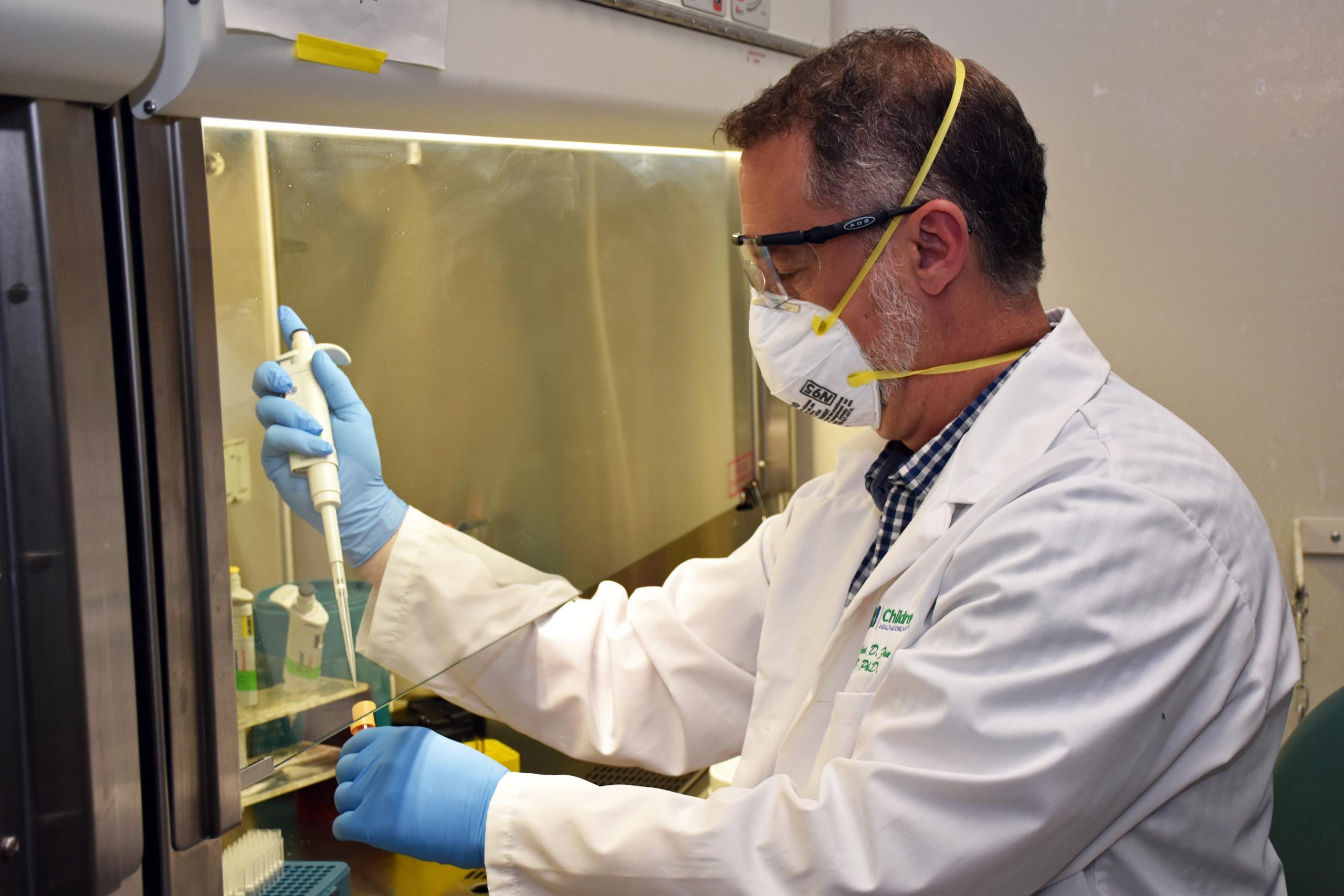
    Dr. Douglas Fraser
    Dr. Douglas Fraser led a research team that identified a unique pattern of six molecules that could be used as therapeutic targets to treat the COVID-19 virus. Credit: Lawson Health Research Institute

    Researchers profile the body’s immune response in critically ill patients.

    A team from Lawson Health Research Institute and Western University are the first in the world to profile the body’s immune response to COVID-19. By studying blood samples from critically ill patients at London Health Sciences Centre (LHSC), the research team identified a unique pattern of six molecules that could be used as therapeutic targets to treat the virus. The study was recently published in Critical Care Explorations.
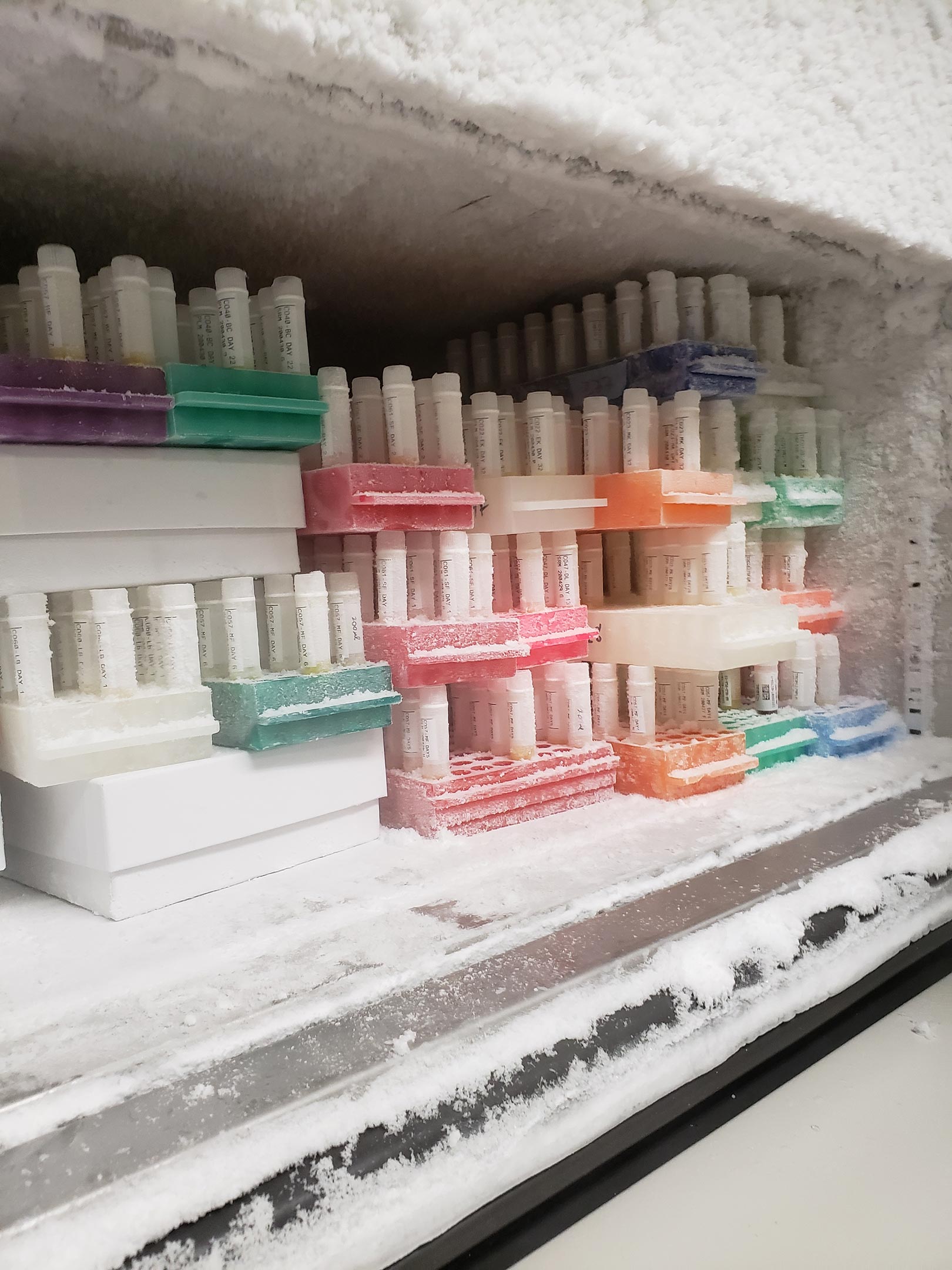
    COVID-19 Blood Samples
    Blood samples from critically ill COVID-19 patients. Credit: Lawson Health Research Institute

    Since the pandemic’s start there have been reports that the immune system can overreact to the virus and cause a cytokine storm – elevated levels of inflammatory molecules that damage healthy cells.

    “Clinicians have been trying to address this hyperinflammation but without evidence of what to target,” explains Dr. Douglas Fraser, lead researcher from Lawson and Western’s Schulich School of Medicine & Dentistry and Critical Care Physician at LHSC. “Our study takes away the guessing by identifying potential therapeutic targets for the first time.”

    The study included 30 participants: 10 COVID-19 patients and 10 patients with other infections admitted to LHSC’s intensive care unit (ICU), as well as 10 healthy control participants. Blood was drawn daily for the first seven days of ICU admission, processed in a lab and then analyzed using statistical methods and artificial intelligence (AI). 

    “Our study takes away the guessing by identifying potential therapeutic targets for the first time.” Dr. Douglas Fraser

    Critically Ill COVID-19 Patient Blood Collection
    A blood sample from a critically ill COVID-19 patient is collected at London Health Sciences Centre. Credit: Lawson Health Research Institute

    The research team studied 57 inflammatory molecules. They found that six molecules were uniquely elevated in COVID-19 ICU patients (tumor necrosis factor, granzyme B, heat shock protein 70, interleukin-18, interferon-gamma-inducible protein 10 and elastase 2). 

    The team also used AI to validate their results. They found that inflammation profiling was able to predict the presence of COVID-19 in critically ill patients with 98 percent accuracy. They also found that one of the molecules (heat shock protein 70) was strongly associated with an increased risk of death when measured in the blood early during the illness.

    “Understanding the immune response is paramount to finding the best treatments,” says Dr. Fraser “Our next step is to test drugs that block the harmful effects of several of these molecules while still allowing the immune system to fight the virus.”

    Reference: “Inflammation Profiling of Critically Ill Coronavirus Disease 2019 Patients” by Fraser, Douglas D. MD, PhD; Cepinskas, Gediminas DVM, PhD; Slessarev, Marat MD, MSc; Martin, Claudio MD, MSc; Daley, Mark PhD; Miller, Michael R. PhD; O’Gorman, David B. PhD; Gill, Sean E. PhD; Patterson, Eric K. PhD; dos Santos, Claudia C. MD, MSc; on behalf of the Lawson COVID-19 Study Team, 25 June 2020, Critical Care Explorations.
    DOI: 10.1097/CCE.0000000000000144

    The study was made possible with donor support to London Health Sciences Foundation. It also received additional funding from Lawson, Western and the AMOSO Innovation Fund.

    Never miss a breakthrough: Join the SciTechDaily newsletter.
    Follow us on Google and Google News.

    COVID-19 Immunology Infectious Diseases Public Health
    Share. Facebook Twitter Pinterest LinkedIn Email Reddit

    Related Articles

    A Big Step Closer to a Universal Antibody Test for COVID-19

    Small Neutralizing Antibody Identified That May Prevent COVID-19 Infection

    Herd Immunity to COVID-19 Fails to Materialize in Sweden

    Research Shows Exposure to Common Cold Coronaviruses Can Teach the Immune System to Recognize SARS-CoV-2

    Yale to Lead Trial of Drug for Treating COVID-19 – Found Most Effective in Combatting SARS-CoV-2 Out of 13,000 Existing Drugs

    Common Molecular Feature of Antibodies That Neutralize SARS-CoV-2 Discovered, Boosting COVID-19 Vaccine Prospects

    How Many People Actually Have COVID-19? Significant Global Differences in Undetected Cases

    FDA Approved Drug May Help Calm Cytokine Storm in COVID-19

    New Study Outlines a Roadmap for Effective Treatment of COVID-19

    Leave A Reply Cancel Reply

    • Facebook
    • Twitter
    • Pinterest
    • YouTube

    Don't Miss a Discovery

    Subscribe for the Latest in Science & Tech!

    Trending News

    Scientists Discover 132-Million-Year-Old Dinosaur Tracks on South Africa’s Coast

    Scientists Uncover the Secret Ingredient Behind the Spark That May Have Started Life on Earth

    Physicists Observe Matter in Two Places at Once in Mind-Bending Quantum Experiment

    Stanford Scientists Discover Hidden Brain Circuit That Fuels Chronic Pain

    New Study Reveals Why Ozempic Works Better for Some People Than Others

    Climate Change Is Altering a Key Greenhouse Gas in a Way Scientists Didn’t Expect

    New Study Suggests Gravitational Waves May Have Created Dark Matter

    Scientists Discover Why the Brain Gets Stuck in Schizophrenia

    Follow SciTechDaily
    • Facebook
    • Twitter
    • YouTube
    • Pinterest
    • Newsletter
    • RSS
    SciTech News
    • Biology News
    • Chemistry News
    • Earth News
    • Health News
    • Physics News
    • Science News
    • Space News
    • Technology News
    Recent Posts
    • 320 Light-Years Away, a Planet Confirms a Fundamental Cosmic Assumption
    • Astronomers Solve Decades-Long Mystery About Saturn’s Spin – “Something Strange Was Happening”
    • Scientists Uncover Strange New State of Matter Inside Uranus and Neptune
    • The Crown Jewel of Dentistry? Breakthrough Tech Could Transform Tooth Repair
    • The Surprising Non-Medical Factor That Determines Cancer Survival
    Copyright © 1998 - 2026 SciTechDaily. All Rights Reserved.
    • Science News
    • About
    • Contact
    • Editorial Board
    • Privacy Policy
    • Terms of Use

    Type above and press Enter to search. Press Esc to cancel.