
Close Menu
    Facebook X (Twitter) Instagram
    SciTechDaily
    • Biology
    • Chemistry
    • Earth
    • Health
    • Physics
    • Science
    • Space
    • Technology
    Facebook X (Twitter) Pinterest YouTube RSS
    SciTechDaily
    Home»Earth»Sulfur Skies Over La Palma – No Signs That Cumbre Vieja Volcanic Eruption Is Calming
    Earth

    Sulfur Skies Over La Palma – No Signs That Cumbre Vieja Volcanic Eruption Is Calming

    By Adam Voiland, NASA Earth ObservatoryOctober 21, 2021No Comments3 Mins Read
    Facebook Twitter Pinterest Telegram LinkedIn WhatsApp Email Reddit
    Share
    Facebook Twitter LinkedIn Pinterest Telegram Email Reddit
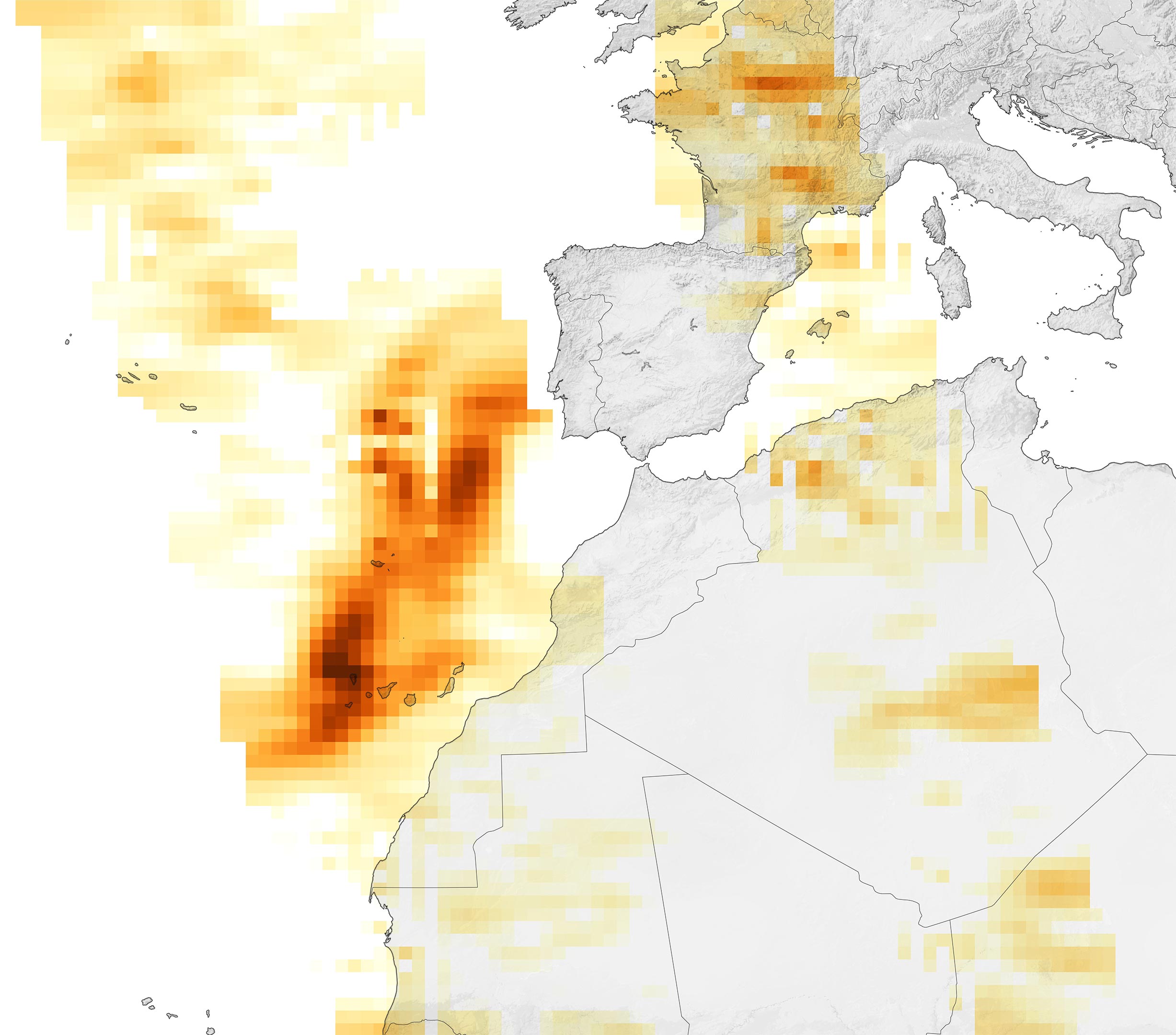
    Sulfur Dioxide La Palma Annotated
    Sulfur Dioxide La Palma,  October 18, 2021

    Volcanoes emit sulfur dioxide — a pungent gas that reacts with oxygen and moisture in the air to produce a haze called vog.

    More than a month after Cumbre Vieja began erupting, the volcano in the Canary Islands shows no signs of calming. In fact, in the past week, increasingly intense earthquakes, lava fountains, and emissions of ash and volcanic gases have rocked La Palma.

    One new breakout lava flow has been advancing through a developed area on the island’s western flank, consuming buildings and fields in its path. Since the eruption began in September 2021, nearly 2,000 homes and hundreds of hectares of farmland have been destroyed by lava flows.

    Among the substances pouring from the volcano is sulfur dioxide (SO2), a pungent gas that reacts with oxygen and moisture to form a gray volcanic haze called vog. Vog is made up of sulfuric acid and sulfate aerosols.

    On October 18, 2021, NASA’s Aqua satellite acquired imagery showing faint visible traces of vog streaming towards Europe. A few minutes later, the Ozone Monitoring Instrument (OMI) on NASA’s Aura satellite took measurements of the SO2 in the plume. The map above shows where Aura detected SO2 in the planetary boundary layer, the lowest part of the atmosphere. The sensor’s spatial resolution of 13 square kilometers (5 square miles) gives the data a blocky quality.

    While weather patterns typically blow vog west from Cumbre Vieja over the Atlantic Ocean, shifts in the winds periodically bring plumes northeast toward Europe. “This plume is diffuse enough that I expect minimal impacts on surface air quality and minimal acid rain over Europe in comparison to local sources of air pollution,” said Michigan Tech volcanologist Simon Carn.

    Satellite observations indicate Cumbre Vieja has released about 0.5 teragrams (Tg) of sulfur dioxide since the eruption began, enough to make it one of the top 50 SO2 emissions events since satellites began measuring volcanic eruptions in 1978. However, Cumbre Vieja is still far behind other recent effusive eruptions that persisted for months, such as Kilauea (Hawaii) in 2018 and Holuhraun (Iceland) in 2014.

    Since the Cumbre Vieja eruption is only modestly explosive (a 2 out of 8 on the Volcanic Explosivity Index), the sulfur dioxide has remained relatively low in the atmosphere and well below the stratosphere. “I don’t expect any lasting global or regional climate impacts. The sulfur dioxide emissions aren’t high enough,” said Carn. “However, the SO2 emissions might have some localized environmental impacts on La Palma and other Canary islands, such as damage to vegetation due to acid deposition and problems with water quality.”

    NASA Earth Observatory image by Joshua Stevens, using OMI data from NASA’s Aura satellite.

    Never miss a breakthrough: Join the SciTechDaily newsletter.
    Follow us on Google and Google News.

    NASA NASA Earth Observatory Pollution Volcano
    Share. Facebook Twitter Pinterest LinkedIn Email Reddit

    Related Articles

    Volcanic Eruption Lights Up Iceland Following Swarms of Small Earthquakes

    Unexpected Decrease in Air Pollution Over Parts of Africa

    A Nighttime Glow Over Mount Etna – Highly Active Italian Volcano

    Socked in Stratovolcano: Astronaut on ISS Captures Incredible View of Uninhabited Atlasov Island

    Kilauea’s Lava Lake Returns – Hawaii’s Most Active Volcano Is Erupting Again

    “Smoking Mountain” – An Outburst From Popocatépetl Volcano in Mexico

    Newberry Volcano Photographed by Astronaut Onboard the International Space Station

    Young Volcanic Island Nishinoshima Belches Ash and Lava As It Grows in the Pacific

    Unusual “Volcano Track” Clouds Investigated

    Leave A Reply Cancel Reply

    • Facebook
    • Twitter
    • Pinterest
    • YouTube

    Don't Miss a Discovery

    Subscribe for the Latest in Science & Tech!

    Trending News

    Breakthrough Bowel Cancer Trial Leaves Patients Cancer-Free for Nearly 3 Years

    Natural Compound Shows Powerful Potential Against Rheumatoid Arthritis

    100,000-Year-Old Neanderthal Fossils in Poland Reveal Unexpected Genetic Connections

    Simple “Gut Reset” May Prevent Weight Gain After Ozempic or Wegovy

    2.8 Days to Disaster: Scientists Warn Low Earth Orbit Could Suddenly Collapse

    Common Food Compound Shows Surprising Power Against Superbugs

    5 Simple Ways To Remember More and Forget Less

    The Atomic Gap That Could Cost the Semiconductor Industry Billions

    Follow SciTechDaily
    • Facebook
    • Twitter
    • YouTube
    • Pinterest
    • Newsletter
    • RSS
    SciTech News
    • Biology News
    • Chemistry News
    • Earth News
    • Health News
    • Physics News
    • Science News
    • Space News
    • Technology News
    Recent Posts
    • After 37 Years, the World’s Longest-Running Soil Warming Experiment Uncovers a Startling Climate Secret
    • NASA Satellite Captures First-Ever High-Res View of Massive Pacific Tsunami
    • ADHD Isn’t Just a Deficit: Study Reveals Powerful Hidden Strengths
    • Scientists Uncover “Astonishing” Hidden Property of Light
    • Scientists Discover Stem Cells That Could Regrow Teeth and Bone
    Copyright © 1998 - 2026 SciTechDaily. All Rights Reserved.
    • Science News
    • About
    • Contact
    • Editorial Board
    • Privacy Policy
    • Terms of Use

    Type above and press Enter to search. Press Esc to cancel.