
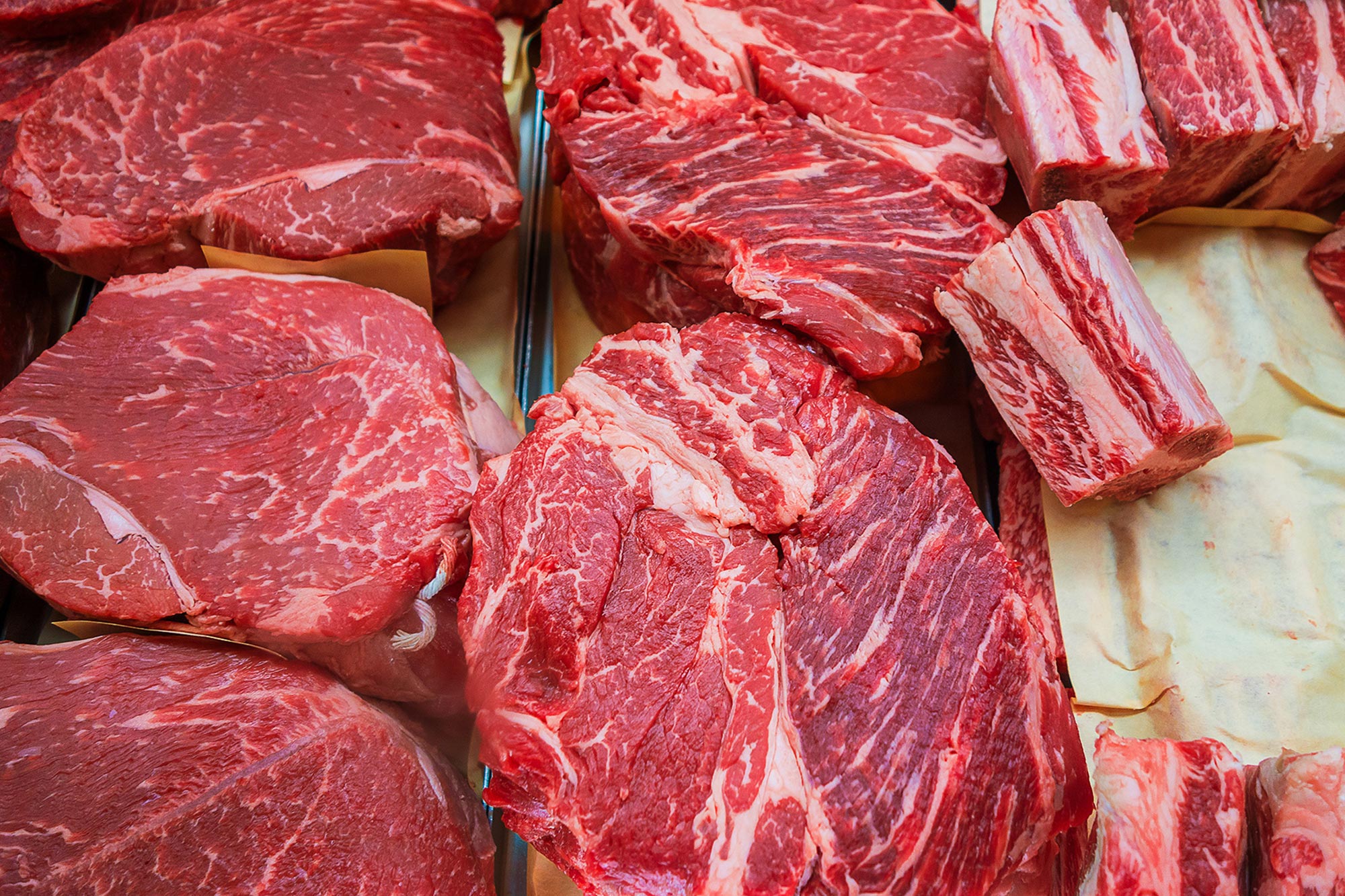
Research from Harvard University reveals that high intake of heme iron, found in red meat, is associated with a 26% increased risk of type 2 diabetes.
- Researchers identified a significant link between heme iron—iron found in red meat and other animal products —and risk of type 2 diabetes (T2D), as well as the metabolic pathways underlying the link.
- Non-heme iron—iron found in plant-based foods—was not associated with risk of T2D.
- The study suggests that cutting down on heme iron from red meat and adopting a plant-rich diet can help lower diabetes risk. And it raises concerns about the addition of heme to increasingly popular plant-based meat alternatives.
Iron Intake and Diabetes Risk
Higher intake of heme iron, the type found in red meat and other animal products—as opposed to non-heme iron, found mostly in plant-based foods—was associated with a higher risk of developing type 2 diabetes (T2D) in a new study led by researchers at Harvard T.H. Chan School of Public Health. While the link between heme iron and T2D has been reported previously, the study’s findings more clearly establish and explain the link.
“Compared to prior studies that relied solely on epidemiological data, we integrated multiple layers of information, including epidemiological data, conventional metabolic biomarkers, and cutting-edge metabolomics,” said lead author Fenglei Wang, research associate in the Department of Nutrition. “This allowed us to achieve a more comprehensive understanding of the association between iron intake and T2D risk, as well as potential metabolic pathways underlying this association.”
The study was published on August 13 in the journal Nature Metabolism.
Longitudinal Study Findings
The researchers assessed the link between iron and T2D using 36 years of dietary reports from 206,615 adults enrolled in the Nurses’ Health Studies I and II and the Health Professionals Follow-up Study. They examined participants’ intake of various forms of iron—total, heme, non-heme, dietary (from foods), and supplemental (from supplements)—and their T2D status, controlling for other health and lifestyle factors.
The researchers also analyzed the biological mechanisms underpinning heme iron’s relationship to T2D among smaller subsets of the participants. They looked at 37,544 participants’ plasma metabolic biomarkers, including those related to insulin levels, blood sugar, blood lipids, inflammation, and two biomarkers of iron metabolism. They then looked at 9,024 participants’ metabolomic profiles—plasma levels of small-molecule metabolites, which are substances derived from bodily processes such as breaking down food or chemicals.
Associations With Diabetes and Dietary Implications
The study found a significant association between higher heme iron intake and T2D risk. Participants in the highest intake group had a 26% higher risk of developing T2D than those in the lowest intake group. In addition, the researchers found that heme iron accounted for more than half of the T2D risk associated with unprocessed red meat and a moderate proportion of the risk for several T2D-related dietary patterns. In line with previous studies, the researchers found no significant associations between intakes of non-heme iron from diet or supplements and risk of T2D.
The study also found that higher heme iron intake was associated with blood metabolic biomarkers associated with T2D. A higher heme iron intake was associated with higher levels of biomarkers such as C-peptide, triglycerides, C-reactive protein, leptin, and markers of iron overload, as well as lower levels of beneficial biomarkers like HDL cholesterol and adiponectin.
The researchers also identified a dozen blood metabolites—including L-valine, L-lysine, uric acid, and several lipid metabolites—that may play a role in the link between heme iron intake and TD2 risk. These metabolites have been previously associated with risk of T2D.
Implications for Public Health and Dietary Recommendations
On a population level, the study findings carry important implications for dietary guidelines and public health strategies to reduce rates of diabetes, according to the researchers. In particular, the findings raise concerns about the addition of heme to plant-based meat alternatives to enhance their meaty flavor and appearance. These products are gaining in popularity, but health effects warrant further investigation.
“This study underscores the importance of healthy dietary choices in diabetes prevention,” said corresponding author Frank Hu, Fredrick J. Stare Professor of Nutrition and Epidemiology. “Reducing heme iron intake, particularly from red meat, and adopting a more plant-based diet can be effective strategies in lowering diabetes risk.”
The researchers noted that the study had several limitations, including the potential for incomplete accounting for confounders and measurement errors in the epidemiological data. In addition, the findings—based on a study population that was mostly white—need to be replicated in other racial and ethnic groups.
Reference: “Integration of epidemiological and blood biomarker analysis links haem iron intake to increased type 2 diabetes risk” by Fenglei Wang, Andrea J. Glenn, Anne-Julie Tessier, Zhendong Mei, Danielle E. Haslam, Marta Guasch-Ferré, Deirdre K. Tobias, A. Heather Eliassen, JoAnn E. Manson, Clary Clish, Kyu Ha Lee, Eric B. Rimm, Dong D. Wang, Qi Sun, Liming Liang, Walter C. Willett and Frank B. Hu, 13 August 2024, Nature Metabolism.
DOI: 10.1038/s42255-024-01109-5
Other Harvard Chan authors included Andrea Glenn, Anne-Julie Tessier, Danielle Haslam, Marta Guasch-Ferré, Deirdre Tobias, Heather Eliassen, JoAnn Manson, Kyu Ha Lee, Eric Rimm, Dong Wang, Qi Sun, Liming Liang, and Walter Willett.
“Integration of epidemiological and blood biomarker analysis links heme iron intake to increased type 2 diabetes risk,” Fenglei Wang, Andrea J. Glenn, Anne-Julie Tessier, Zhendong Mei, Danielle E. Haslam, Marta Guasch-Ferré, Deirdre K. Tobias, A. Heather Eliassen, JoAnn E. Manson, Clary Clish, Kyu Ha Lee, Eric B. Rimm, Dong D. Wang, Qi Sun, Liming Liang, Walter C. Willett, Frank B. Hu, Nature Metabolism, August 13, 2024, doi: 10.1038/s42255-024-01109-5
Never miss a breakthrough: Join the SciTechDaily newsletter.
Follow us on Google and Google News.
8 Comments
“The researchers noted that the study had several limitations, including the potential for incomplete accounting for confounders and measurement errors in the epidemiological data.”
While they may have established a “link” (correlation) between red meat and T2D, I see nothing in the press release that allows them to rule out a spurious correlation. That is, the confounders that they acknowledge, but give short shrift to, could well be responsible for a spurious correlation. Recommending changes in one’s behavior or diet without thoroughly exploring all the ramifications and possible influences is not good ‘science.’
SUGAR!
As a now eighty year old ‘worse’ but not ‘worst’ case scenario of multiple nearly subclinical non-IgE-mediated food allergies (e.g., then renowned American immunologist Dr. Arthur F. Coca, by 1935; not yet recognized or researched by mainstream medicine as true allergies) who first wrote the US FDA (with replies) of my early lay findings of connections between allergies, added MSG, chronic disease and obesity in October of 2005 (obviously, now, in-vain), I’ve since written thousands more professionals of various specialties, including multiple researchers at Harvard with mostly similar results. Basics: no cohort studies yet include my kind of allergy reactions to mostly animal proteins, which can also take longer to metabolize.
They also don’t include FDA approved food poisoning, namely soy processed with hexane with some residue since the early 1970s and added cultured “free” (can cross the blood-brain barrier) monosodium glutamate (MSG), approved for expanded use in 1980 and which I personally painfully and expensively found to aggravate my practically harmless individual allergy reactions in early 1980, to become chronic and life threatening by early 1981.
With most of the US food supply now adulterated, contaminated and permeated with FDA approved food poisoning, to go back only 36 years fails to take into account a dramatic chronic illness causing change in the standard American diet since the 1960s and, therefore, are heavily biased against animal proteins, even despite humanity having evolved to be mostly healthy omnivores for millennia. So, for a little relevant perspective, who/what funded that excellent example of pseudoscientific pro-vegan drivel? Shame on you/them; shame on Harvard; shame on science.
It’s hard to trust studies which pack lots of data from various studies into a statistical program to come out with some association that makes no intuitive sense. What’s even more fascinating is when these studies admit that changing one variable can change the entire outcome. This means ignoring some variable they don’t know about can invalidate the study’s conclusions. This type of research is really about confirmation bias. If you don’t want to eat meat, this gives you a reason. It will also probably be used by environmentalists who want to eliminate the beef industry for methane emissions. Pseudoscience all around.
Meat can be bad or good for you, but the real environmental problem of ruminants is they eat plants, especially grasses, therefore degrading the soil of vitamins, minerals, carbohydrates, protein,
& lipids, which are normally returned to the soil by rotting plants.
Are you suggesting that soil, like a living organism, NEEDS ” vitamins, minerals, carbohydrates, protein,
& lipids” for some reason? Can you provide a citation to support this novel idea?
Poop, Sir, whether directly plopped or collected and spread on ground trod by busy animal hooves. Ruminants give us a natural bio digester mechanism to turn the plants of both arble and nonarble lands into concentrated proteins. The soil suffers without these critters.
Your average vegetarian eats his greens far fron the ancestral roots, and the aforementioned nutrients are lost to their birthplace. The steak in turn goes to the table.
Assuming reasonable husbandry, it all seems a someting of a wash to me.
Outlaw toxic chemical herbicides and pesticides. They are wreaking havoc on the earthworms and dungbeetles, the real heroes of the sustainable soil story.
Arable. Sorry. Irritating tablet virtual keyboard.