

Forests are falling dangerously behind in the race against climate change.
A new study reveals that tree populations typically need 100 to 200 years to respond to warming—far too slow for today’s rapid shifts. Ancient pollen records and spectral analysis show that while the climate races ahead, forests are stuck on a much longer clock. As the mismatch grows, scientists warn that without bold interventions like assisted migration, beloved ecosystems could collapse before they have time to adapt.
Forests Versus Fast-Track Warming
Scientists are raising alarms that forests may not be able to keep up with the rapidly accelerating pace of climate change, which could threaten their long-term health and productivity. Historically, tree species in the Northern Hemisphere adjusted to shifts in temperature over thousands of years. During Ice Ages, trees gradually moved south in search of warmer conditions, with their seeds spreading through wind and animal movement. When the planet warmed again, those same species slowly migrated back north. However, because mature trees live for many decades or even centuries, their populations shift very slowly. Today’s climate is warming at a rate far beyond what forests can naturally respond to, leading to a growing gap between environmental change and ecological adaptation.
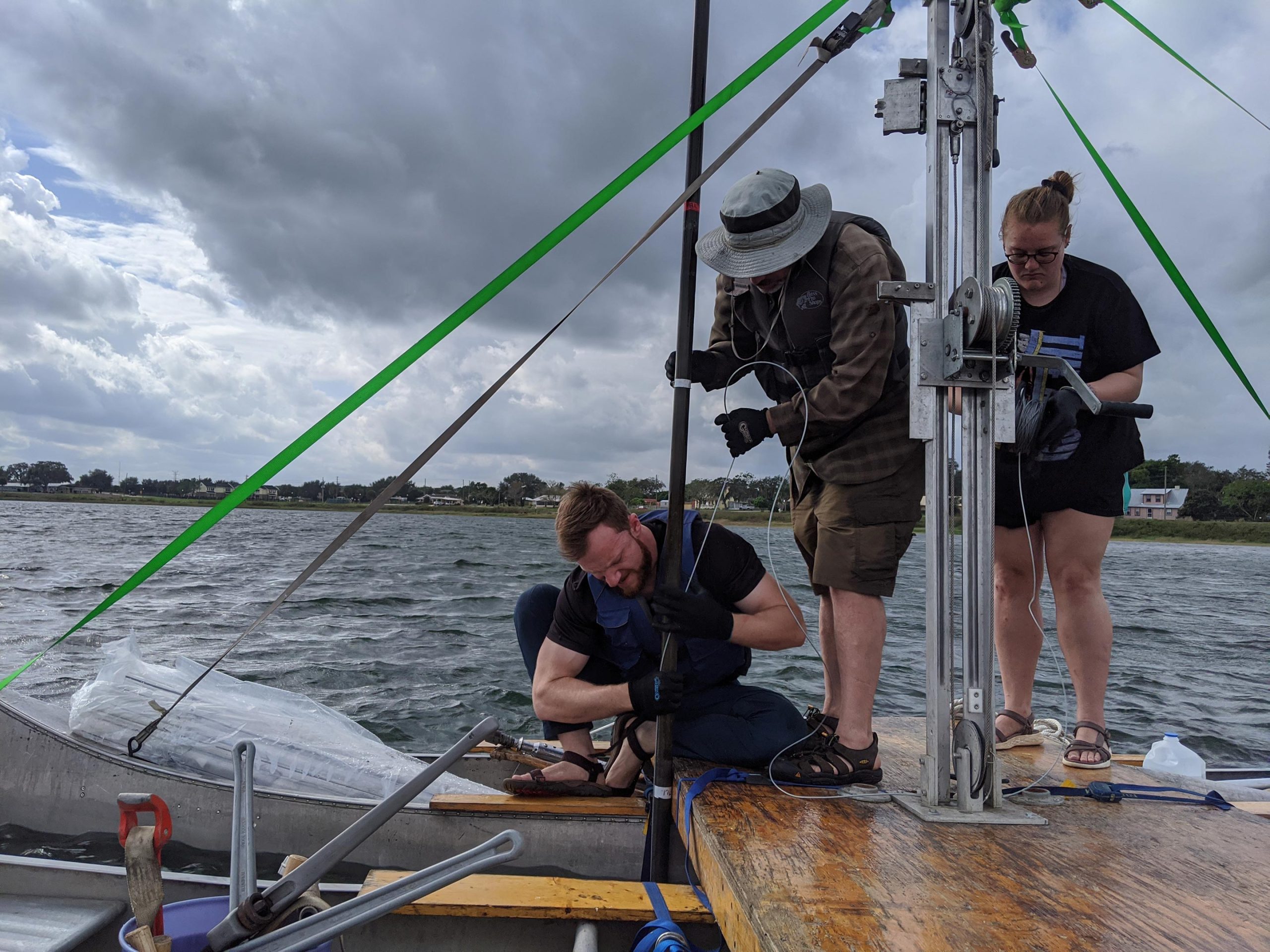
According to a new study published in Science, forest ecosystems typically take 100 to 200 years to respond to shifts in climate. This delay in tree population movement was identified by lead author David Fastovich, a postdoctoral researcher at Syracuse University working in the Paleoclimate Dynamics Lab led by Tripti Bhattacharya, Thonis Family Professor of Paleoclimate Dynamics and associate professor in the Department of Earth and Environmental Sciences.
To better understand this long response time, the research team analyzed pollen preserved in lake sediments. These records span as far back as 600,000 years, allowing scientists to track how forests have historically reacted to climate shifts over deep time.
Century-Scale Catch-Up: Tree Lag Times
“We’ve known these time lags have existed, but no one could put a firm number on them,” says Fastovich. “We can intuit how long a tree lives. We can count the rings on a tree and estimate from there. But now we know that after one to two centuries—very close to how long a tree lives on average—entire forest ecosystems begin to turnover as trees die and are replaced in response to climate.”
The research team used spectral analysis, a statistical technique common in fields such as physics and engineering, to study long-term ecological data. This method allowed the researchers to compare the relationship between tree populations and climate from decades to millennia. One goal was to learn how closely tree population migrations, tree mortality, and forest disturbances from things like forest fires match climate changes over time.
Spectral analysis provides a newly unified statistical approach that connects how natural forest adaptation evolves from days to thousands of years.

Spectral Insights: How Forests Evolve
“This gives us a common language for people who observe forest change—ecologists, paleoecologists, and paleobiologists—to talk to one another about those changes, no matter if we study forests on annual or millennial timescales,” Fastovich says.
The researchers found that at timescales of years and decades, forests typically change slowly. After about eight centuries, though, forest changes tend to become larger, tied to natural climate variability.
“With this new technique, we can think about ecological processes on any timescale and how they are connected,” says Fastovich. “We can understand how dispersal and population changes interact and cause a forest to change from decades to centuries, and even longer timescales. That hasn’t been done before.”
Helping Woods Survive: Assisted Migration
The study also suggests that forests will need more human intervention to keep them healthy. Assisted migration might be an effective tool. It is the practice of planting warmer-climate trees in traditionally colder locations to help woodlands adapt and flourish despite the heating of their habitats from climate change. Forest adaptation to climate will be a slow, complex process requiring nuanced, long-term management strategies, Fastovich notes.
“There’s a mismatch between the timescales at which forests naturally change to what’s happening today with climate change,” Fastovich says. “Population-level changes aren’t going to be fast enough to keep the forests that we care about around. Assisted migration is one tool of many to keep cherished forests around for longer.”
Reference: “Coupled, decoupled, and abrupt responses of vegetation to climate across timescales” by David Fastovich, Stephen R. Meyers, Erin E. Saupe, John W. Williams, Maria Dornelas, Elizabeth M. Dowding, Seth Finnegan, Huai-Hsuan M. Huang, Lukas Jonkers, Wolfgang Kiessling, Ádám T. Kocsis, Qijian Li, Lee Hsiang Liow, Lin Na, Amelia M. Penny, Kate Pippenger, Johan Renaudie, Marina C. Rillo, Jansen Smith, Manuel J. Steinbauer, Mauro Sugawara, Adam Tomašových, Moriaki Yasuhara and Pincelli M. Hull, 3 July 2025, Science.
DOI: 10.1126/science.adr6700
Never miss a breakthrough: Join the SciTechDaily newsletter.
Follow us on Google and Google News.