
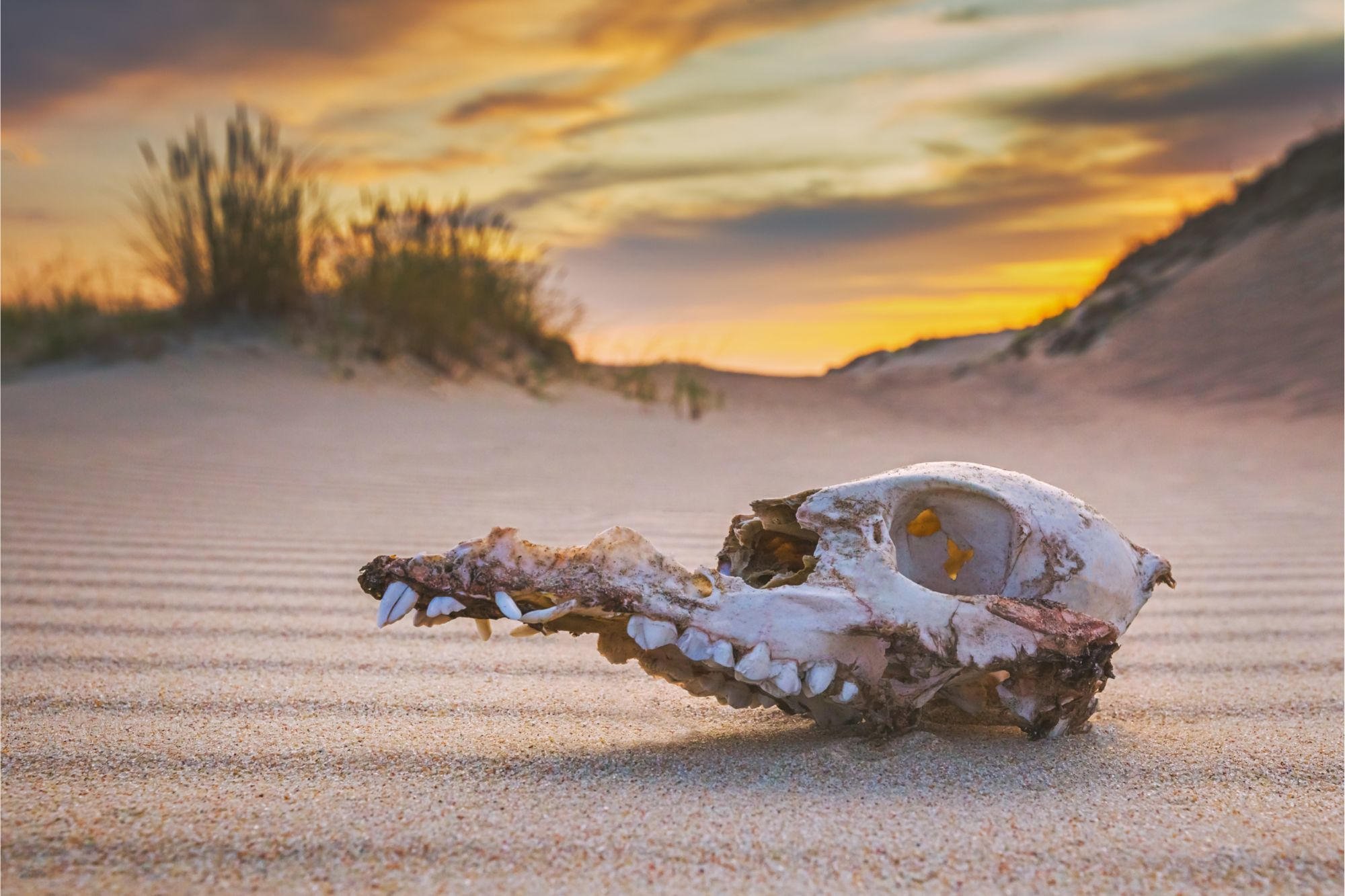
A new study challenges long-held assumptions about survival following a global catastrophe.
If you’re an animal trying to survive a mass extinction, your best bet might be to carve out a truly unique way of life.
A fascinating new study has uncovered surprising insights into which species survived—and which didn’t—after the asteroid impact that wiped out the dinosaurs. The findings challenge long-held ideas about how life bounces back from catastrophic events.
Scientists from the University of Chicago, the Smithsonian Institution, and the Natural History Museum in London analyzed thousands of fossilized clams and mussels. By piecing together what ocean ecosystems looked like just before and after the extinction 66 million years ago, they found that although nearly 75 percent of all species disappeared, every type of ecological role in the ocean remained filled. Statistically, that shouldn’t have happened—and yet, it did.
“It’s a really interesting, and slightly disquieting finding,” said David Jablonski, the William R. Kenan, Jr., Distinguished Service Professor of Geophysical Sciences at UChicago and one of the authors on a new study published in Science Advances. “How ecosystems recover from mass extinctions is a huge question for the field at the moment, given that we’re pushing towards one right now.”
‘Extremely statistically unlikely’
In the history of Earth, we have documented five major extinctions—cataclysmic events in which the majority of species die out due to some worldwide change—and are currently edging towards the sixth mass extinction. Scientists are, therefore, very interested in understanding how biodiversity and ecosystems recover from these massive events.
Jablonski, along with paleobiologists Stewart Edie at the Smithsonian and Katie Collins at the Natural History Museum in London, decided to examine the most recent past extinction. Known as the end-Cretaceous, the event resulted in more than three-quarters of all known species dying out, including T-rexes and most of the dinosaurs.
The team focused on clams, oysters, cockles, and other ocean-dwelling mollusks. Their hard shells are abundant and fossilize easily, which was important because the team wanted to document as complete a picture as possible of the ecosystem—both before and after the extinction.
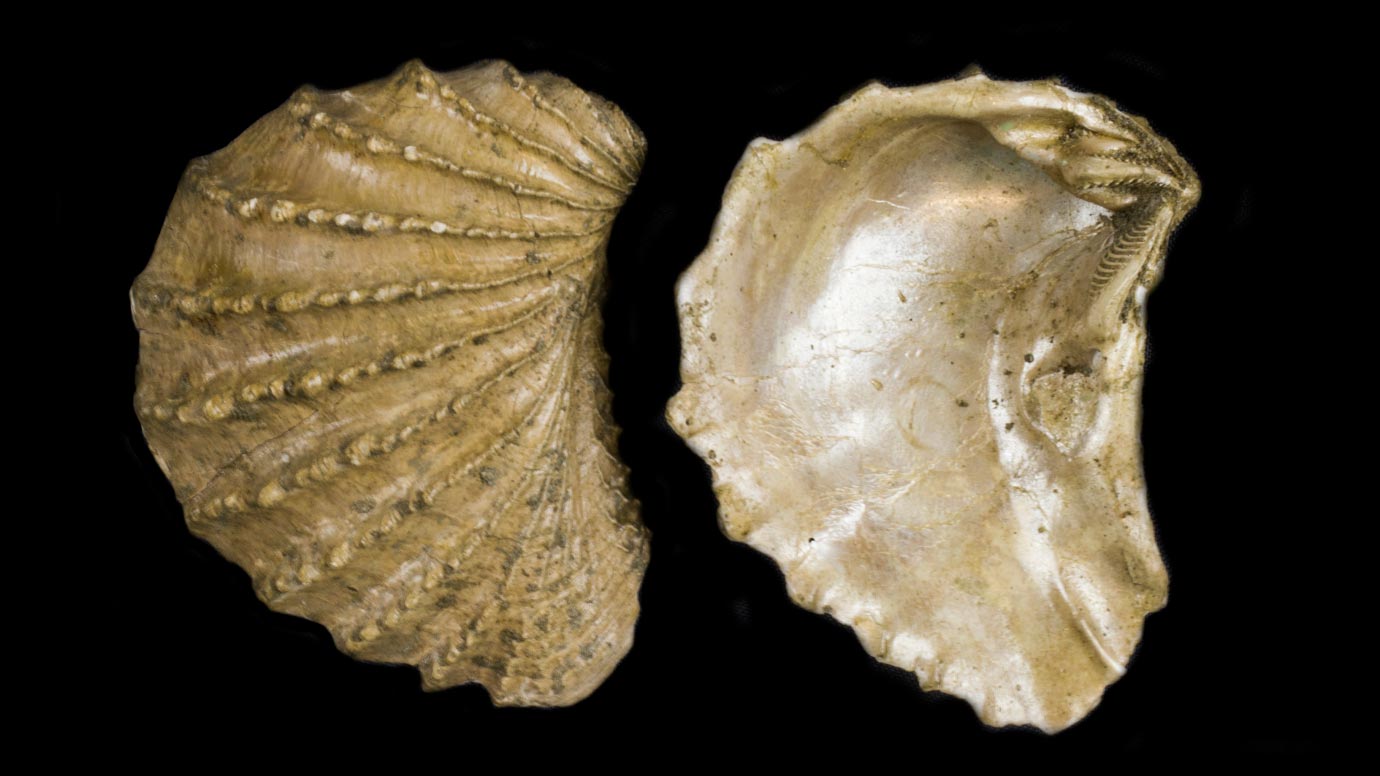
“What we wanted to do was not just count species, but count ways of life,” Edie explained. “How do they make their living? For example, some cement themselves to rocks; others tunnel into sand or mud; some are even carnivorous.”
The team painstakingly built a picture of the global ecological landscape just before the extinction, “before the roof came in,” Jablonski said, and compared it to the species found afterwards. And they got a surprise.
Though huge numbers of species died out, virtually none of the ecological niches were lost.
“That’s extremely statistically unlikely,” said Collins, co-author on the study. “If 75% of all of the species died out, you would expect at least some of the ways of life to be lost completely—some of those niches only had one or two species in them. But that’s not what we see.”
The finding doesn’t fit with either of the prevailing models for how biodiversity recovers from extinction, the authors said.
Decades ago, scientists thought that major extinctions simply “hastened the inevitable”—ie, dinosaurs were always going to lose out to mammals, and a meteor hitting Earth just happened to hurry it along. More recently, the pendulum of thinking swung back the other way, and others proposed that mass extinctions are a defining biological event—whoever manages to survive in the new landscape then evolves to fill different niches.
But neither model fully explains this picture.
Jablonski described the finding as “a bit of a wake-up call.”
“We don’t understand how loss of functional groups relates to loss of biological diversity,” he said.
A scrambled effect
The team also found that the way species recovered was counter to expectations.
“We thought the survival pool would lay the foundation for the modern world, it would all just flow from who got through the extinction, but that wasn’t the case,” said Edie. “It gets scrambled. A genus that had many species survive the extinction doesn’t necessarily wind up on top later on.” And, Jablonski added, a mode of life that was packed with survivors hasn’t necessarily stayed that way.
Jablonski explained that many scientists assumed that if you flatten the playing field, as in a mass extinction, the survivors should all take advantage of the opportunity and diversify rapidly.
“That may have been what happened with mammals, but in the marine ecosystem, it didn’t work that way,” he said.
This is important information for conservation efforts for the modern ocean, for example, which is under threat from acidification, pollution,n and overfishing.
“This is something we really want to understand if we’re thinking about modern extinction and rebound in oceans, and how to manage it,” Jablonski said. “Billions of people depend on the ocean for food, and we can see that reserves and management policies need to take into account the larger ecological structure of the biota, rather than just the individual species.”
Reference: “The end-Cretaceous mass extinction restructured functional diversity but failed to configure the modern marine biota” by Stewart M. Edie, Katie S. Collins and David Jablonski, 21 May 2025, Science Advances.
DOI: 10.1126/sciadv.adv1171
Funding: National Science Foundation, NASA, University of Chicago, Smithsonian Institution.
Never miss a breakthrough: Join the SciTechDaily newsletter.
Follow us on Google and Google News.
1 Comment
“…, including T-rexes and most of the dinosaurs.
Including T-rexes and ALL of the non-avian dinosaurs.