
Close Menu
    Facebook X (Twitter) Instagram
    SciTechDaily
    • Biology
    • Chemistry
    • Earth
    • Health
    • Physics
    • Science
    • Space
    • Technology
    Facebook X (Twitter) Pinterest YouTube RSS
    SciTechDaily
    Home»Health»The Male Y Chromosome Does More Than We Thought – Could Explain Why Men Suffer Differently From COVID-19
    Health

    The Male Y Chromosome Does More Than We Thought – Could Explain Why Men Suffer Differently From COVID-19

    By University of MontrealOctober 15, 2020No Comments3 Mins Read
    Facebook Twitter Pinterest Telegram LinkedIn WhatsApp Email Reddit
    Share
    Facebook Twitter LinkedIn Pinterest Telegram Email Reddit
    Y Chromosome
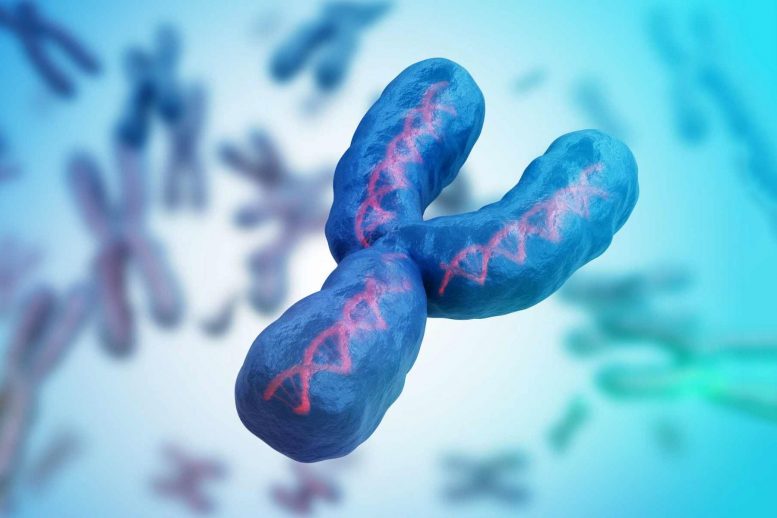
    New findings highlight the little-known role of Y chromosome genes in explaining gender-based differences in diseases like COVID-19.

    New light is being shed on a little-known role of Y chromosome genes, specific to males, that could explain why men suffer differently than women from various diseases, including COVID-19.

    The findings were published this month in Scientific Reports by Université de Montréal professor Christian Deschepper, director of the Experimental Cardiovascular Biology research unit of the Montreal Clinical Research Institute.

    “Our discovery provides a better understanding of how male genes on the Y chromosome allow male cells to function differently from female cells,” said Deschepper, the study’s lead author, who is also an associate professor at McGill University.

    “In the future, these results could help to shed some light on why some diseases occur differently in men and women.”

    Genes that females lack

    Humans each have 23 pairs of chromosomes, including one pair of sex chromosomes. While females carry two X sex chromosomes, males carry one X and one Y chromosome. This male chromosome carries genes that females lack. Although these male genes are expressed in all cells of the body, their only confirmed role to date has been essentially limited to the functions of the sex organs.

    In his study, Deschepper performed a genetic manipulation that inactivated two male genes on the Y chromosome, altering several signaling pathways that play important roles in certain functions of non-sex organ cells. For example, under stress, some of the affected mechanisms could influence the way in which cells in human hearts defend themselves against aggressions such as ischemia (reduced blood supply) or mechanical stress.

    In addition, the study showed that these male genes performed their regulatory functions in a way that was unusual compared to the mechanisms generally used by most other genes on the non-sex chromosomes. Thus, instead of specifically activating certain genes by direct action at the genome level, the Y chromosome seems to affect cellular functions by acting on protein production.

    The discovery of these differences in function may explain in part why the functions of male Y chromosome genes have so far been poorly understood, said Deschepper.

    Males differ from females in the manifestation, severity, and consequences of most diseases. A recent example of this duality is COVID-19, which has a mortality rate twice as high in men than in women.

    Reference: “Regulatory effects of the Uty/Ddx3y locus on neighboring chromosome Y genes and autosomal mRNA transcripts in adult mouse non-reproductive cells” by Christian F. Deschepper, 10 September 2020, Scientific Reports.
    DOI: 10.1038/s41598-020-71447-3

    Never miss a breakthrough: Join the SciTechDaily newsletter.
    Follow us on Google and Google News.

    Cell Biology COVID-19 Genetics University of Montreal
    Share. Facebook Twitter Pinterest LinkedIn Email Reddit

    Related Articles

    Genetic Limit on Cell Division Could Explain COVID-19 Deaths Among Elderly

    Uncovering Genetic Traces to Discover How Humans Adapted to Historical Coronavirus Outbreaks

    Melatonin Produced in the Lungs Prevents COVID-19 Infection

    UCLA Scientists Discover How the COVID-19 Virus Causes Multiple Organ Failure

    Gene Identified That Could Explain Why COVID-19 Causes No Symptoms in Some and Serious Illness or Death in Others

    COVID-19 Treatment May Lie in Pangolin Genetics – May Possess Evolutionary Advantage Against Coronavirus

    Strange New Organelle That Helps Prevent Cancer Discovered in Our Cells

    Major Implications for Human Disease Uncovered in Mysterious Microproteins

    Naturally Occurring Molecule Enhances Defense Mechanisms Against Neurodegenerative Diseases

    Leave A Reply Cancel Reply

    • Facebook
    • Twitter
    • Pinterest
    • YouTube

    Don't Miss a Discovery

    Subscribe for the Latest in Science & Tech!

    Trending News

    Popular Sugar-Free Sweetener Linked to Liver Disease, Study Warns

    What Is Hantavirus? The Deadly Disease Raising Alarm Worldwide

    Scientists Just Discovered How the Universe Builds Monster Black Holes

    Scientists Unveil New Treatment Strategy That Could Outsmart Cancer

    A Simple Vitamin May Hold the Key to Treating Rare Genetic Diseases

    Scientists Think the Real Fountain of Youth May Be Hiding in Your Gut

    Ravens Don’t Follow Wolves, They Predict Them

    This Common Knee Surgery May Be Doing More Harm Than Good

    Follow SciTechDaily
    • Facebook
    • Twitter
    • YouTube
    • Pinterest
    • Newsletter
    • RSS
    SciTech News
    • Biology News
    • Chemistry News
    • Earth News
    • Health News
    • Physics News
    • Science News
    • Space News
    • Technology News
    Recent Posts
    • Popular Supplement Ingredient Linked to Shorter Lifespan in Men
    • Scientists May Have Found a Way To Repair Nerve Damage in Multiple Sclerosis
    • GLP-1 Weight Loss Linked To Dramatically Lower Risk of Sleep Apnea, Kidney Disease and More
    • Scientists Uncover the Surprising Source of Strange Clouds Near the Milky Way’s Supermassive Black Hole
    • This Dazzling Green Snake Was Hiding in Plain Sight for Decades
    Copyright © 1998 - 2026 SciTechDaily. All Rights Reserved.
    • Science News
    • About
    • Contact
    • Editorial Board
    • Privacy Policy
    • Terms of Use

    Type above and press Enter to search. Press Esc to cancel.