
Close Menu
    Facebook X (Twitter) Instagram
    SciTechDaily
    • Biology
    • Chemistry
    • Earth
    • Health
    • Physics
    • Science
    • Space
    • Technology
    Facebook X (Twitter) Pinterest YouTube RSS
    SciTechDaily
    Home»Biology»The Orchid and the Fruit Fly – Scientists Discover Unique New Plant-Animal Relationship
    Biology

    The Orchid and the Fruit Fly – Scientists Discover Unique New Plant-Animal Relationship

    By Kobe UniversityAugust 27, 2023No Comments4 Mins Read
    Facebook Twitter Pinterest Telegram LinkedIn WhatsApp Email Reddit
    Share
    Facebook Twitter LinkedIn Pinterest Telegram Email Reddit
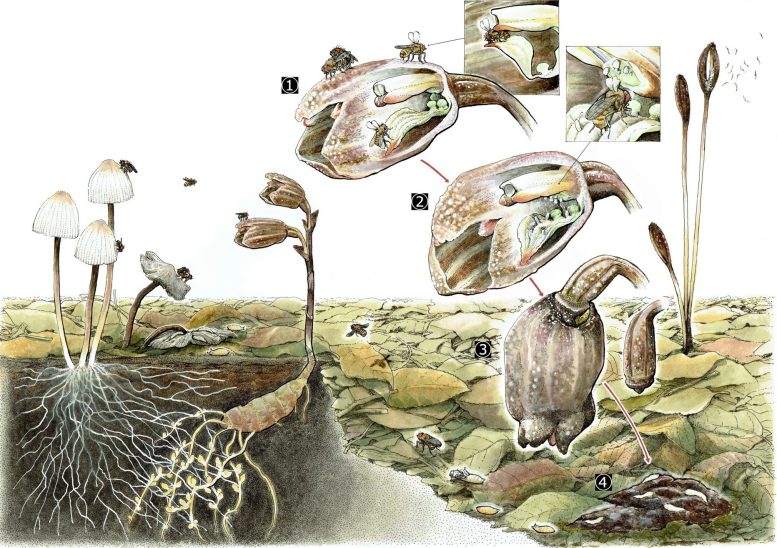
    The Mutualistic Relationship Between Gastrodia foetida and Its Pollinator
    The mutualistic relationship between Gastrodia foetida and its pollinator, both of which primarily feed on mushrooms. The flowers emit a mushroom-like smell that lures the flies in. As the flies feed on the flowers, pollen grains attach to their backs (1). When the fly leaves one flower and visits another to lay eggs, the attached pollen comes into contact with the stigma, completing pollination (2). After successful pollination, the flower starts to decay and internally hatched larvae begin consuming the petals (3). The larvae grow further by consuming the petals that have fallen to the ground (4). Approximately one week later, they emerge as adults. Credit: ANSAI Shun

    The orchid Gastrodia foetida provides a nursery for fruit flies, marking the first known example of nursery pollination in orchids and a potential shift toward mutualism.

    For the first time, orchids that consume fungi have been observed offering their flowers to fungi-eating fruit flies in return for pollination services. This discovery represents the first evidence of nursery pollination in orchids. This unique new plant-animal relationship hints at an evolutionary transition towards mutualistic symbiosis.

    Orchids are well known to trick their pollinators into visiting the flowers by imitating food sources, breeding grounds, or even mates without actually offering anything in return. The fungi-eating, non-photosynthetic orchid genus Gastrodia is no different: To attract fruit flies (Drosophila spp.), the plants usually emit a smell like their common diet of fermented fruits or decaying mushrooms.
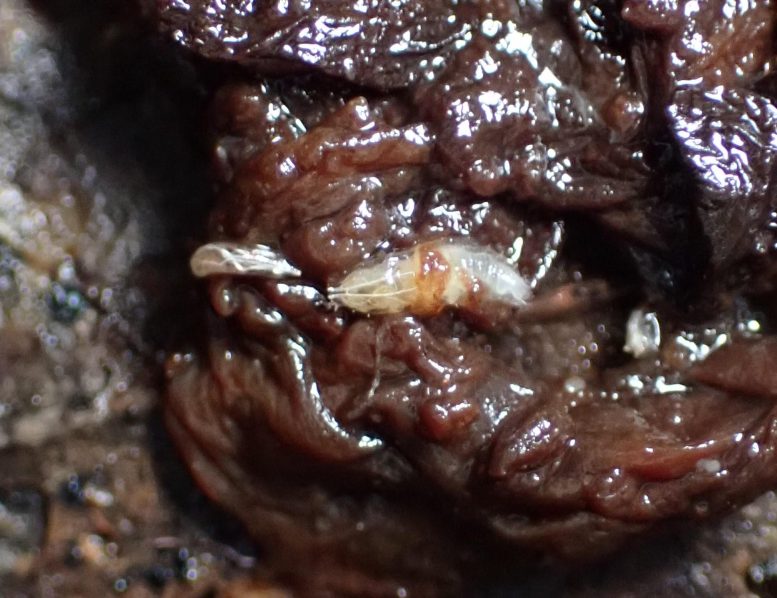
    A Fruit Fly Larva Consuming Decomposing Floral Tissue on the Ground
    A fruit fly larva consuming decomposing floral tissue on the ground. Credit: Suetsugu Kenji

    The fruit flies get lured into the flowers, are trapped there for a short while, and get pollen attached to their backs which they then transport to other plants of the same species. Thus, this deceptive relationship offers benefits to only one partner.

    Kobe University plant biologist Suetsugu Kenji, a specialist on these orchids, noticed that a certain species of this genus, Gastrodia foetida, has particularly fleshy petals that decompose and fall off a few days after pollination. He decided to investigate these plants in the search for the first example of orchids engaging in “nursery pollination”, which is a plant offering a breeding ground to its pollinator.
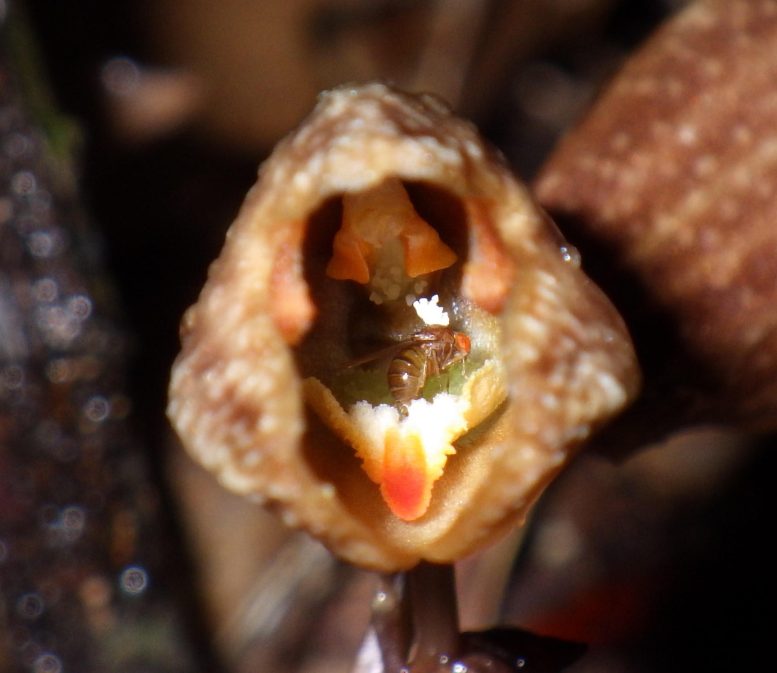
    A Fruit Fly Lays Its Eggs Inside a Flower of Gastrodia foetida
    A fruit fly lays its eggs inside a flower of Gastrodia foetida. Credit: Suetsugu Kenji

    And indeed, in the study now published in the journal Ecology, he reports that fruit flies often lay their eggs into the plant’s flowers and that their larvae can fully develop into adult flies in this environment.

    Suetsugu says: “The most intriguing aspect is that contrary to its common name as the ‘fruit’ fly, Drosophila bizonata, a species specialized in mushroom-feeding, predominantly utilizes decaying Gastrodia foetida flowers as brood sites. A possible explanation is the fact that Gastrodia foetida is a non-photosynthetic orchid that feeds on fungi. These non-photosynthetic orchids often exhibit chemical resemblance to the fungi they assimilate, underlining the age-old adage ‘You are what you eat.’ As a plant that feeds on mushrooms, G. foetida likely tastes similar to a mushroom, making it a prime target for the mushroom-specialized fruit fly.” This discovery is significant because it uncovers a new type of nursery pollination system, going beyond deceptive strategies commonly found in the genus.
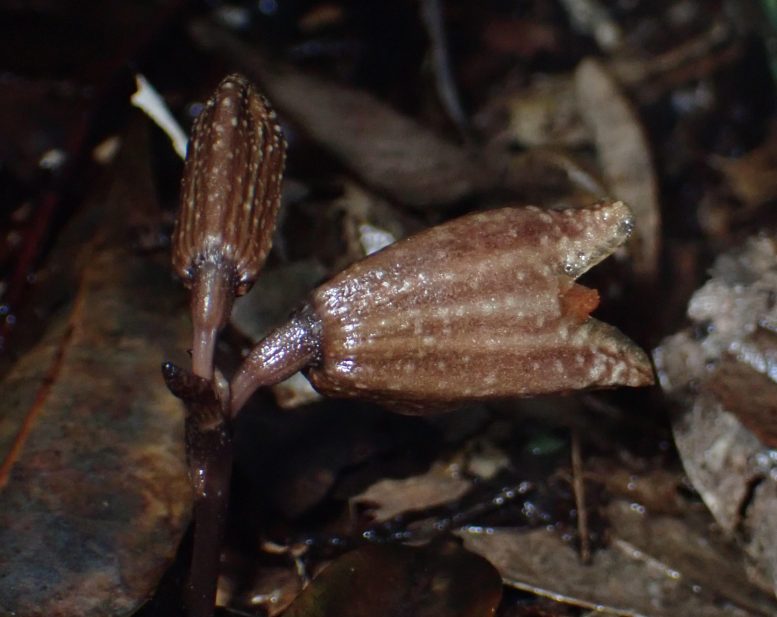
    Flower of Gastrodia foetida
    Flower of Gastrodia foetida. Credit: Suetsugu Kenji

    The Kobe University researcher further explains that the relationship is neither obligatory nor specific, that is, the fruit flies also lay fully developing eggs on fungi. Thus, this finding may represent an example of the transition from a deceptive relationship towards mutualistic symbiosis, suggested by two factors: the low cost to the plant, since the petals are not needed anymore after pollination; and that closely related Gastrodia dominantly utilize a deceptive strategy without providing a nursery.
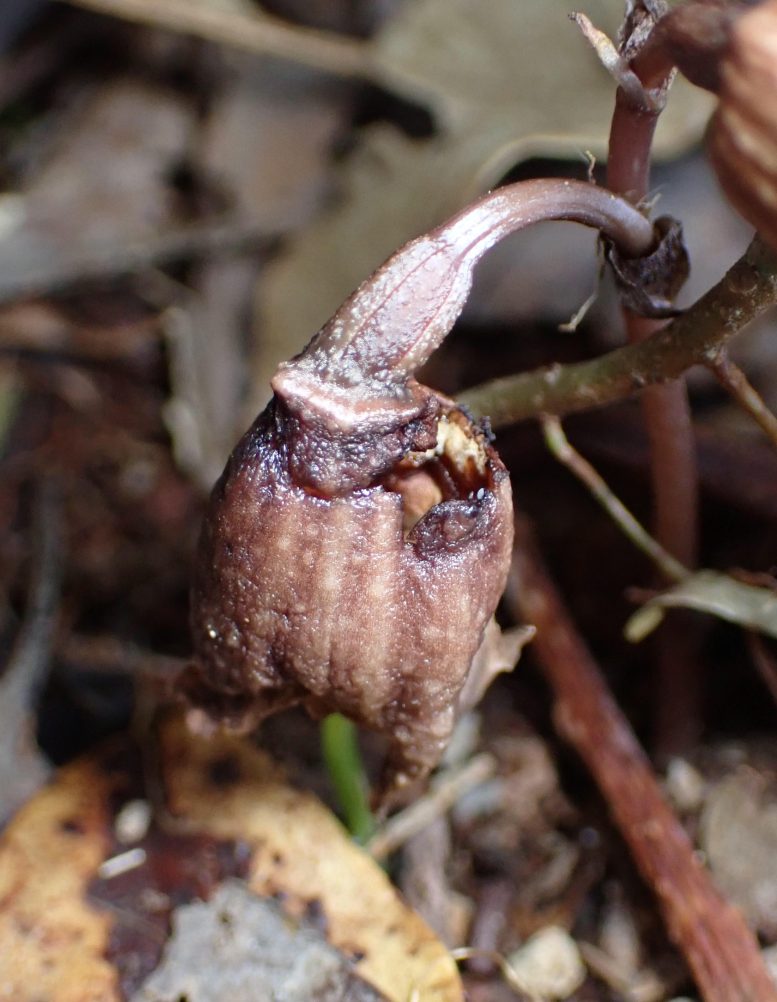
    A Flower of Gastrodia foetida on the Verge of Decomposition
    A flower of Gastrodia foetida on the verge of decomposition. Credit: Suetsugu Kenji

    Suetsugu concludes: “This study represents the first evidence of nursery pollination in orchids, comprising nearly 30,000 species, and being the most diverse plant group in the world. In addition, it contributes a vital understanding of the intricate and mutually beneficial relationships that can develop in nature. The understanding of how plants can offer genuine benefits rather than merely deceiving pollinators could impact the broader study of plant-animal interactions and their evolutionary dynamics.”

    Reference: “A novel nursery pollination system between a mycoheterotrophic orchid and mushroom-feeding flies” by Kenji Suetsugu, 23 August 2023, Ecology.
    DOI: 10.1002/ecy.4152

    The study was funded by the Japan Science and Technology Agency.

    Never miss a breakthrough: Join the SciTechDaily newsletter.
    Follow us on Google and Google News.

    Ecology Flowers Kobe University Orchids
    Share. Facebook Twitter Pinterest LinkedIn Email Reddit

    Related Articles

    This Orchid Hacks Fungi to Supercharge Its Growth

    How Two “Touch-Me-Not Plants” Plants Fooled Scientists for Decades

    Scientists Reveal the Invisible Secret Behind Spectacular Blooms in the World’s Driest Desert

    Environmental DNA (eDNA) Analysis Could Contribute Towards More Effective Pest Control

    How Scent and Nectar Influence Pollinators and Herbivores

    Scientists Reconstruct Ancient Permian Ecosystem from Ash-Covered Plants

    Researchers Recreate the Song of 165 Million Year Old Katydid

    Researchers Report That Anthropogenic CO2 Emissions Have Raised Ocean Acidity

    Jacques Cousteau Predicted Detrimental Change in Coral Reefs

    Leave A Reply Cancel Reply

    • Facebook
    • Twitter
    • Pinterest
    • YouTube

    Don't Miss a Discovery

    Subscribe for the Latest in Science & Tech!

    Trending News

    Millions Take These IBS Drugs, But a New Study Finds Serious Risks

    Scientists Unlock Hidden Secrets of 2,300-Year-Old Mummies Using Cutting-Edge CT Scanner

    Bread Might Be Making You Gain Weight Even Without Eating More Calories

    Scientists Discover Massive Magma Reservoir Beneath Tuscany

    Europe’s Most Active Volcano Just Got Stranger – Here’s Why Scientists Are Rethinking It

    Alzheimer’s Symptoms May Start Outside the Brain, Study Finds

    Millions Take This Popular Supplement – Scientists Discover a Concerning Link to Heart Failure

    The Universe Is Expanding Too Fast and Scientists Can’t Explain Why

    Follow SciTechDaily
    • Facebook
    • Twitter
    • YouTube
    • Pinterest
    • Newsletter
    • RSS
    SciTech News
    • Biology News
    • Chemistry News
    • Earth News
    • Health News
    • Physics News
    • Science News
    • Space News
    • Technology News
    Recent Posts
    • Doctors Surprised by the Power of a Simple Drug Against Colon Cancer
    • Why Popular Diabetes Drugs Like Ozempic Don’t Work for Everyone: The “Genetic Glitch”
    • Scientists Create Improved Insulin Cells That Reverse Diabetes in Mice
    • Scientists Stunned After Finding Plant Thought Extinct for 60 Years
    • A Common Diabetes Drug May Hold the Key to Stopping HIV From Coming Back
    Copyright © 1998 - 2026 SciTechDaily. All Rights Reserved.
    • Science News
    • About
    • Contact
    • Editorial Board
    • Privacy Policy
    • Terms of Use

    Type above and press Enter to search. Press Esc to cancel.