
Close Menu
    Facebook X (Twitter) Instagram
    SciTechDaily
    • Biology
    • Chemistry
    • Earth
    • Health
    • Physics
    • Science
    • Space
    • Technology
    Facebook X (Twitter) Pinterest YouTube RSS
    SciTechDaily
    Home»Health»The Serotonin Secret: TAAR1’s Unseen Influence on Mental Disorders
    Health

    The Serotonin Secret: TAAR1’s Unseen Influence on Mental Disorders

    By The Mount Sinai Hospital / Mount Sinai School of MedicineJanuary 14, 2024No Comments4 Mins Read
    Facebook Twitter Pinterest Telegram LinkedIn WhatsApp Email Reddit
    Share
    Facebook Twitter LinkedIn Pinterest Telegram Email Reddit
    Solving Brain Neuropsychiatric Disorders Concept
    A study at the Icahn School of Medicine has uncovered that asenapine, an antipsychotic medication, may work through the TAAR1 receptor, revealing crucial differences between human and rodent TAAR1. This discovery suggests new avenues for treating substance use and neuropsychiatric disorders and rethinking drug development strategies. Credit: SciTechDaily.com

    Study sheds light on TAAR1, pointing to potential enhancement opportunities in drug development.

    Researchers at the Icahn School of Medicine at Mount Sinai have uncovered insights into the potential mechanism of action of the antipsychotic medication asenapine, a possible therapeutic target for substance use and neuropsychiatric disorders. This discovery may pave the way for the development of improved medications targeting the same pathway.

    Their findings, detailed in the January 2 online issue of Nature Communications, show that a brain protein known as the TAAR1 receptor, a drug target known to regulate dopamine signaling in key reward pathways in the brain, differs significantly in humans compared to the preclinical rodent models on which drugs are typically tested.

    The study suggests considering species-specific differences in drug-receptor interactions and further investigation into ways asenapine affects the body, as steps toward potential therapeutic improvements.
    How Drugs Can Bind to TAAR1 Receptor
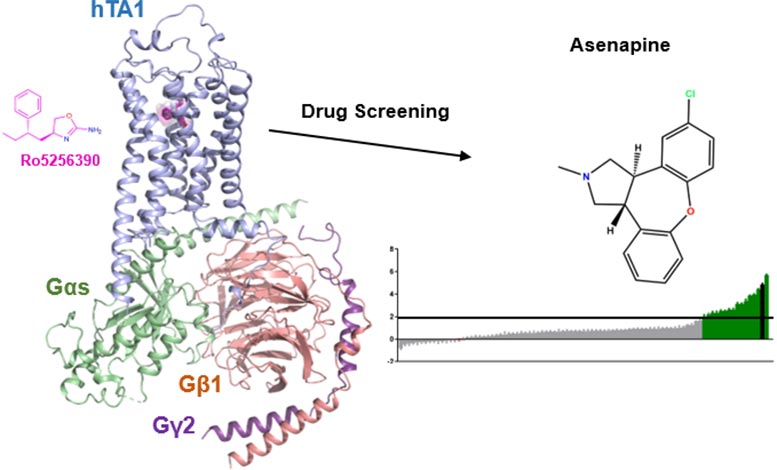
    Mount Sinai Icahn scientists took detailed pictures of how drugs can bind to the TAAR1 receptor using CryoEM. They also discovered that an antipsychotic drug, asenapine, unexpectedly activates TAAR1, which could potentially contribute to asenapine’s therapeutic effects. Credit: Wacker et al., Nature Communications

    “In investigating the functional and structural properties of TAAR1, our study aimed to shed more light on its mechanisms and pharmacology,” says study first author Gregory Zilberg, a PhD candidate at Icahn Mount Sinai. “Our findings may guide the development of novel TAAR1 drugs and prompt more exploration of medications similar to asenapine.”

    Using advanced techniques to investigate TAAR1’s structure and function, the researchers identified three important elements. First, there are differences between rodent and human TAAR1 that likely affect how preclinical model studies can be translated to humans. Second, TAAR1 is much more closely related to serotonin and dopamine receptors than previously assumed. This suggests that several serotonin-targeting medications might have unknown therapeutic efficacy or side effects that are in fact due to their actions at TAAR1.

    Finally, the investigators highlight that the clinically used antipsychotic asenapine unexpectedly shows strong activation of TAAR1, suggesting in fact that this serotonin- and dopamine-targeting antipsychotic could derive some of its therapeutic effects from TAAR1 activation. If proven in further studies, this could open up new possibilities for its potential in other TAAR1-related therapeutic applications such as its use in substance use disorders, as well as the development of new asenapine-based drugs.

    The researchers noted the absence of information about differences in how TAAR1 works in rodents and humans, and emphasized that some of these differences could account for why preclinical data on TAAR1 has not yet been successfully translated into effective therapies in humans. Next, the researchers plan to study where TAAR1 is located within cells and what its precise role is in influencing serotonin and dopamine signaling.

    “This study provides a significant leap in understanding TAAR1, offering potential avenues for drug development and encouraging further research into its therapeutic applications,” says senior author Daniel Wacker, PhD, Assistant Professor of Pharmacological Sciences, and Neuroscience, at Icahn Mount Sinai. “As our work advances, we anticipate it may play a crucial role in shaping the development of new drugs targeting TAAR1 and offering valuable insights into how drugs similar to asenapine might work.”

    Reference: “Molecular basis of human trace amine-associated receptor 1 activation” by Gregory Zilberg, Alexandra K. Parpounas, Audrey L. Warren, Shifan Yang and Daniel Wacker, 2 January 2024, Nature Communications.
    DOI: 10.1038/s41467-023-44601-4

    Other authors who co-authored this work, all with Icahn Mount Sinai, are Alexandra K. Parpounas, M.S., Audrey L. Warren (PhD candidate), and Shifan Yang, PhD.

    Never miss a breakthrough: Join the SciTechDaily newsletter.
    Follow us on Google and Google News.

    Mental Health Mount Sinai Health System Mount Sinai Hospital Mount Sinai School of Medicine Neuroscience Popular Psychiatry
    Share. Facebook Twitter Pinterest LinkedIn Email Reddit

    Related Articles

    Waning Immunity: Your Mental Health May Impact Your Chances of Breakthrough COVID

    Psychedelic Drug From Magic Mushrooms – Psilocybin – Can Be Safely Administered With No Detrimental Effects in Healthy People

    Study of Suicide Attempts Confirms Genetic Underpinnings Not Driven by Underlying Psychiatric Disorders

    Warning: High Caffeine Consumption May Increase Risk of Blinding Eye Disease

    Can Omega-3 Fatty Acids – Fish Oil Supplements – Prevent Psychotic Disorder?

    Antidepressant Power of Lactate Revealed in New Research

    Non-hallucinogenic Psychedelic Analog Rapidly Reverses Effects of Stress on the Brain

    Brain Ion Channel Identified As New Approach to Treating Depression – Scientists “Surprised” by Significant Improvements in Depressive Symptoms

    Strong Results for Advanced Universal Flu Vaccine in Clinical Trials

    Leave A Reply Cancel Reply

    • Facebook
    • Twitter
    • Pinterest
    • YouTube

    Don't Miss a Discovery

    Subscribe for the Latest in Science & Tech!

    Trending News

    Your Blood Pressure Reading Could Be Wrong Because of One Simple Mistake

    Astronomers Stunned by Ancient Galaxy With No Spin

    Physicists May Be on the Verge of Discovering “New Physics” at CERN

    Scientists Solve 320-Million-Year Mystery of Reptile Skin Armor

    Scientists Say This Daily Walking Habit May Be the Secret to Keeping Weight Off After Dieting

    New Therapy Rewires the Brain To Restore Joy in Depression Patients

    Giant Squid Detected off Western Australia in Stunning Deep-Sea Discovery

    Popular Sugar-Free Sweetener Linked to Liver Disease, Study Warns

    Follow SciTechDaily
    • Facebook
    • Twitter
    • YouTube
    • Pinterest
    • Newsletter
    • RSS
    SciTech News
    • Biology News
    • Chemistry News
    • Earth News
    • Health News
    • Physics News
    • Science News
    • Space News
    • Technology News
    Recent Posts
    • Fur Seals’ Hearts Suddenly Spike Hours After Returning to Land
    • Scientists Say Cognitive Decline Isn’t Inevitable — Your Brain Can Improve at Any Age
    • This Weird Sea Creature May Have Rewritten Life’s Genetic Rulebook
    • The Hidden Types of Dementia Most People Have Never Heard Of
    • Scientists Discover Why Alcohol Prevents the Liver From Healing, Even After You Quit
    Copyright © 1998 - 2026 SciTechDaily. All Rights Reserved.
    • Science News
    • About
    • Contact
    • Editorial Board
    • Privacy Policy
    • Terms of Use

    Type above and press Enter to search. Press Esc to cancel.