
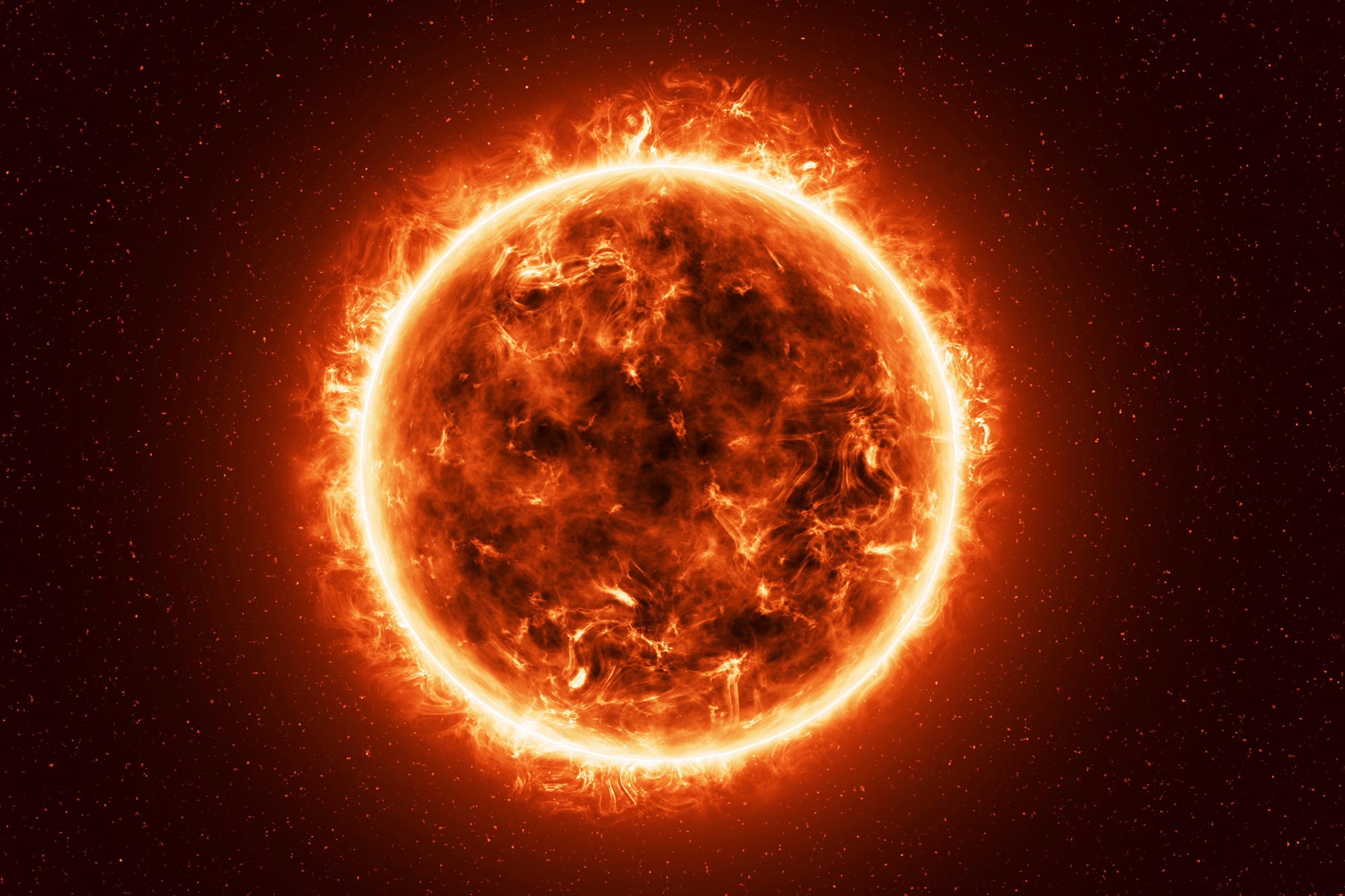
Researchers describe the newly discovered binary system as a cosmic oddball.
Stars often reach the end of their lives and fade from view, but astronomers were left baffled when a star that had remained steady for more than ten years suddenly seemed to vanish for nearly eight months.
From late 2024 through early 2025, a star in our galaxy known as ASASSN-24fw lost about 97% of its brightness before returning to normal. The unusual dimming quickly became the subject of debate as researchers searched for an explanation behind such an extraordinary event.
An international research team, led by scientists at The Ohio State University, now believes they may have solved the puzzle. In a study recently published in The Open Journal of Astrophysics, the group reports that because the star’s color did not change during the dimming, the cause was unlikely to be related to stellar evolution. Instead, they conclude that a massive cloud of dust and gas surrounding the star blocked it from Earth’s view.
“We explored three different scenarios for what could be going on,” said Raquel Forés-Toribio, lead author of the study and a postdoctoral researcher in astronomy at Ohio State. “Evidence suggests it is likely that there is a cloud of dust in the form of a disk around it.”
The Star and Its Surroundings
ASASSN-24fw is an F-type star — a star that is a little more massive than our sun and about twice as big — and is located about 3,000 light-years away from Earth. Researchers estimate that the cloudy disk it’s surrounded by is about 1.3 astronomical units (AU) across, even bigger than the distance between the sun and our planet. (One AU is the distance between the center of the Earth and the center of the sun.)
Researchers suggest this disk is also likely made up of large clusters of carbon or water ice close in size to a large grain of dust found on Earth. This material is similar enough to planet-forming disks that studying it could give astronomers novel insights into stellar formation and evolution.

Yet these findings alone don’t explain all of the system’s abnormalities, said Forés-Toribio. Instead, researchers think that a smaller, cooler star may also orbit ASASSN-24fw, which would make it a hidden binary system.
“At this moment, with the data that we have, what we propose is that there should be two stars together in a binary system,” said Forés-Toribio. “The second star, which is much fainter and less massive, may be driving the changes in geometry leading to the eclipses.”
A Rare and Dramatic Event
While dimming systems like the one the team saw are rare, this one-in-a-million eclipsing was especially dramatic, said Chris Kochanek, co-author of the study and a professor of astronomy at Ohio State, as even when researchers searched for similar objects, they couldn’t find one that fit the same exact pattern.
“We were hoping to find some similarities and we didn’t really find very many, which is interesting in and of itself,” said Kochanek. “But the hope is, as we find more in the future, some patterns might eventually be revealed.”
The system was discovered as part of the All-Sky Automated Survey for Supernovae (ASAS-SN) project, a network of small telescopes that monitor the entire visible night sky. Since its establishment more than a decade ago, ASAS-SN has collected about 14 million images and counting of the cosmos.
“The universe’s capacity to surprise us is continuous,” said Krzysztof Stanek, another co-author of the study and a professor of astronomy at Ohio State. “Even with small telescopes on the ground and big telescopes in space, every time we get a new capability, we still discover new things.”
The Next Eclipse
According to the team, the ASASSN-24fw system likely experiences an eclipse about once every 43.8 years, with the next one not expected to occur until around 2068. While some members of the team don’t expect to be around to study that event, they hope that the work they leave in cultivating these long-term sky surveys gives future scientists a foundation to make all sorts of new, exciting discoveries.
“We want our data to be accessible a hundred years from now, even if we are not around,” said Stanek. “The main point of ASAS-SN is, if something happens in the sky, we’ll have historical data for it.”
In the meantime, the team wants to make use of larger telescopes like The James Webb Space Telescope and the ground-based Large Binocular Telescope Observatory to make more complete observations of the system as it returns to full brightness.
“This study is a particularly interesting example of a broader class of still very strange objects,” said Stanek. “We learn more about astrophysics when we find things that are unusual, because it pushes our theories to the test.”
Reference: “ASASSN-24fw: An 8-month long, 4.1 mag, optically achromatic and polarized dimming event” by Raquel Forés-Toribio, B. Jo, Hantgen, C. S. Kochanek, S. G. Jorstad, J. J. Hermes, J. D. Armstrong, C. Ashall, C. R. Burns, E. Gaidos, W. B. Hoogendam, E. Y. Hsiao, K. Medler, N. Morrell, C. Pfeffer, B. J. Shappee, K. Stanek, M. A. Tucker, H. Xiao, K. Auchettl, L. Lu, D. M. Rowan, T. Vaccaro and J. P. Williams, 7 August 2025, The Open Journal of Astrophysics.
DOI: 10.33232/001c.143105
This work was supported by the National Science Foundation and NASA, the Gordon and Betty Moore Foundation and the Alfred P. Sloan Foundation.
Never miss a breakthrough: Join the SciTechDaily newsletter.
Follow us on Google and Google News.