

A new research study reveals how fruit bats’ unique physiology enables a healthy high-sugar diet, offering insights for human diabetes research.
A high-sugar diet is bad news for humans, leading to diabetes, obesity, and even cancer. Yet fruit bats survive and even thrive by eating up to twice their body weight in sugary fruit every day.
Now, UC San Francisco scientists have discovered how fruit bats may have evolved to consume so much sugar, with potential implications for the 37 million Americans with diabetes. The findings, published today (January 9, 2024) in Nature Communications, point to adaptations in the fruit bat body that prevent their sugar-rich diet from becoming harmful.
Diabetes is the eighth leading cause of death in the United States, according to the Centers for Disease Control and Prevention, and it’s responsible for $237 billion in direct medical costs each year.
Understanding Fruit Bats’ Unique Physiology
“With diabetes, the human body can’t produce or detect insulin, leading to problems controlling blood sugar,” said Nadav Ahituv, PhD, director of the UCSF Institute for Human Genetics and co-senior author of the paper. “But fruit bats have a genetic system that controls blood sugar without fail. We’d like to learn from that system to make better insulin- or sugar-sensing therapies for people.”
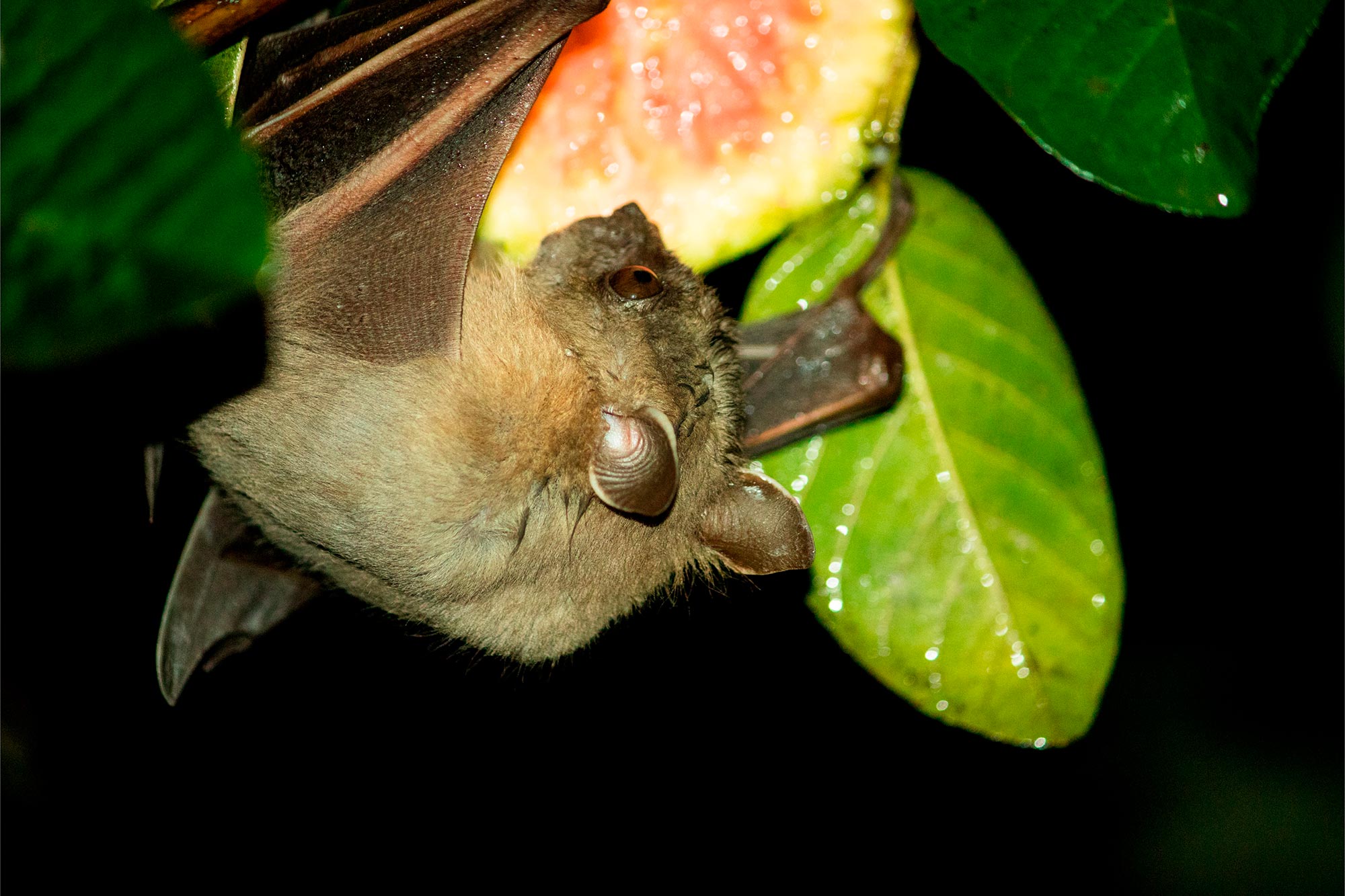
Ahituv’s team focused on evolution in the bat pancreas, which controls blood sugar, and the kidneys. They found that the fruit bat pancreas, compared to the pancreas of an insect-eating bat, had extra insulin-producing cells as well as genetic changes to help it process an immense amount of sugar. And fruit bat kidneys had adapted to ensure that vital electrolytes would be retained from their watery meals.
“Even small changes, to single letters of DNA, make this diet viable for fruit bats,” said Wei Gordon, PhD, co-first author of the paper, a recent graduate of UCSF’s TETRAD program, and assistant professor of biology at Menlo College. “We need to understand high-sugar metabolism like this to make progress helping the one in three Americans who are prediabetic.”
A Sweet Tooth Without Consequences
Each day, after 20 hours of sleep, fruit bats wake up for four hours to gorge on fruit. Then it’s back to the roost.
To understand how a fruit bat pulls off this feat of sugar consumption, Ahituv and Gordon collaborated with scientists from a variety of institutions, ranging from Yonsei University in Korea to the American Museum of Natural History in New York City, to compare the Jamaican fruit bat to the big brown bat, which only eats insects.
The researchers analyzed gene expression (which genes were on or off) and regulatory DNA (the parts of DNA that control gene expression) using a method for measuring both in individual cells.
“This newer single-cell technology can explain not only which types of cells are in which organs, but also how those cells regulate gene expression to manage each diet,” Ahituv said.
In fruit bats, the compositions of the pancreas and kidneys evolved to accommodate their diet. The pancreas had more cells to produce insulin, which tells the body to lower blood sugar, as well as more cells to produce glucagon, the other major sugar-regulating hormone. The fruit bat kidneys, meanwhile, had more cells to trap scarce salts as they filter blood.
Zooming in, the regulatory DNA in those cells had evolved to turn the appropriate genes for fruit metabolism on or off. The big brown bat, on the other hand, had more cells for breaking down protein and conserving water. And the gene expression in those cells was tuned to handle a diet of bugs.
“The organization of the DNA around the insulin and glucagon genes was very clearly different between the two bat species,” Gordon said. “The DNA around genes used to be considered ‘junk,’ but our data shows that this regulatory DNA likely helps fruit bats react to sudden increases or decreases in blood sugar.”
While some of the biology of the fruit bat resembled what’s found in humans with diabetes, the fruit bat appeared to evolve something that humans with a sweet tooth could only dream of: a sweet tooth without consequences.
“It’s remarkable to step back from model organisms, like the laboratory mouse, and discover possible solutions for human health crises out in nature,” Gordon said. “Bats have figured it out, and it’s all in their DNA, the result of natural selection.”
Superheroes of Evolution
The study benefited from a recent groundswell of interest in studying bats to better human health. Gordon and Ahituv traveled to Belize to participate in an annual Bat-a-Thon with nearly 50 other bat researchers, taking a census of wild bats as well as field samples for science. One of the Jamaican fruit bats captured at this event was used in the sugar metabolism study.
As one of the most diverse families of mammals, bats include many examples of evolutionary triumph, from their immune systems to their peculiar diets and beyond.
“For me, bats are like superheroes, each one with an amazing superpower, whether it is echolocation, flying, blood-sucking without coagulation, or eating fruit and not getting diabetes,” Ahituv said. “This kind of work is just the beginning.”
Reference: “Integrative single-cell characterization of a frugivorous and an insectivorous bat kidney and pancreas” by Wei E. Gordon, Seungbyn Baek, Hai P. Nguyen, Yien-Ming Kuo, Rachael Bradley, Sarah L. Fong, Nayeon Kim, Alex Galazyuk, Insuk Lee, Melissa R. Ingala, Nancy B. Simmons, Tony Schountz, Lisa Noelle Cooper, Ilias Georgakopoulos-Soares, Martin Hemberg and Nadav Ahituv, 9 January 2024, Nature Communications.
DOI: 10.1038/s41467-023-44186-y
Key collaborators included co-first author Seungbyn Baek, PhD, from Yonsei University (South Korea); co-senior author Martin Hemberg, PhD, from Harvard Medical School; Tony Schountz, PhD, from Colorado State University; Lisa Noelle Cooper, PhD, from Northeast Ohio Medical University; Melissa R. Ingala, PhD, Fairleigh Dickinson University; and Nancy B. Simmons, PhD, American Museum of Natural History. Other UCSF authors are Hai P. Nguyen, PhD, Yien-Ming Kuo, PhD, Rachael Bradley, and Sarah L. Fong, PhD. For all authors see the paper.
Never miss a breakthrough: Join the SciTechDaily newsletter.
Follow us on Google and Google News.
1 Comment
First time visit to this website. Excellent new information is what I like seeing on this website. Could change the world is what i like to see. Keep them coming. I’m telling my friends about this site.