
Advanced biomechanical modeling shows that early mammal ancestors likely used an eardrum to hear airborne sounds 250 million years ago.
The rise of sensitive hearing marked a major turning point in mammal evolution. The mammalian middle ear, which includes an eardrum and several tiny bones, makes it possible to detect a wide range of sounds at different volumes. This ability likely gave early mammal ancestors, many of which were active at night, a crucial advantage as they lived alongside dinosaurs.
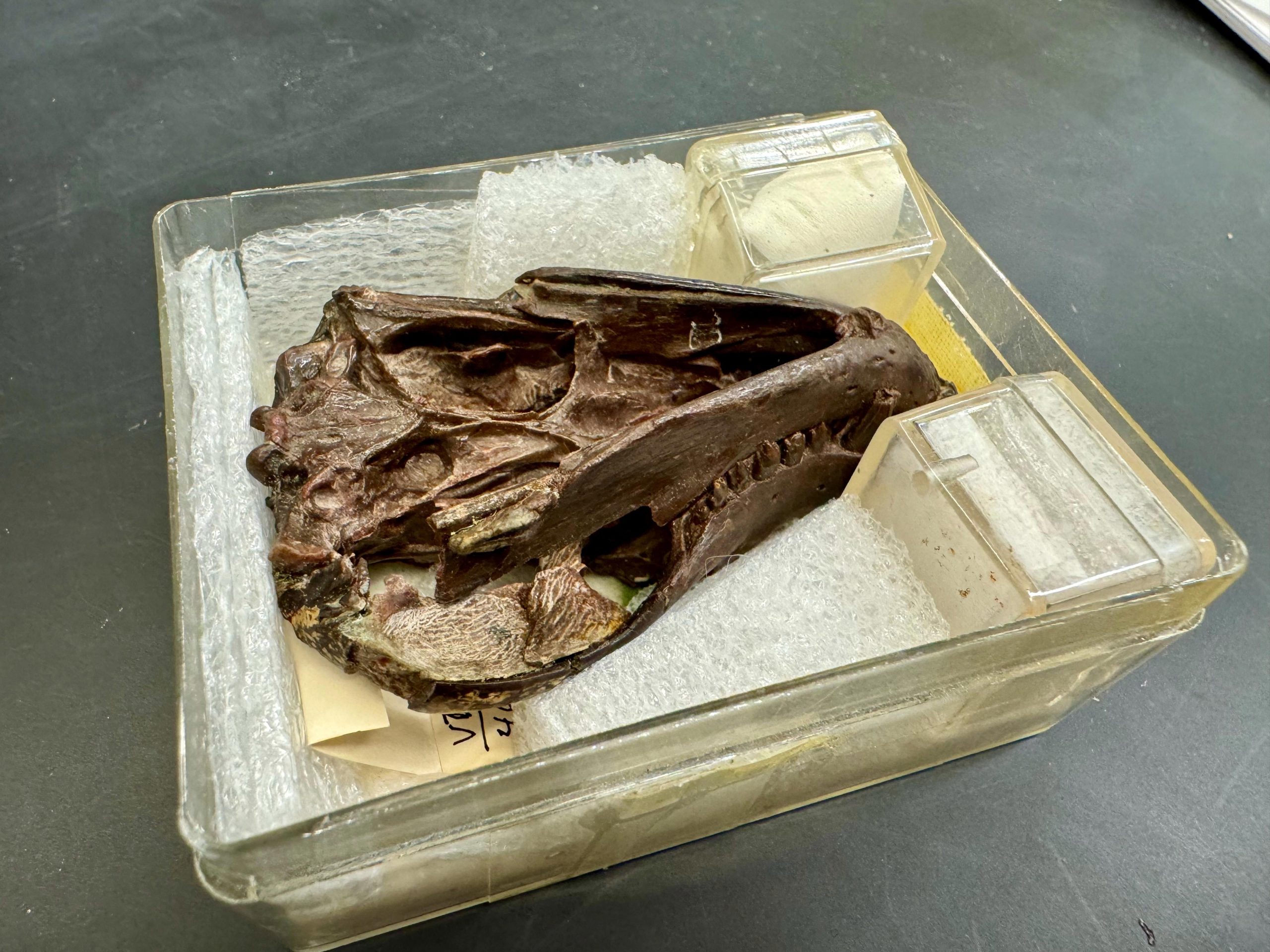
New findings from paleontologists at the University of Chicago suggest that this form of hearing appeared far earlier than scientists once believed. Using detailed CT scans of the skull and jaw of Thrinaxodon liorhinus, a mammal forerunner that lived about 250 million years ago, the researchers applied engineering techniques to model how sound waves of varying pressures and frequencies would interact with its anatomy.
The results indicate that this animal probably possessed an eardrum capable of detecting airborne sounds nearly 50 million years earlier than previous estimates for the emergence of such hearing in early mammals.
“For almost a century, scientists have been trying to figure out how these animals could hear. These ideas have captivated the imagination of paleontologists who work in mammal evolution, but until now we haven’t had very strong biomechanical tests,” said Alec Wilken, a graduate student who led the study, which was published this week in PNAS. “Now, with our advances in computational biomechanics, we can start to say smart things about what the anatomy means for how this animal could hear.”
Testing a 50-year-old hypothesis
Thrinaxodon belonged to a group called cynodonts, animals from the early Triassic period that show early steps toward mammalian traits. These included specialized teeth, changes in the palate and diaphragm that supported improved breathing and metabolism, and likely warm-bloodedness and fur.
In these early cynodonts, including Thrinaxodon, the ear bones (malleus, incus, stapes) were still connected to the jaw. In later mammals, these bones detached to form a separate middle ear, a change seen as a defining feature of modern mammal hearing.
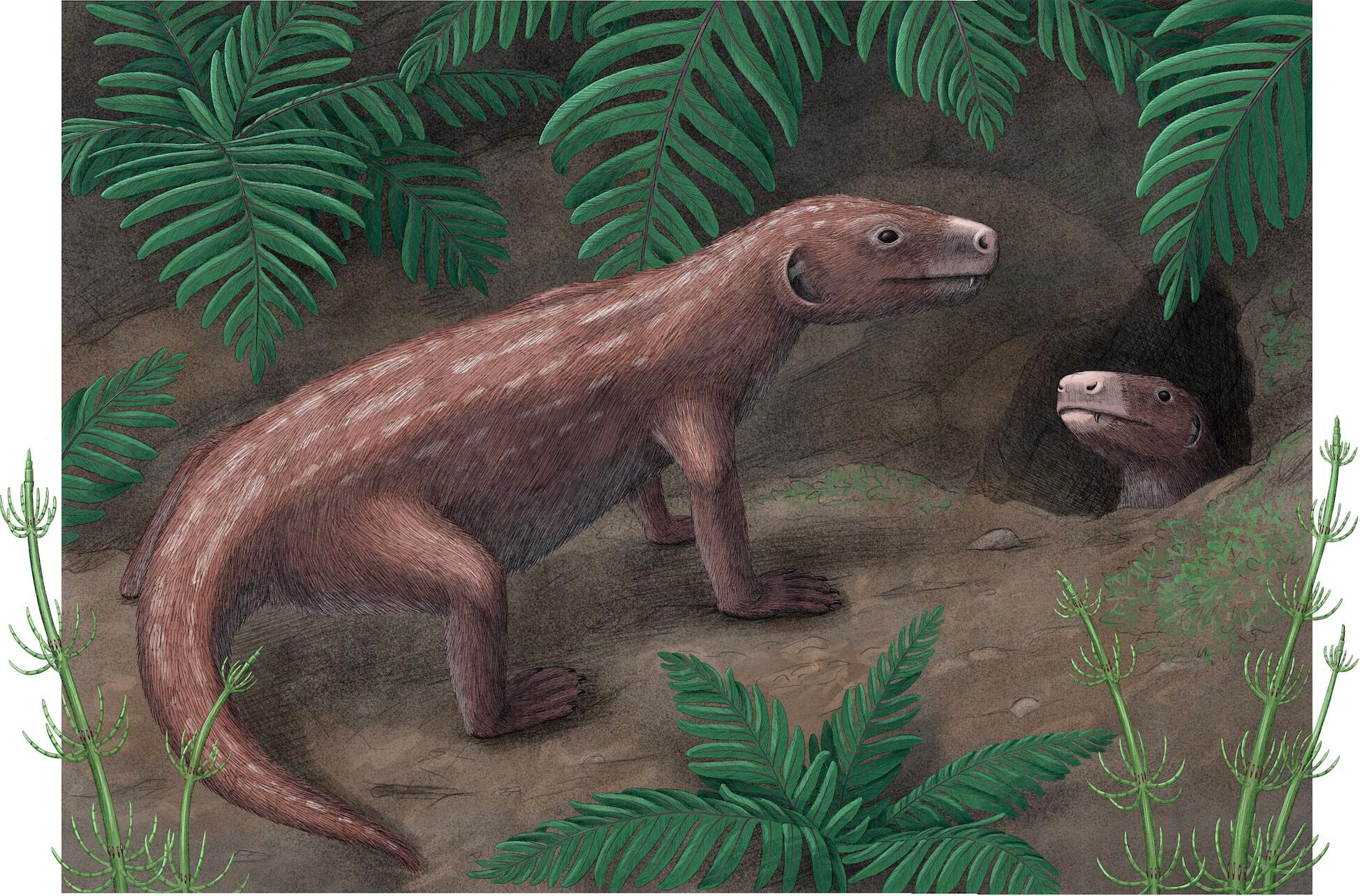
About fifty years ago, Edgar Allin, a paleontologist at the University of Illinois Chicago, proposed that cynodonts such as Thrinaxodon may have had a membrane stretched across a curved part of the jawbone that functioned as an early version of the eardrum.
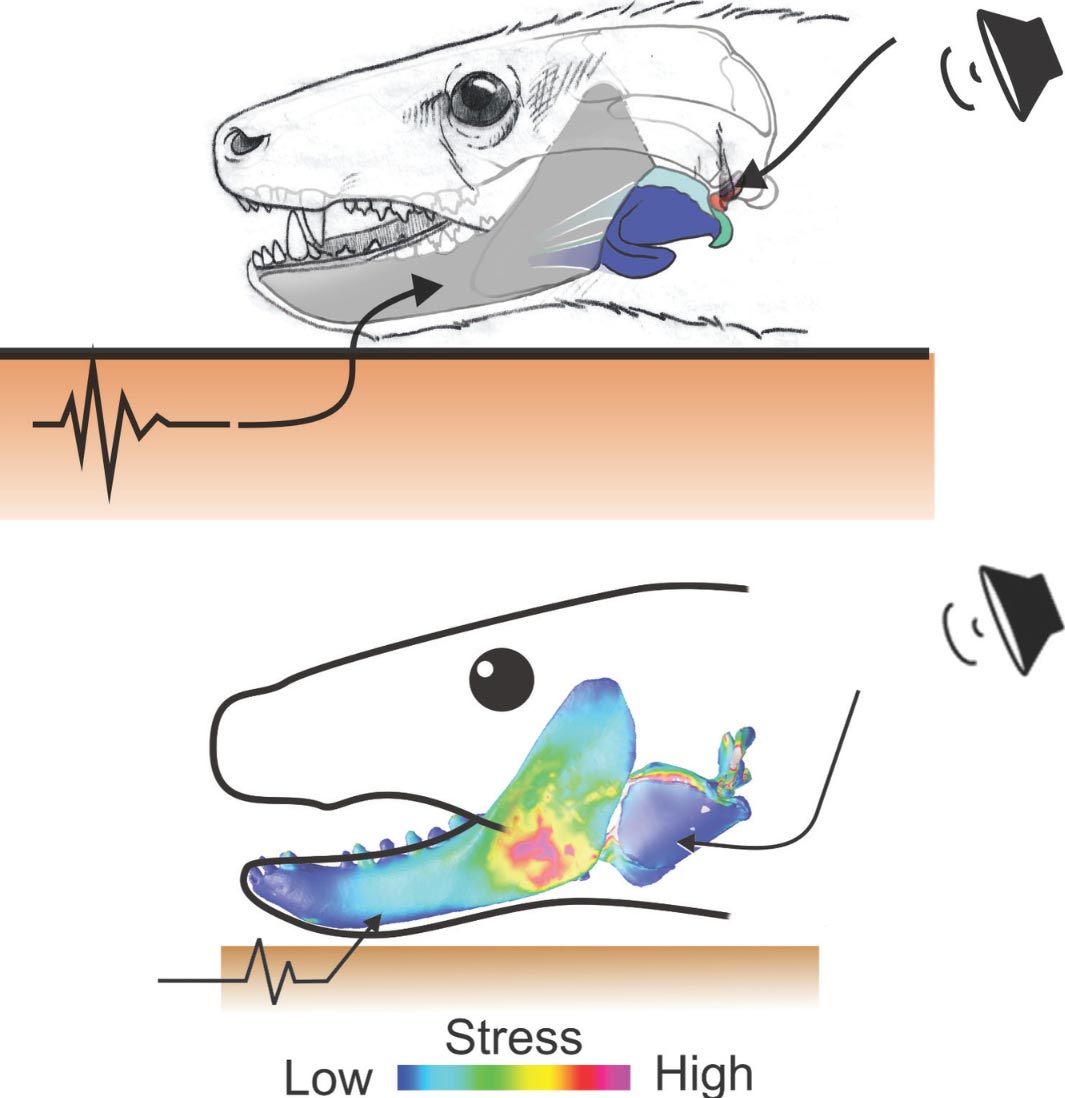
Before this idea, most researchers thought early cynodonts detected sound mainly through bone conduction, or through “jaw listening,” in which vibrations were picked up by placing the lower jaw against the ground. Although the proposed eardrum was intriguing, scientists lacked a clear way to test whether it could actually support hearing through the air.
Turning fossils into an engineering problem
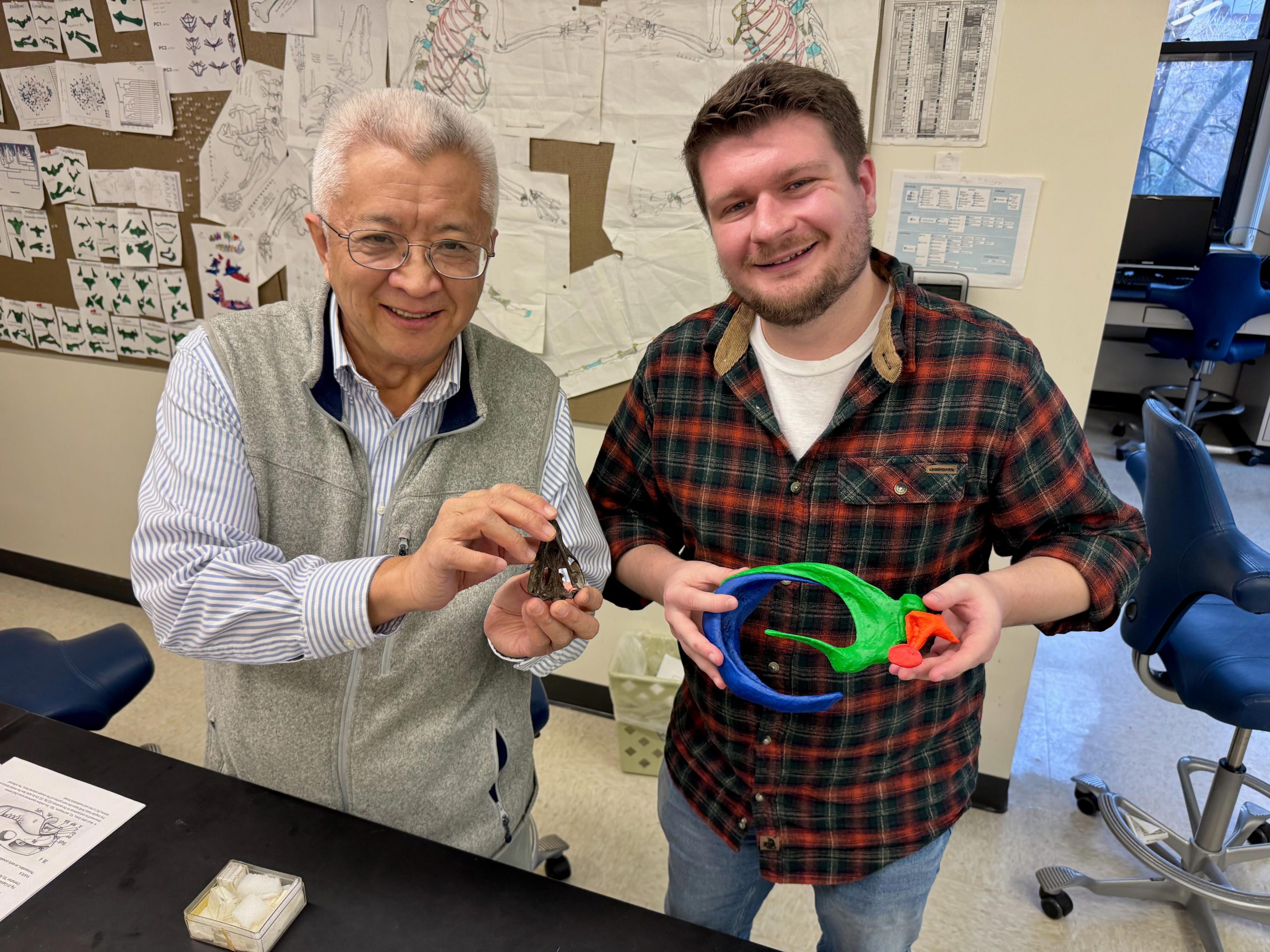
Modern imaging tools like CT scanning have revolutionized the field of paleontology, allowing scientists to unlock a wealth of information that wouldn’t have been possible through studying physical specimens alone. Wilken and his advisors, Zhe-Xi Luo, PhD, and Callum Ross, PhD, both Professors of Organismal Biology and Anatomy, took a well-known Thrinaxodon specimen from the University of California Berkeley Museum of Paleontology and scanned it in UChicago’s PaleoCT Laboratory.
The resulting 3D model gave them a highly detailed reconstruction of its skull and jawbones, with all the dimensions, shapes, angles and curves they needed to determine how a potential eardrum might function.
Next, they used a software tool called Strand7 to perform finite element analysis, an approach that breaks down a system into smaller parts with different physical characteristics.
Such tools are usually used for complex engineering problems, like predicting stresses on bridges, aircraft, and buildings, or analyzing heat distribution in engines. The team used the software to simulate how the anatomy of Thrinaxodon would respond to different sound pressures and frequencies, using a library of known properties about the thickness, density, and flexibility of bones, ligaments, muscles, and skin from living animals.
Evidence for early airborne hearing
The results were loud and clear: Thrinaxodon, with an eardrum tucked into a crook on its jawbone, could definitely hear that way much more effectively than through bone conduction. The size and shape of its eardrum would have produced the right vibrations to move the ear bones and generate enough pressure to stimulate its auditory nerves and detect sound frequencies. While it still would have relied on some jaw listening, the eardrum was already responsible for most of its hearing.
“Once we have the CT model from the fossil, we can take material properties from extant animals and make it as if our Thrinaxodon came alive,” Luo said. “That hasn’t been possible before, and this software simulation showed us that vibration through sound is essentially the way this animal could hear.”
Wilken said the new technology allowed them to answer an old question by turning it into an engineering problem. “That’s why this is such a cool problem to study,” he said. “We took a high concept problem—that is, ‘how do ear bones wiggle in a 250-million-year-old fossil?’—and tested a simple hypothesis using these sophisticated tools. And it turns out in Thrinaxodon, the eardrum does just fine all by itself.”
Reference: “Biomechanics of the mandibular middle ear of the cynodont Thrinaxodon and the evolution of mammal hearing” by Alec T. Wilken, Chelsie C. G. Snipes, Callum F. Ross and Zhe-Xi Luo, 8 December 2025, Proceedings of the National Academy of Sciences.
DOI: 10.1073/pnas.2516082122
This work was funded by the University of Chicago Department of Organismal Biology and Anatomy, training fellowship to A.T.W. from NINDS NIH T32NS121763-01A1, and funding to C.F.R. and Z.-X.L. from NSF (IOS 2315501).
Never miss a breakthrough: Join the SciTechDaily newsletter.
Follow us on Google and Google News.
1 Comment
Oh lookie another “rewriting history of xxxxx” article.
“We took a high concept problem—that is, ‘how do ear bones wiggle in a 250-million-year-old fossil?’
How? Because that fossil is not 250 million years old!