
Close Menu
    Facebook X (Twitter) Instagram
    SciTechDaily
    • Biology
    • Chemistry
    • Earth
    • Health
    • Physics
    • Science
    • Space
    • Technology
    Facebook X (Twitter) Pinterest YouTube RSS
    SciTechDaily
    Home»Science»This Ancient Ape Fossil Could Change Where Humans Came From
    Science

    This Ancient Ape Fossil Could Change Where Humans Came From

    By Walter Beckwith, American Association for the Advancement of Science (AAAS)March 26, 20262 Comments3 Mins Read
    Facebook Twitter Pinterest Telegram LinkedIn WhatsApp Email Reddit
    Share
    Facebook Twitter LinkedIn Pinterest Telegram Email Reddit
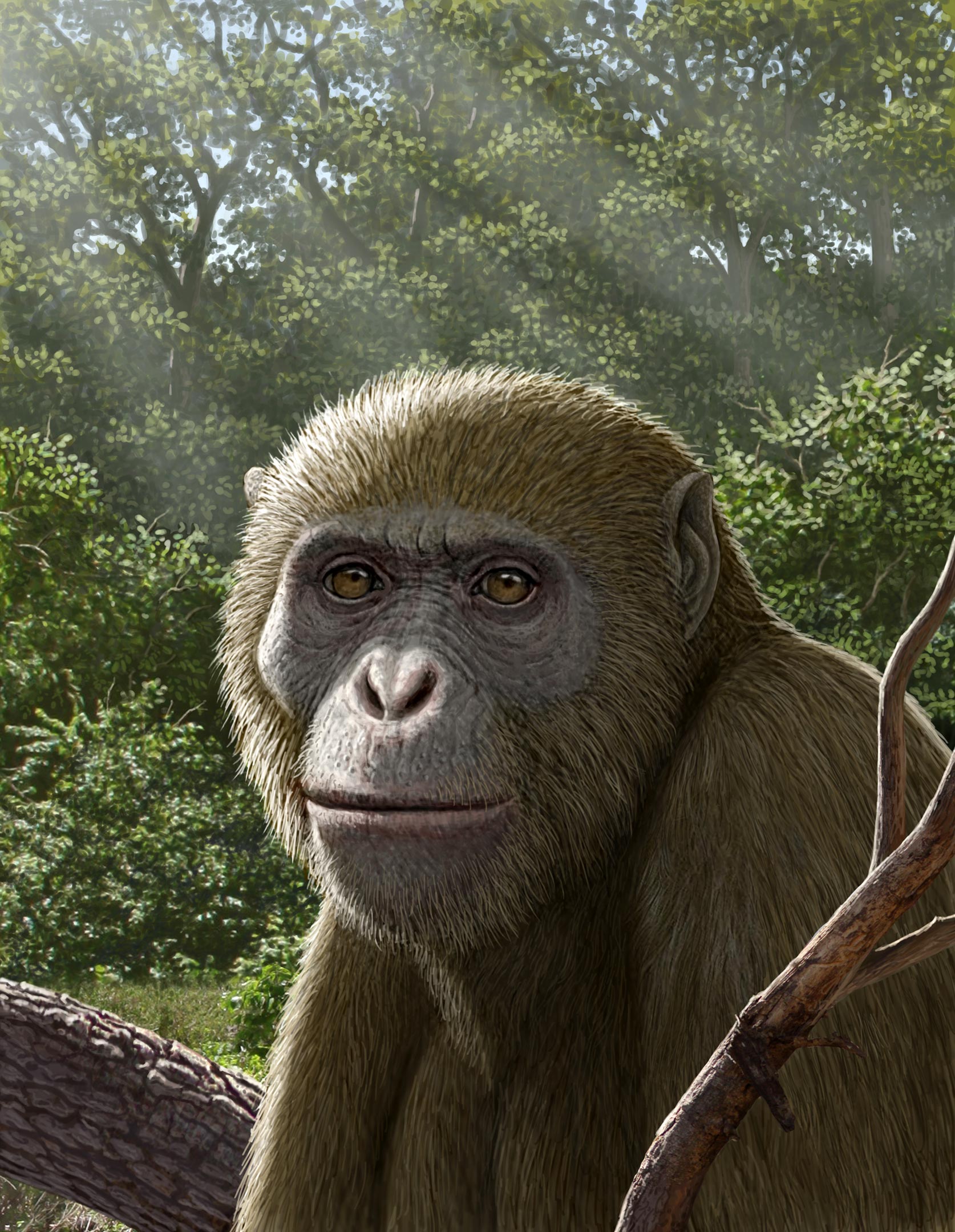
    Masripithecus
    Reconstruction of Masripithecus moghraensis by Mauricio Antón. Credit: Professor Hesham Sallam

    A fossil from Egypt hints we’ve been searching for humanity’s ape ancestors in the wrong place.

    Researchers say a newly uncovered fossil ape from northern Egypt is changing how scientists think about early hominoid evolution. The discovery points to northern Africa, rather than the more commonly studied regions of East Africa, as a possible birthplace for the ancestors of modern apes. “[The] findings […] confirm that paleontologists might have been looking for crown-hominoid ancestors in the wrong place,” write David Alba and Júlia Arias-Martorell in a related Perspective.

    The fossil dates to roughly 17-18 million years ago and belongs to a newly identified species called Masripithecus. It is considered the closest known hominoid relative to the lineage that eventually led to all living apes, including humans. Scientists widely agree that the earliest apes (stem hominoids) first appeared in Afro-Arabia during the Oligocene Epoch more than 25 million years ago. These early apes later spread into Eurasia between about 14 and 16 million years ago during the Miocene. Still, the exact origin of modern apes, which include all living species and their last common ancestor, remains unclear due to limited and scattered fossil evidence. Much of Africa’s fossil record is uneven, with discoveries concentrated in a few areas, leaving large regions from this time period largely unexplored.
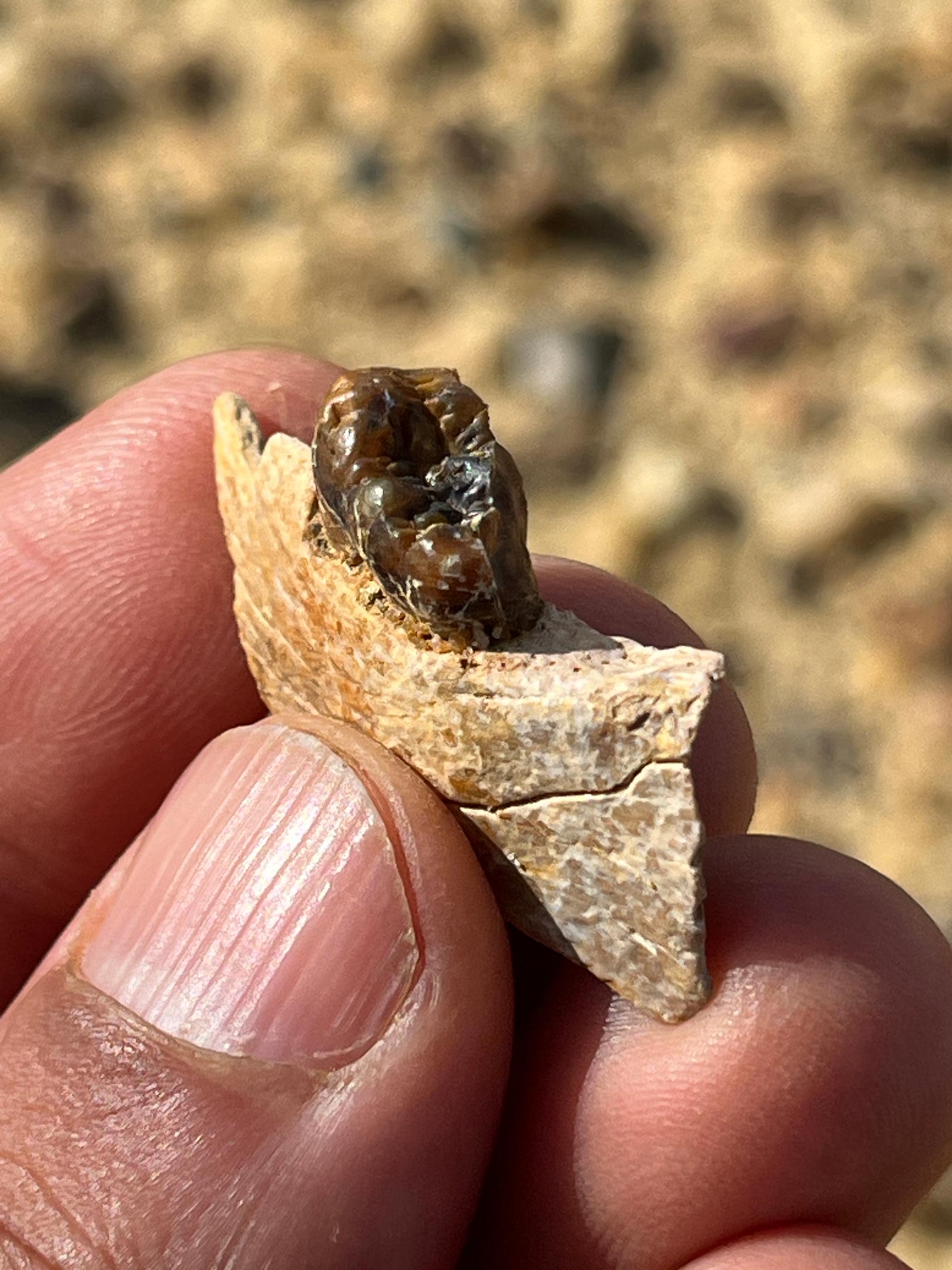
    Masripithecus moghraensis Mandibular Fragment
    Masripithecus moghraensis mandibular fragment with right M3 at the moment of discovery. Credit: Professor Hesham Sallam

    Masripithecus Discovery in Northern Egypt

    In the new study, Shorouq Al-Ashqar and colleagues describe the fossil, which was found in the Wadi Moghra region of northern Egypt and dates to about 17-18 million years ago. The species, named Masripithecus moghraensis, provides new insight into ape diversity during a critical period when land connections between Afro-Arabia and Eurasia allowed animals to move between continents.

    To understand where this species fits in the evolutionary tree, the researchers used a Bayesian “tip-dating” method that combines physical characteristics with fossil ages to estimate evolutionary relationships and timing. Their results indicate that Masripithecus is a stem hominoid closely related to the lineage that produced all modern apes.

    A New Possible Origin for Modern Apes

    Based on these findings, the researchers suggest that modern apes may have originated in northern Afro-Arabia, the Levant, or the eastern Mediterranean. This challenges long-standing assumptions and highlights how much remains to be discovered about the early evolution of apes and humans.

    Reference: “An Early Miocene ape from the biogeographic crossroads of African and Eurasian Hominoidea” by Shorouq F. Al-Ashqar, Erik R. Seiffert, Sanaa El-Sayed, Belal S. Salem, Abdullah S. Gohar, Hossam El-Saka, Mohamed Amin and Hesham M. Sallam, 26 March 2026, Science.
    DOI: 10.1126/science.adz4102

    Never miss a breakthrough: Join the SciTechDaily newsletter.
    Follow us on Google and Google News.

    American Association for the Advancement of Science Anthropology Paleontology Popular
    Share. Facebook Twitter Pinterest LinkedIn Email Reddit

    Related Articles

    Modern Human-Like Brains Evolved Long After Earliest Humans First Dispersed From Africa

    Earliest Homo Populations in Africa Had Primitive Ape-Like Brains – Just Half the Size of Today’s Humans

    Crystals Reveal Early Humans in the Kalahari 105,000 Years Ago Were As Innovative as Their Coastal Neighbors

    First Human Migration From Asia to North America Helped by Warm Oceans

    A New Clue to the Timeline of Human Evolution

    DNA of Bones Found in Cave Reveals Major Cultural Transition in Europe Took Place Earlier Than Thought

    Earliest Interbreeding Between Ancient Human Populations Discovered – Evolutionary Puzzle Solved

    New Evidence Shows Humans Mastered Fire Earlier Than Thought

    Jaw Structures of Fossils Seems to Suggest That Three Homo Species Roamed Africa Concurrently

    2 Comments

    1. Robert on March 27, 2026 7:18 am

      Afro-centrists get the raw deal again.

      Reply
      • Wattle blossom on March 29, 2026 12:03 pm

        Last I checked Egypt was still in Africa.
        No evidence was given as to why our ancestors might have evolved in the Levant, just a bare assertion that is counter to all other reasoning. Why would 90% of human DNA diversity be in Africa if we evolved elsewhere?

        Reply
    Leave A Reply Cancel Reply

    • Facebook
    • Twitter
    • Pinterest
    • YouTube

    Don't Miss a Discovery

    Subscribe for the Latest in Science & Tech!

    Trending News

    The Universe Is Expanding Too Fast and Scientists Can’t Explain Why

    “Like Liquid Metal”: Scientists Create Strange Shape-Shifting Material

    Early Warning Signals of Esophageal Cancer May Be Hiding in Plain Sight

    Common Blood Pressure Drug Shows Surprising Power Against Deadly Antibiotic-Resistant Superbug

    Scientists Uncover Dangerous Connection Between Serotonin and Heart Valve Disease

    Scientists Discover a “Protector” Protein That Could Help Reverse Hair Loss

    Bone-Strengthening Discovery Could Reverse Osteoporosis

    Scientists Uncover Hidden Trigger Behind Stem Cell Aging

    Follow SciTechDaily
    • Facebook
    • Twitter
    • YouTube
    • Pinterest
    • Newsletter
    • RSS
    SciTech News
    • Biology News
    • Chemistry News
    • Earth News
    • Health News
    • Physics News
    • Science News
    • Space News
    • Technology News
    Recent Posts
    • A Common Diabetes Drug May Hold the Key to Stopping HIV From Coming Back
    • Ancient “Syphilis-Like” Disease in Vietnam Challenges Key Scientific Assumptions
    • Drinking Alcohol To Cope in Your 20s Could Damage Your Brain for Life
    • Scientists Crack Alfalfa’s Chromosome Mystery After Decades of Debate
    • Ancient Ant-Plant Alliance Collapses As Predatory Wasps Move In
    Copyright © 1998 - 2026 SciTechDaily. All Rights Reserved.
    • Science News
    • About
    • Contact
    • Editorial Board
    • Privacy Policy
    • Terms of Use

    Type above and press Enter to search. Press Esc to cancel.