
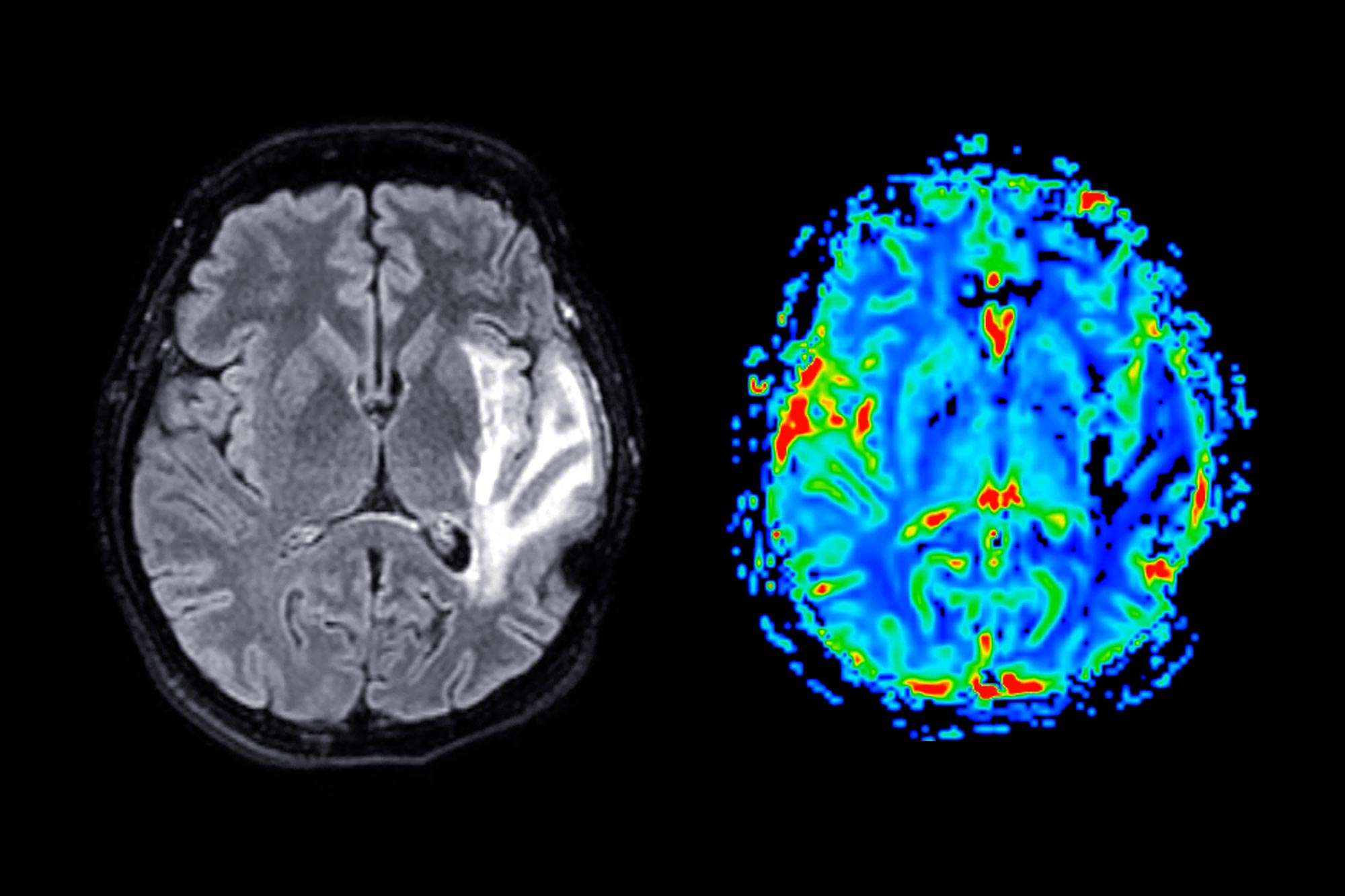
Scientists found that soccer fans’ emotional highs and lows activate specific brain circuits tied to reward and control.
Winning lights up the brain’s reward centers, while losing suppresses cognitive control, explaining why intense fans sometimes act irrationally. The patterns mirror those seen in political or sectarian fanaticism, showing how early-life experiences shape susceptibility to extreme group identities.
The Emotional Brain of Soccer Fans
Studying brain patterns in soccer fans, researchers found that certain circuit regions of the brain were activated while viewing soccer matches involving their favorite team, triggering positive and negative emotions and behaviors, according to a new study published today (November 11) in Radiology, a journal of the Radiological Society of North America (RSNA). The researchers say these patterns could apply to other types of fanaticism as well, and that the circuits are forged early in life.
Soccer is followed worldwide and offers a clear view of how people behave, from casual watching to intense emotional involvement. This wide range makes it a strong model for examining social identity and how emotions are processed during competition.
History shows that sports rivalries can be powerful, and many fans fiercely defend their “home” team and favorite players. Over a single match, they may celebrate a goal or become angry at a disputed call. Loyalty and enthusiasm are especially visible among fans in Europe and South America.
Investigating the Neuroscience of Fanaticism
“Soccer fandom provides a high-ecological-validity model of fanaticism with quantifiable life consequences for health and collective behavior,” said lead author Francisco Zamorano, biologist, Ph.D. in medical sciences at Clínica Alemana de Santiago and associate professor at Facultad de Ciencias para el Cuidado de la Salud, Universidad San Sebastián, Santiago, Chile. “While social affiliation has been widely studied, the neurobiological mechanisms of social identity in competitive settings are unclear, so we set out to investigate the brain mechanisms associated with emotional responses in soccer fans to their teams’ victories and losses.”
For the study, researchers used functional MRI (fMRI)—a technique that measures brain activity by detecting changes in blood flow—to examine 60 healthy male soccer fans (20–45 years) of two historic rivals. Fanaticism was quantified with the Football Supporters Fanaticism Scale, a 13-item scale that measures the fanaticism of football fans, assessing two sub-dimensions: “Inclination to Violence” and “Sense of Belongingness.”
Brain imaging data were collected while participants viewed 63 goal clips from matches featuring their favorite team, a rival, or a neutral team. The team then performed a whole-brain analysis to compare responses when a favorite team scored against an archrival (significant victory) with responses when the archrival scored against the participant’s team (significant defeat), alongside control conditions for non-rival goals.
How Victory and Defeat Rewire the Brain
The fMRI scans showed clear shifts in brain activity depending on whether a fan’s team succeeded or failed.
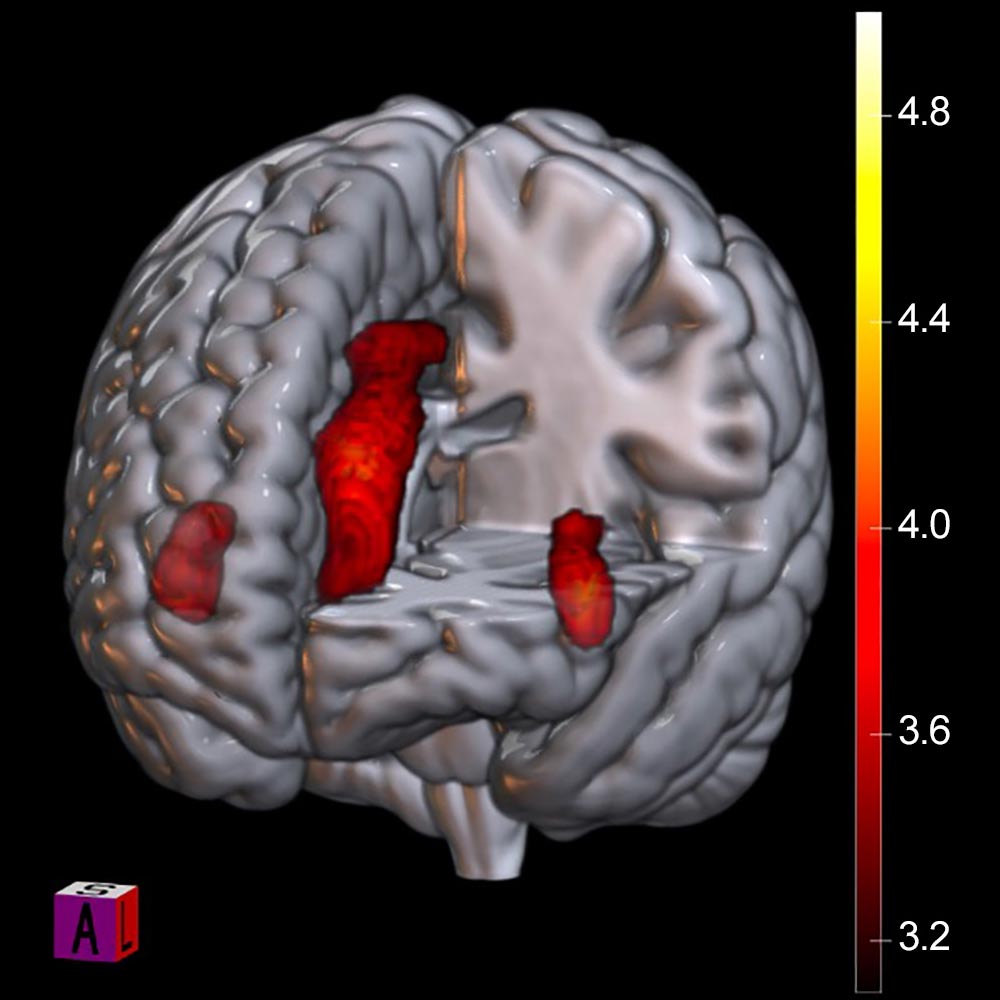
“Rivalry rapidly reconfigures the brain’s valuation–control balance within seconds,” Dr. Zamorano said. “With significant victory, the reward circuitry in the brain is amplified relative to non-rival wins, whereas in significant defeat the dorsal anterior cingulate cortex (dACC)—which plays an important role in cognitive control—shows paradoxical suppression of control signals.”
Paradoxical suppression refers to attempting to suppress a thought, feeling, or behavior, only to produce the opposite effect.
Reward, Identity, and the Fanatic Flip
Higher activation in the reward system regions occurred when participants’ teams scored against rivals versus non-rivals, suggesting in-group bonding and social identity reinforcement. Dr. Zamorano notes that the effect is strongest in highly fanatic participants, predicting momentary self-regulatory failure precisely when identity is threatened and accounting for the puzzling ability of otherwise rational individuals to suddenly “flip” at matches.
“Clinically, the pattern implies a state-dependent vulnerability whereby a brief cooling-off or removal from triggers might permit the dACC/salience control system to recover,” he said. “The same neural signature—reward up, control down under rivalry—likely generalizes beyond sport to political and sectarian conflicts.”
The neural results identify mechanisms that may inform communication, crowd management, and prevention strategies around high-stakes events in the reward amplification and control down-regulation under rivalry, Dr. Zamorano noted.
“Studying fanaticism matters because it reveals generalizable neural mechanisms that can scale from stadium passion to polarization, violence, and population-level public-health harm,” he said. “Most importantly, these very circuits are forged in early life: caregiving quality, stress exposure, and social learning sculpt the valuation–control balance that later makes individuals vulnerable to fanatic appeals. Therefore, protecting childhood is the most powerful prevention strategy. Societies that neglect early development do not avoid fanaticism; they inherit its harms.”
From Stadiums to Politics
Soccer fandom offers an ethical, high-validity proxy to time-lock these processes in the brain and to test interventions (framing, fairness cues, event design, crowd management, etc.) that translate to politics, sectarianism, and digital tribalism, he noted.
Dr. Zamorano adds that urgency is evident in today’s global conflicts and political narratives. For example, he said the January 6, 2021, U.S. Capitol assault, demonstrated how political fanaticism can override democratic norms when identity fusion reaches critical mass.
“The participants showed classic signs of compromised cognitive control, exactly what our study found in the reduced dACC activation,” Dr. Zamorano said. “In short, investigating fanaticism is not merely descriptive—it is developmentally informed prevention that protects public health and strengthens democratic cohesion. When we discuss fanaticism, the facts speak for themselves.”
Reference: “Brain Mechanisms across the Spectrum of Engagement in Football Fans: A Functional Neuroimaging Study” by Francisco Zamorano, José María Hurtado, Patricio Carvajal-Paredes, César Salinas, Ximena Stecher, Patricia Soto-Icaza, Rommy Von Bernhardi, Waldemar Méndez, Pablo Billeke, Vladimir López and Claudio Silva, 11 November 2025, Radiology.
DOI: 10.1148/radiol.242595
Collaborating with Dr. Zamorano were José María Hurtado, Ph.D., Patricio Carvajal-Paredes, Ph.D., César Salinas, M.T., Ximena Stecher, M.D., Patricia Soto-Icaza, Ph.D., Rommy Von Bernhardi, M.D., Ph.D., Waldemar Méndez, Pablo Billeke, M.D., Ph.D., Vladimir López, M.D., Ph.D., and Claudio Silva, M.D., Ph.D.
Never miss a breakthrough: Join the SciTechDaily newsletter.
Follow us on Google and Google News.