
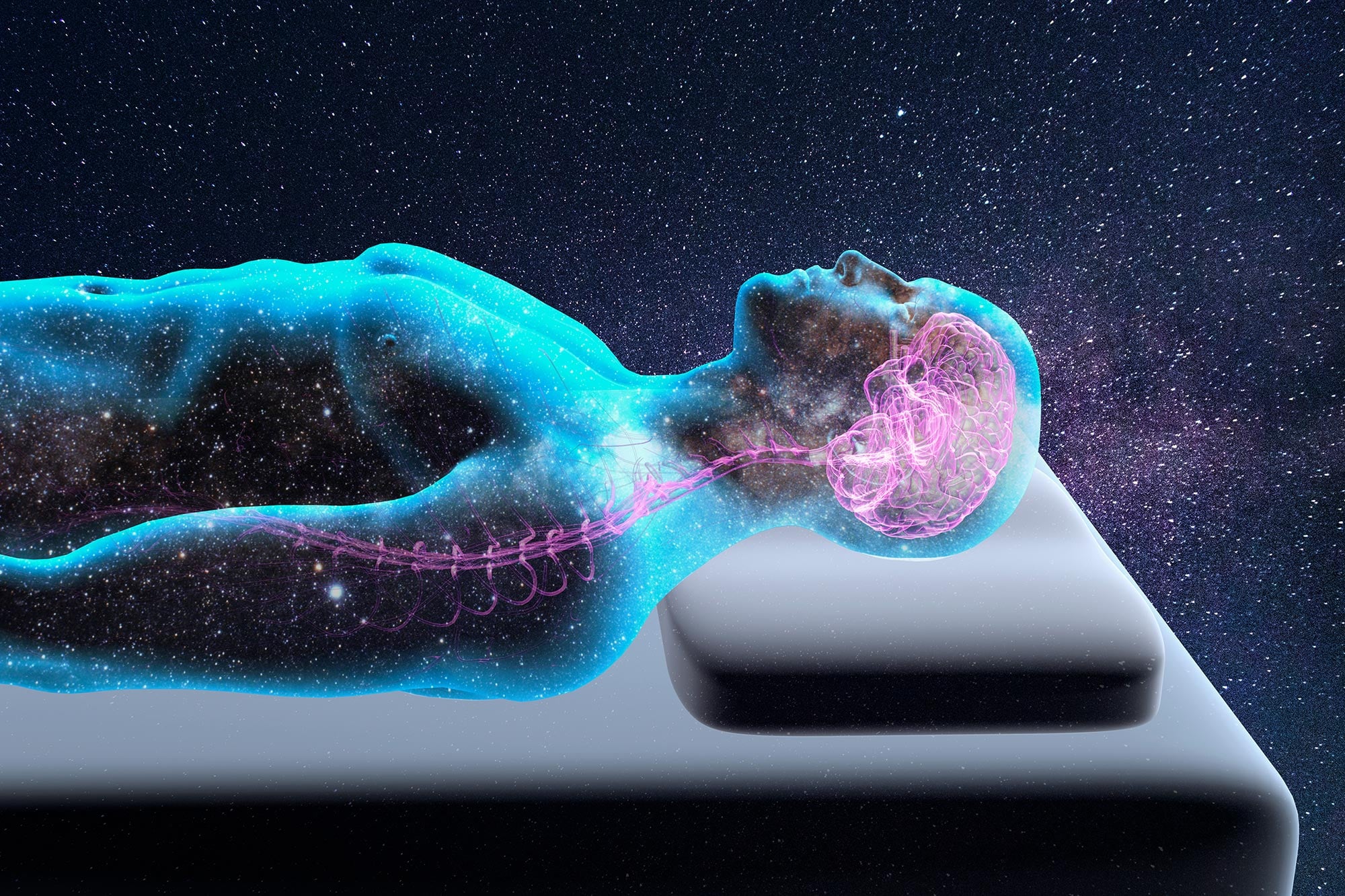
Researchers outline a roadmap for applying transcranial focused ultrasound, a noninvasive technique for stimulating the brain and studying how it works.
Consciousness has long been described as one of science’s most difficult puzzles. Researchers still do not fully understand how physical processes in the brain give rise to thoughts, sensations, and feelings. A developing research method known as transcranial focused ultrasound, however, may offer a new way to explore how this transformation happens.
Although the technology has been available for several years, it has not yet been widely adopted in research settings. Now, two MIT researchers are preparing to use it in a new series of experiments and have published what they call a “roadmap” outlining how the technique could be applied to the scientific study of consciousness.
“Transcranial focused ultrasound will let you stimulate different parts of the brain in healthy subjects, in ways you just couldn’t before,” says Daniel Freeman, an MIT researcher and co-author of a new paper on the subject. “This is a tool that’s not just useful for medicine or even basic science, but could also help address the hard problem of consciousness. It can probe where in the brain are the neural circuits that generate a sense of pain, a sense of vision, or even something as complex as human thought.”
Unlike other brain stimulation methods, transcranial focused ultrasound does not require surgery and can reach deeper brain regions with higher precision than approaches such as transcranial magnetic or electrical stimulation.
“There are very few reliable ways of manipulating brain activity that are safe but also work,” says Matthias Michel, an MIT philosopher who studies consciousness and co-authored the new work.
The paper was recently published in Neuroscience and Biobehavioral Reviews. The authors are Freeman, a technical staff member at MIT Lincoln Laboratory; Brian Odegaard, an assistant professor of psychology at the University of Florida; Seung-Schik Yoo, an associate professor of radiology at Brigham and Women’s Hospital and Harvard Medical School; and Michel, an associate professor in MIT’s Department of Philosophy and Linguistics.
Moving from observation to causality
Studying the human brain is especially challenging because of the limits involved in working with healthy volunteers. Outside of neurosurgery, scientists have few options for directly accessing deep brain structures. Noninvasive tools such as MRI scans and ultrasound can provide images, while electroencephalography (EEG) records electrical activity across the brain’s surface. Transcranial focused ultrasound offers something different. By sending acoustic waves through the skull and concentrating them on a region just a few millimeters wide, researchers can stimulate specific brain areas and observe the effects.
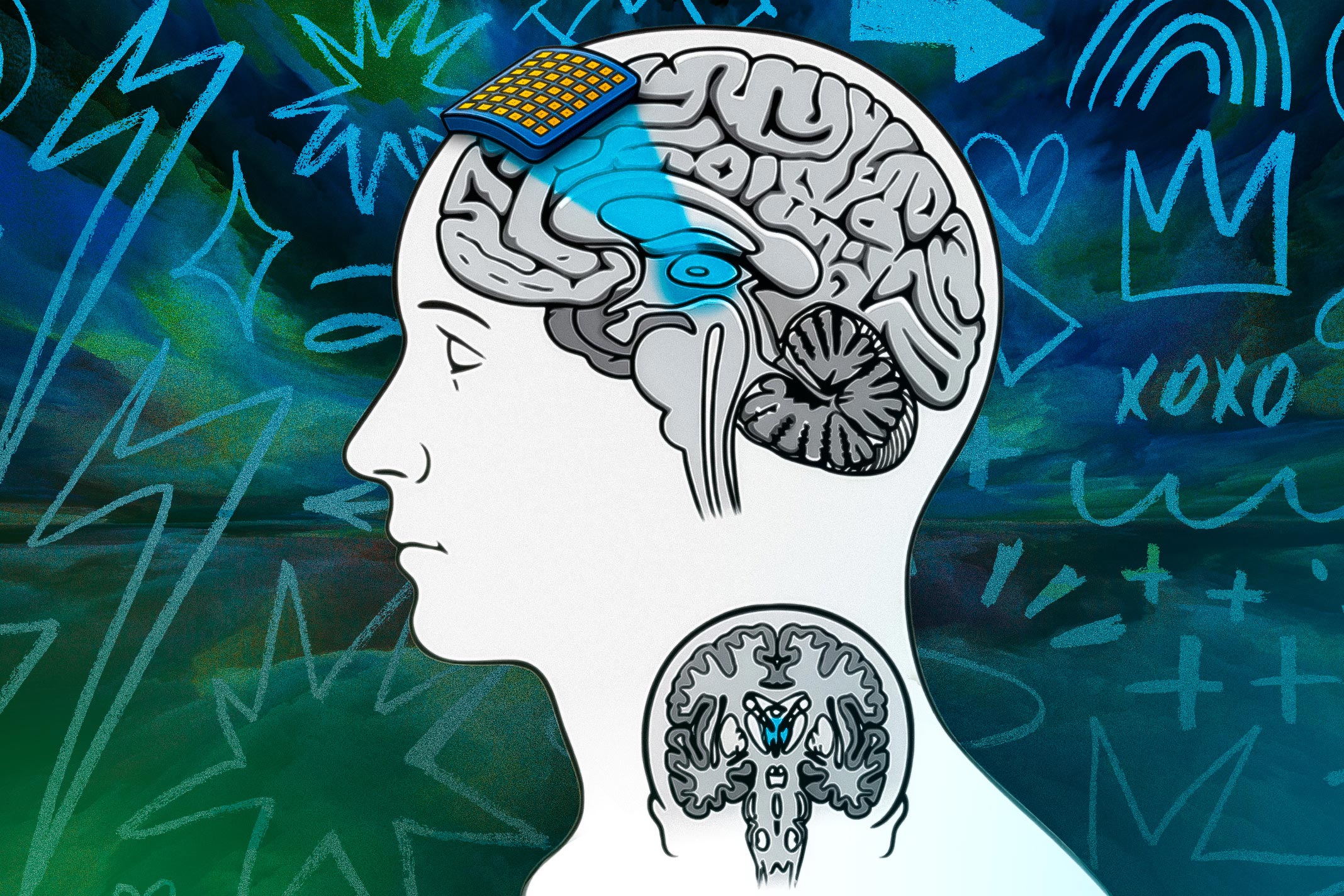
“It truly is the first time in history that one can modulate activity deep in the brain, centimeters from the scalp, examining subcortical structures with high spatial resolution,” Freeman says. “There’s a lot of interesting emotional circuits that are deep in the brain, but until now you couldn’t manipulate them outside of the operating room.”
This ability to alter brain activity directly could help resolve long-standing questions about cause and effect in consciousness research. Many current studies track brain signals while people process visual information or other sensory input, but it is often unclear whether those signals produce conscious experience or simply follow it. By actively changing neural activity, researchers may be able to distinguish brain processes that generate consciousness from those that reflect its aftermath.
“Transcranial focused ultrasound gives us a solution to that problem,” says Michel.
Testing competing theories of consciousness
The “roadmap” laid out in the new paper aims to help distinguish between two main conceptions of consciousness. Broadly, the “cognitivist” conception holds that the neural activity that generates conscious experience must involve higher-level mental processes, such as reasoning or self-reflection. These processes link information from many different parts of the brain into a coherent whole, likely using the frontal cortex of the brain.
By contrast, the “non-cognitivist” idea of consciousness takes the position that conscious experience does not require such cognitive machinery; instead, specific patterns of neural activity give rise directly to particular subjective experiences, without the need for sophisticated interpretive processes. In this view, brain activity responsible for consciousness may be more localized, at the back of the cortex or in subcortical structures at the back of the brain.
To use transcranial focused ultrasound productively, the researchers lay out a series of more specific questions that experiments might address: What is the role of the prefrontal cortex in conscious perception? Is perception generated locally, or are brain-wide networks required? If consciousness arises across distant regions of the brain, how are perceptions from those areas linked into one unified experience? And what is the role of subcortical structures in conscious activity?
By modulating brain activity in experiments involving, say, visual stimuli, researchers could draw closer to answers about the brain areas that are necessary in the production of conscious thought. The same goes for studies of, for instance, pain, another core sensation linked with consciousness. We pull our hand back from a hot stove before the pain hits us. But how is the conscious sensation of pain generated, and where in the brain does that happen?
“It’s a basic science question, how is pain generated in the brain,” Freeman says. “And it’s surprising there is such uncertainty … Pain could stem from cortical areas, or it could be deeper brain structures. I’m interested in therapies, but I’m also curious if subcortical structures may play a bigger role than appreciated. It could be that the physical manifestation of pain is subcortical. That’s a hypothesis. But now we have a tool to examine it.”
From roadmap to real experiments
Freeman and Michel are not just abstractly charting a course for others to follow; they are planning forthcoming experiments centered on stimulation of the visual cortex, before moving on to higher-level areas in frontal cortex. While methods of recording brain activity, such as an EEG, reveal areas that are visually responsive, these new experiments are aiming to build a more complete, causal picture of the entire process of visual perception and its associated brain activity.
“It’s one thing to say if these neurons responded electrically. It’s another thing to say if a person saw light,” Freeman says.
Michel, for his part, is also playing an active role in generating further interest in studies of consciousness at MIT. Along with Earl Miller, the Picower Professor of Neuroscience in MIT’s Department of Brain and Cognitive Sciences, Michel is a co-founder of the MIT Consciousness Club, a cross-disciplinary effort to spur further academic study of consciousness, on campus and at other Boston-area institutions.
The MIT Consciousness Club is supported in part by MITHIC, the MIT Human Insight Collaborative, an initiative backed by the School of Humanities, Arts, and Social Sciences. The program aims to hold monthly events, while grappling with the cutting edge of consciousness research.
At the moment, Michel believes, the cutting edge very much involves transcranial focused ultrasound.
“It’s a new tool, so we don’t really know to what extent it’s going to work,” Michel says. “But I feel there’s low risk and high reward. Why wouldn’t you take this path?”
Reference: “Transcranial focused ultrasound for identifying the neural substrate of conscious perception” by Daniel K. Freeman, Brian Odegaard, Seung-Schik Yoo and Matthias Michel, 19 November 2025, Neuroscience & Biobehavioral Reviews.
DOI: 10.1016/j.neubiorev.2025.106485
The research for the paper was supported by the U.S. Department of the Air Force.
Never miss a breakthrough: Join the SciTechDaily newsletter.
Follow us on Google and Google News.
2 Comments
La science et la matière n’appartiennent pas à la même dimension.
Solving the problem how consciousness works will be the culmination of our knowledge about life, and I believe that humans will achieve that. Along with that, a unified theory in physics will help in explaining the physical world that allows the existence of consciousness.
In my opinion, consciousness is an emergent property of matter, and it’s emergence is not a chance coincidence. It is deterministic, and in the universe, which remains in an infinite loop of pulsations, life and consciousness will always emerge in each expanding phase. Even chance accidents cannot prevent it .