
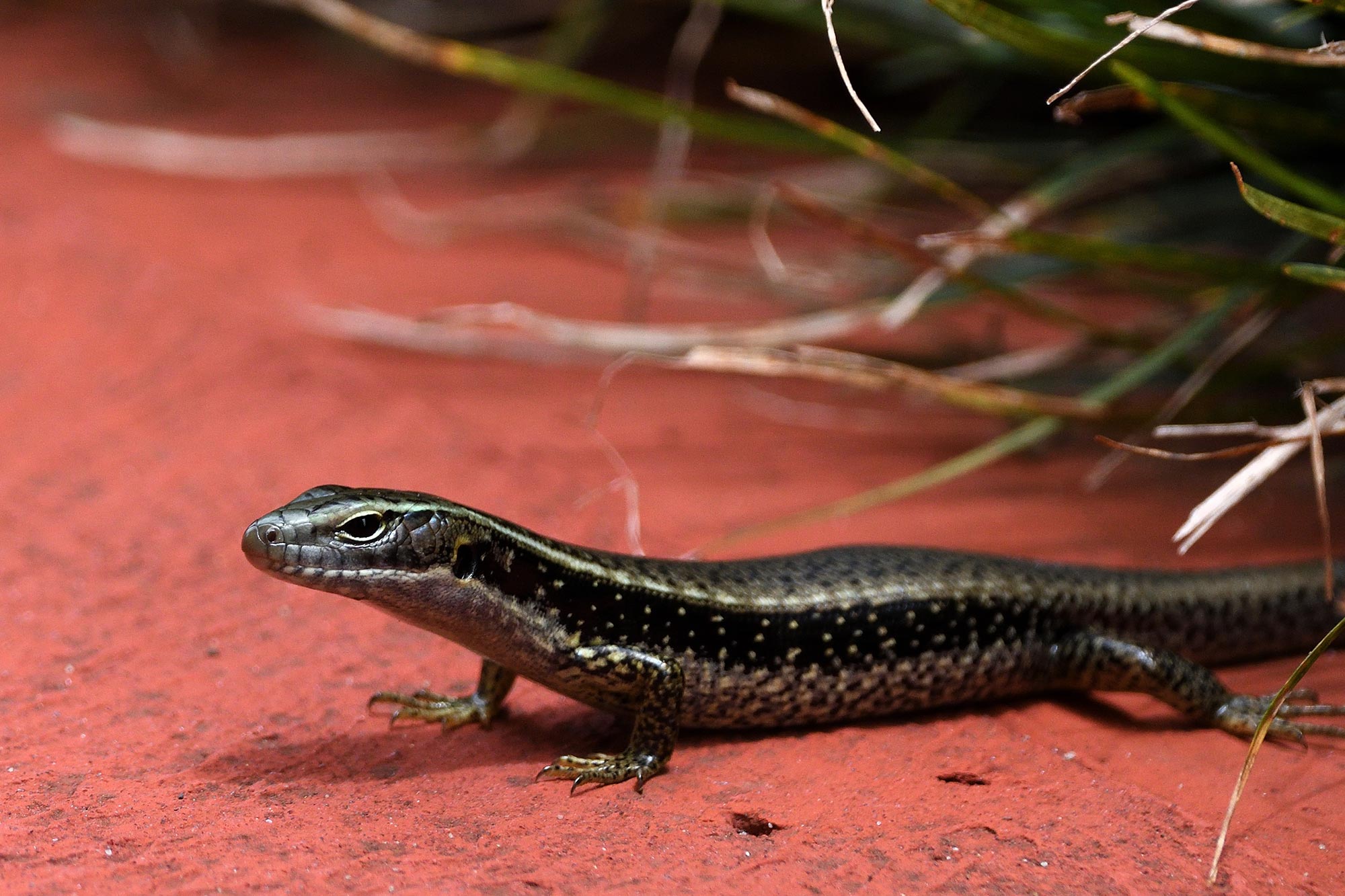
Australian skinks have pulled off an extraordinary evolutionary feat, developing genetic armor that blocks deadly snake venom from paralyzing them.
Scientists discovered that tiny mutations in a key muscle receptor, repeated independently across species, make the lizards effectively snakebite-proof.
Skinks Develop Venom Resistance
A University of Queensland-led study has found that Australian skinks have evolved molecular armor to prevent snake venom from shutting down their muscles.
Professor Bryan Fry from UQ’s School of the Environment said revealing exactly how skinks dodge death could inform biomedical approaches to treating snakebite in people.
“What we saw in skinks was evolution at its most ingenious,” Professor Fry said.
“Australian skinks have evolved tiny changes in a critical muscle receptor, called the nicotinic acetylcholine receptor.”
Mutations Blocking Neurotoxins
“This receptor is normally the target of neurotoxins, which bind to it and block nerve-muscle communication, causing rapid paralysis and death,” Fry continued.
“But in a stunning example of a natural counterpunch, we found that on 25 occasions, skinks independently developed mutations at that binding site to block venom from attaching.
“It’s a testament to the massive evolutionary pressure that venomous snakes exerted after their arrival and spread across the Australian continent, when they would have feasted on the defenceless lizards of the day.”
Shared Genetic Solutions Across Species
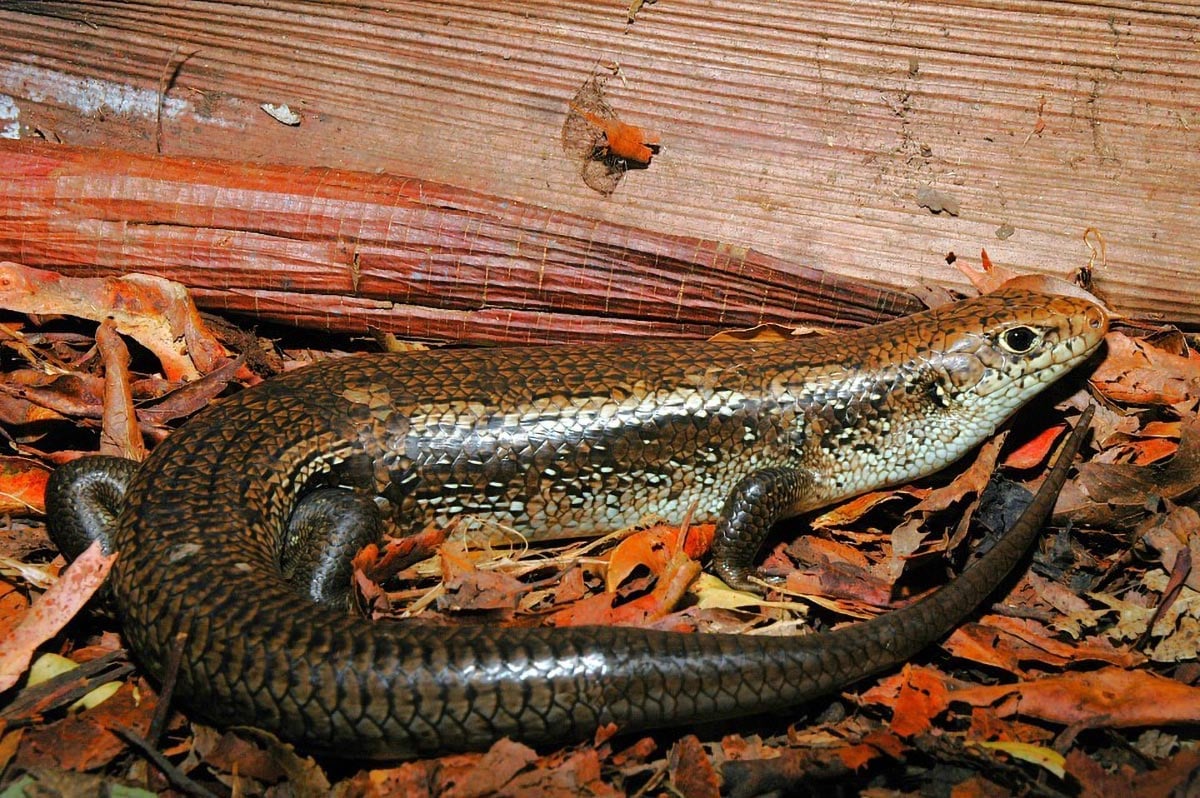
“Incredibly, the same mutations evolved in other animals like mongooses, which feed on cobras,” said Fry.
“We confirmed with our functional testing that Australia’s Major Skink (Bellatorias frerei) has evolved exactly the same resistance mutation that gives the honey badger its famous resistance to cobra venom.
“To see this same type of resistance evolve in a lizard and a mammal is quite remarkable – evolution keeps hitting the same molecular bullseye.”
Molecular Modifications Confirmed in Lab
The muscle receptor mutations in the skinks included a mechanism to add sugar molecules to physically block toxins and the substitution of a protein building block (amino acid arginine at position 187).
The laboratory work validating the mutations was carried out at UQ’s Adaptive Biotoxicology Laboratory by Dr. Uthpala Chandrasekara, who said it was incredible to witness.
“We used synthetic peptides and receptor models to mimic what happens when venom enters an animal at the molecular level and the data was crystal clear, some of the modified receptors simply didn’t respond at all,” said Dr. Chandrasekara.
“It’s fascinating to think that one tiny change in a protein can mean the difference between life and death when facing a highly venomous predator.”
Biomedical Promise for Snakebites
The findings could one day inform the development of novel antivenoms or therapeutic agents to counter neurotoxic venoms.
“Understanding how nature neutralises venom can offer clues for biomedical innovation,” Dr. Chandrasekara said.
“The more we learn about how venom resistance works in nature, the more tools we have for the design of novel antivenoms.”
The project included collaborations with museums across Australia.
The research has been published in the International Journal of Molecular Sciences.
Reference: “Make Acetylcholine Great Again! Australian Skinks Evolved Multiple Neurotoxin-Proof Nicotinic Acetylcholine Receptors in Defiance of Snake Venom” by Uthpala Chandrasekara, Marco Mancuso, Glenn Shea, Lee Jones, Jacek Kwiatkowski, Dane Trembath, Abhinandan Chowdhury, Terry Bertozzi, Michael G. Gardner, Conrad J. Hoskin, Christina N. Zdenek and Bryan G. Fry, 3 August 2025, International Journal of Molecular Sciences.
DOI: 10.3390/ijms26157510
Never miss a breakthrough: Join the SciTechDaily newsletter.
Follow us on Google and Google News.