
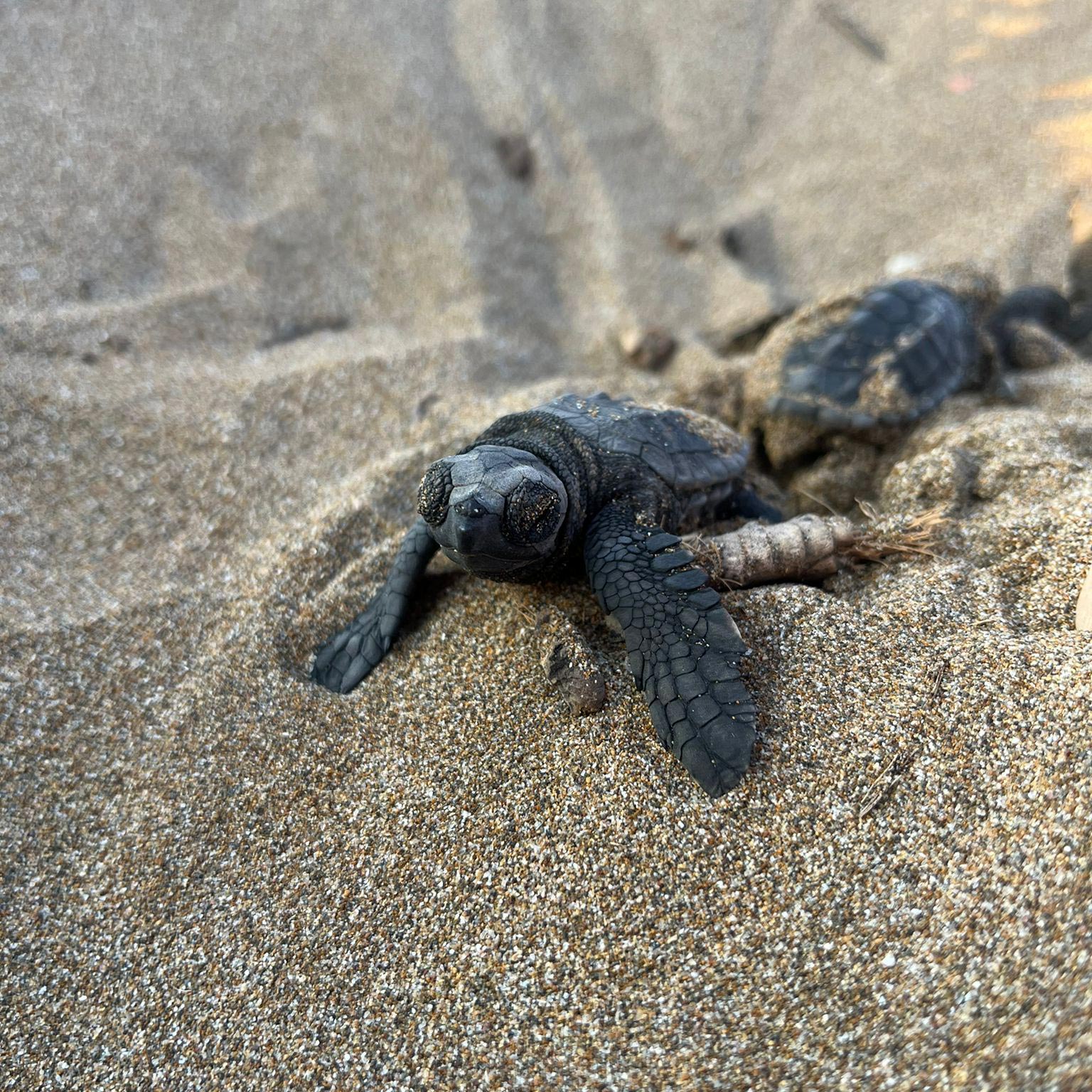
Turtles are proving to be surprisingly adaptable in the face of climate change, shifting their nesting season earlier each year to cope with rising temperatures.
Scientists studying green and loggerhead turtles in Cyprus found that these marine reptiles are adjusting their schedules in response to warming ocean temperatures, helping to maintain a balance in hatchling success and sex ratios. While this shift appears to be a promising sign of resilience, researchers warn that it might not be enough in the long run.
Turtles Nesting Earlier Due to Climate Change
New research reveals that turtles are adapting to climate change by nesting earlier each year.
Scientists studying green and loggerhead turtles in Cyprus have found that these turtles are returning to their usual nesting sites sooner than before, likely in response to rising temperatures.
For sea turtles, temperature plays a crucial role in determining the sex of hatchlings. Warmer conditions lead to more females being born, while excessive heat can reduce overall hatching success.
Turtles also exhibit a behavior called “natal philopatry,” meaning they return to the same area where they hatched to lay their own eggs.

Predicting the Future of Loggerhead Nesting
Using 30 years of nesting data, researchers from the University of Exeter and the Society for the Protection of Turtles predict that by 2100, loggerhead turtles may struggle to produce viable offspring — unless they continue shifting their nesting season earlier to counter rising temperatures.
To track these changes, scientists placed temperature loggers inside nests during the night while female turtles laid their eggs. By analyzing data from the nests after hatching, they estimated that to maintain the current balance of male and female hatchlings, turtles need to nest 0.5 days earlier per year. To prevent egg losses due to excessive heat, they would need to advance nesting by 0.7 days per year.
A green turtle returning to the sea after laying eggs. Credit: Mollie Rickwood
Turtles Are Already Nesting Earlier
But their data showed that the loggerhead turtles are indeed already nesting earlier in the year, with returning females advancing the start of nesting by 0.78 days per year since 1993.
This means that at least for now, the turtles are doing enough to ensure their eggs continue to hatch by nesting earlier in more ideal temperatures.
Professor Annette Broderick said: “This is a bit of good news, as we’ve shown that these turtles are responding to the elevated temperatures brought about by climate change by shifting to cooler months to nest.
“There is no guarantee that they carry on doing this though – it’s very much dependent on how much the temperatures rises, and also what they are eating. If the timing of production in terms of where their food’s coming from shifts, then they could start to be disconnected ecologically between where they forage and where they breed.”
Studying 31 Years of Green Turtle Data
The research team have also published a study using 31 years of data on over 600 individual green turtles nesting at the same beach in North Cyprus to see what influences when they start laying each year, and how we can explain the advancement we have seen over the past three decades.
The research team found that individual turtles were adjusting the timing of nesting based on sea temperature, laying eggs 6.47 days earlier for every 1°C increase in ocean temperature. They calculated that temperature accounted for around 30% of the advancement, with more experienced females and those laying more clutches also nesting earlier.
What the Future Holds for Turtle Nesting
Lead author Mollie Rickwood, from the University of Exeter’s Centre for Ecology and Conservation, said: “To know if the advancement we see now will continue into the future, it is crucial to understand the combined effects of changes in, for example, the age structure of the population, and how individual turtles respond to environmental change.”
Dr. Damla Beton, from the Society for Protection of Turtles (SPOT), added: “Although our turtles appear to be coping with current rising temperatures, it is unclear how long they may be able to do this before conditions in Cyprus are no longer suitable, but cooler locations in the Mediterranean may become available for them to nest.”
“Phenological shift mitigates predicted impacts of climate change on sea turtle offspring” is published in the journal Endangered Species Research.
Reference: “Individual plasticity in response to rising sea temperatures contributes to an advancement in green turtle nesting phenology” by Mollie L. Rickwood, Eve Tucker, Damla Beton, Sophie Davey, Brendan J. Godley, Robin T. E. Snape, Erik Postma and Annette C. Broderick, 1 February 2025, Proceedings B.
DOI: 10.1098/rspb.2024.1809
Never miss a breakthrough: Join the SciTechDaily newsletter.
Follow us on Google and Google News.
1 Comment
“Scientists studying green and loggerhead turtles in Cyprus have found that these turtles are returning to their usual nesting sites sooner than before, likely in response to rising temperatures.”
These claims are surprising because of the difference in the specific heat capacity of water compared to air. Because of that difference, water tends to lag behind air in temperature changes and only warm about half as much over a given time frame. Now the change in global air temperature is about 0.015 deg C per year, on average, over the last century, with most of that happening in Winter, and the Arctic experiencing a warming rate 2-4X faster than the rest of the globe. That means that the warming in the Tropics is considerably less than the global average. Therefore, it would seem the increase in the Mediterranean Ocean temperatures is probably less than 0.0075 deg C per year; let’s say about 0.005 deg C, or about 0.0005 deg per month, mostly in the Winter. So, it would seem that those little green mentions get a warning of such a small size that it makes one wonder just what their Just Noticeable Difference (JND) for temperature differences is, particularly when swimming in water that varies several degrees from the surface to the depths at which they may be feeding.
The world is full of mysteries — like the Loch Ness Monster, Sasquatch, and sea turtles that can detect changes in the average water temperature on the order of 0.0005 deg per month and act appropriately for long-term survival, even if a particular year is warmer or cooler than the long-term trend.
Inquiring minds might also wonder how the turtles know how to respond. One possibility is that they have experienced global warming several times previously — well before modern humans evolved — and the leathernecks have stormed warm beaches so many times in the past that the proper response has become genetically imprinted.
Pardon my skepticism, but the article itself stated, “While these studies provide strong evidence for an association between temperature and nesting phenology, in green turtles, all but one study found no effect.” Reproducibility is an important factor in hypothesis acceptance.