

A comprehensive study of Uganda’s lions, leopards, and hyenas shows critical low numbers of lions across most protected areas, with Murchison Falls National Park being a vital conservation area due to its relatively high lion density.
In contrast, spotted hyenas are thriving, especially in Murchison Falls, showcasing a trophic imbalance potentially due to declining lion populations.
Declining Lion Populations and Resilient Hyenas
Lion populations in Uganda are at critically low levels, while spotted hyenas are thriving across four major protected areas, according to new survey findings co-led by Griffith University, Southern University of Science and Technology in China, and Northern Arizona University.
The survey represents the first comprehensive population estimate for Uganda’s lions, leopards, and spotted hyenas in nearly 20 years.
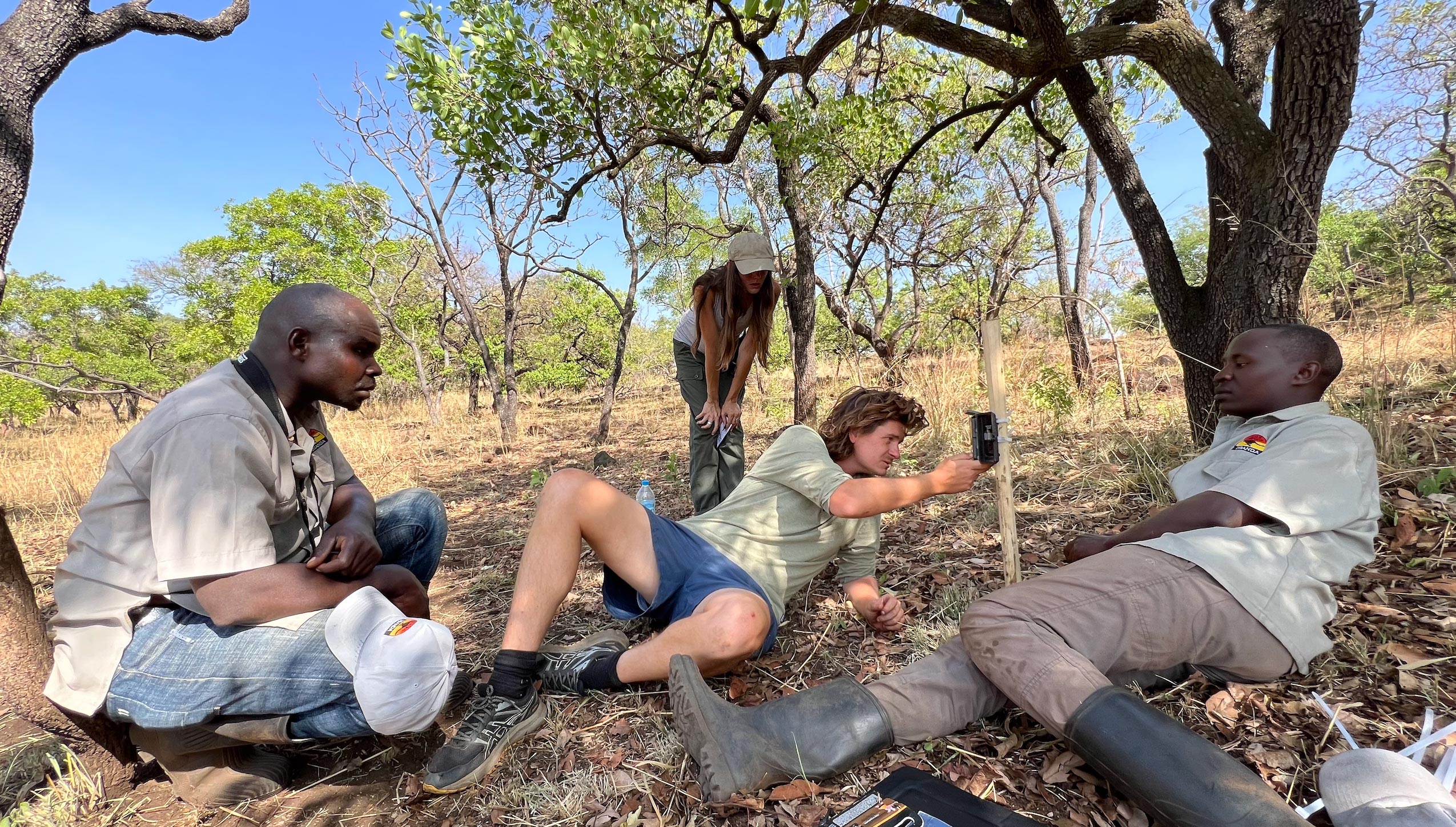
The study, conducted across six key protected areas—including the 4,000 km² Murchison Falls National Park and the 2,400 km2 Queen Elizabeth Conservation Area—was a collaborative effort involving over 100 conservation stakeholders.
Using advanced spatial capture-recapture methods, the research set a new benchmark for wildlife monitoring in Africa. These findings are already shaping conservation policies and provided the foundation for Uganda’s new Strategic Action Plan for Large Carnivore Conservation (2023–2033).
Critical Status of Lions in Specific Areas
The study showed that populations of lions in the Queen Elizabeth and Kidepo Valley National Parks were critically low, with fewer than 40 and 20 individuals remaining respectively.
In contrast, spotted hyena populations appear to be faring well with the Murchison Falls National Park population holding Africa’s largest density recorded to date at 45 individuals per 100 km².
The radically different numbers of hyenas displaying resilience could be indicative of a trophic imbalance.
“We could be seeing a release in hyena numbers as populations of lions decline,” Dr. Braczkowski said.
“However in places like Murchison Falls, we are seeing high densities of all three species, lions, hyenas, and leopards.”
Murchison Falls: A Conservation Priority
The study identified the Murchison Falls National Park (Uganda’s largest protected area) as a vital area for lion conservation.
The region supported high lion densities (seven lions per 100 km²) and an abundance of 240 individuals in a 3233 km2 sampling area compared with Queen Elizabeth and Kidepo Valley despite significant pressures from wire snare poaching and oil exploration, making it a critical priority conservation area in the country.
Variable Leopard Populations
While leopard densities varied, Murchison Falls recorded some of the highest in Africa at 14 individuals per 100km2, the highest recorded to date in Africa. Similarly to the national parks’ lion populations, it is highly probable that the anti-poaching efforts by the government and several non-government organizations (including Uganda Conservation Foundation, Snares to Wares, and ICON) were preventing the low densities observed in other parts of the country.
Collaborative Conservation Efforts
Griffith University lead researcher Dr. Alexander Braczkowski said one of the most striking results from the survey was that it brought together more than 100 participants from 20 different NGOs, lodges, and conservation groups, meaning people who may not have had an opportunity to be involved in science previously now had an opportunity to survey and engage in science on the animals they lived closest to.
He added that this was critical for the long-lasting capacity needed to maintain a solid understanding of how these carnivore populations performed over time, especially against conservation action.
“This survey highlights both the challenges and successes of Uganda’s carnivore conservation,” Dr. Braczkowski said.
“The collaborative nature of this work – spanning governments, NGOs, and local communities – is a testament to what’s possible for wildlife conservation. More importantly, these are the kinds of training exercises that are most needed if we hope to build the science capacity in the places that need it most”
Dr. Braczkowski said the results sounded an alarm for Uganda’s iconic carnivores, whose survival was jeopardised by poaching, habitat loss, and human-wildlife conflict. His team also emphasized the critical role of community engagement in conservation success.
Reference: “Insights into Large Carnivore Populations in Uganda: A Participatory Survey of Lions, Leopards, and Hyenas Using Spatial Capture-Recapture” by Alexander R. Braczkowski, Nicholas Elliot, Aggrey Rwetsiba, Tutilo Mudumba, Arjun M. Gopalaswamy, Christopher J. O’Bryan, Anna Crysell, Duan Biggs, Hamish McCallum, Michael Cima, Silvan Musobozi, Lilian Namukose, Sophia Jingo, Peter Luhonda, Ralph Schenk, Patrick Okello, Innocent Komakech, Jimmy Kisembo, Keren S. Pereira, Gilbert Drileyo and Luke Gibson, 18 November 2024, Global Ecology and Conservation.
DOI: 10.1016/j.gecco.2024.e03312
Never miss a breakthrough: Join the SciTechDaily newsletter.
Follow us on Google and Google News.
1 Comment
Hyenas thrive in human world, too.