
Close Menu
    Facebook X (Twitter) Instagram
    SciTechDaily
    • Biology
    • Chemistry
    • Earth
    • Health
    • Physics
    • Science
    • Space
    • Technology
    Facebook X (Twitter) Pinterest YouTube RSS
    SciTechDaily
    Home»Science»Uncovering the Origins of the Connection Between Humans and Dogs
    Science

    Uncovering the Origins of the Connection Between Humans and Dogs

    By Bill Hathaway, Yale UniversityOctober 18, 2017No Comments3 Mins Read
    Facebook Twitter Pinterest Telegram LinkedIn WhatsApp Email Reddit
    Share
    Facebook Twitter LinkedIn Pinterest Telegram Email Reddit
    Uncovering the Origins of Dog–Human Eye Contact
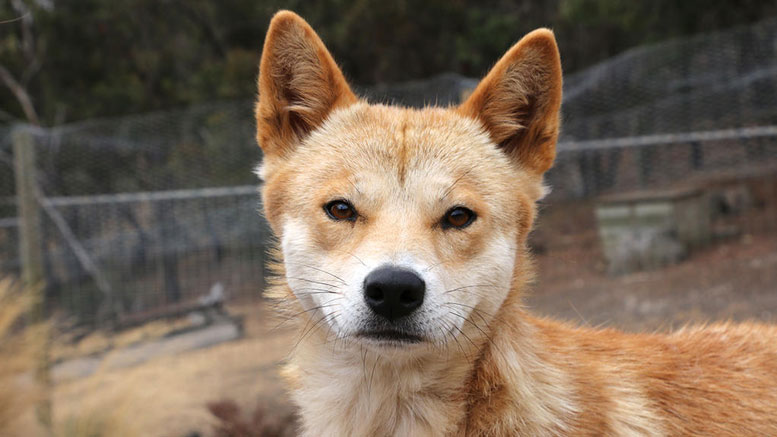
    Researchers suggest that dogs may have developed the motivation to make eye contact early in domestication and later developed the desire to maintain it as they became closer to humans.

    Why do dogs, unlike wolves, make eye contact with people? New research from Yale University helps fill out the evolutionary history of the deep and enduring connection between humans and dogs.

    Domesticated dogs look at their owners to convey and request a host of information — for instance, for help in solving a difficult problem. Wild wolves do not. Dingoes appear to represent an intermediate point in the domestication of wolves.

    When dingoes arrived in Australia some 5,000 to 10,000 years ago, they were likely comfortable around humans, but not yet fully domesticated. “Dingoes give us a glimpse at what dogs might have been like at the earliest stages of domestication,” said Angie Johnston, a graduate student at Yale.

    The new study led by psychologists Johnston and Laurie Santos published in the journal Animal Behaviour shows dingoes are more likely to make eye contact with people than wolves are, but for a shorter period than dogs. According to the researchers, these findings suggest that dogs may have developed the motivation to make eye contact with people early in their domestication, but only developed the desire to maintain this contact later in their evolution as man’s best friend.

    Reference: “Uncovering the origins of dog–human eye contact: dingoes establish eye contact more than wolves, but less than dogs” by Angie M. Johnston, Courtney Turrin, Lyn Watson, Alyssa M. Arre and Laurie R. Santos, 9 October 2017, Animal Behaviour.
    DOI: 10.1016/j.anbehav.2017.09.002

    Abstract: Through domestication, dogs have developed a robust ability to form interspecific bonds with humans. Recent work comparing dogs and wolves suggests that eye contact is an important behavior underlying these social bonds; however, it remains unclear how this feature of interspecific social bonding evolved. We explored eye contact in a unique comparison species that represents an intermediate point in canid domestication: the Australian dingo (Canis dingo). Across two different studies with two different human handlers, we examined dingo-initiated eye contact using a method similar to one previously used with dogs and wolves. In contrast to wolves tested previously, dingoes initiated eye contact with a human, but did so for a shorter time than dogs. Given that dingoes share only an early domestication history with dogs, our results suggest that the motivation to initiate eye contact with humans may have evolved relatively early in domestication. However, the tendency to maintain prolonged eye contact with a familiar human may have evolved later. These results shed new light on the evolutionary steps by which humans and dogs developed their unique social bond.

    Never miss a breakthrough: Join the SciTechDaily newsletter.
    Follow us on Google and Google News.

    Animal Psychology Behavioral Science Dog Yale University
    Share. Facebook Twitter Pinterest LinkedIn Email Reddit

    Related Articles

    Ingenious Experiments Show Monkeys Consciously Experience the Visual World the Same Way People Do

    Scientists Baffled by Strange Form of Childhood OCD – Yale Researchers Propose Explanation: PANDAS

    Researchers Link Dyslexia Gene Variants to Consonant Use Across Populations

    Researchers Discover Oldest Images to Date of Dogs on Leashes

    New Yale Study Reveals That Gun Violence is a ‘Contagious’ Social Epidemic

    Yale Study Shows Strong Neighborhood Relationships Can Help Reduce Gun Violence

    Targeted Computer Games Improve Neurobiological Dysfunctions of Psychopaths

    Swarm Study Offers a New Way to Look at Collective Animal Motion

    7 Million Year Old Footprints Reveal Elephant Social Structure from the Past

    Leave A Reply Cancel Reply

    • Facebook
    • Twitter
    • Pinterest
    • YouTube

    Don't Miss a Discovery

    Subscribe for the Latest in Science & Tech!

    Trending News

    Scientists Discover 132-Million-Year-Old Dinosaur Tracks on South Africa’s Coast

    Scientists Uncover the Secret Ingredient Behind the Spark That May Have Started Life on Earth

    Physicists Observe Matter in Two Places at Once in Mind-Bending Quantum Experiment

    Stanford Scientists Discover Hidden Brain Circuit That Fuels Chronic Pain

    New Study Reveals Why Ozempic Works Better for Some People Than Others

    Climate Change Is Altering a Key Greenhouse Gas in a Way Scientists Didn’t Expect

    New Study Suggests Gravitational Waves May Have Created Dark Matter

    Scientists Discover Why the Brain Gets Stuck in Schizophrenia

    Follow SciTechDaily
    • Facebook
    • Twitter
    • YouTube
    • Pinterest
    • Newsletter
    • RSS
    SciTech News
    • Biology News
    • Chemistry News
    • Earth News
    • Health News
    • Physics News
    • Science News
    • Space News
    • Technology News
    Recent Posts
    • 320 Light-Years Away, a Planet Confirms a Fundamental Cosmic Assumption
    • Astronomers Solve Decades-Long Mystery About Saturn’s Spin – “Something Strange Was Happening”
    • Scientists Uncover Strange New State of Matter Inside Uranus and Neptune
    • The Crown Jewel of Dentistry? Breakthrough Tech Could Transform Tooth Repair
    • The Surprising Non-Medical Factor That Determines Cancer Survival
    Copyright © 1998 - 2026 SciTechDaily. All Rights Reserved.
    • Science News
    • About
    • Contact
    • Editorial Board
    • Privacy Policy
    • Terms of Use

    Type above and press Enter to search. Press Esc to cancel.