
Researchers report that a new method for assessing microbial activity in wetted soil leads to a better understanding of vulnerability.
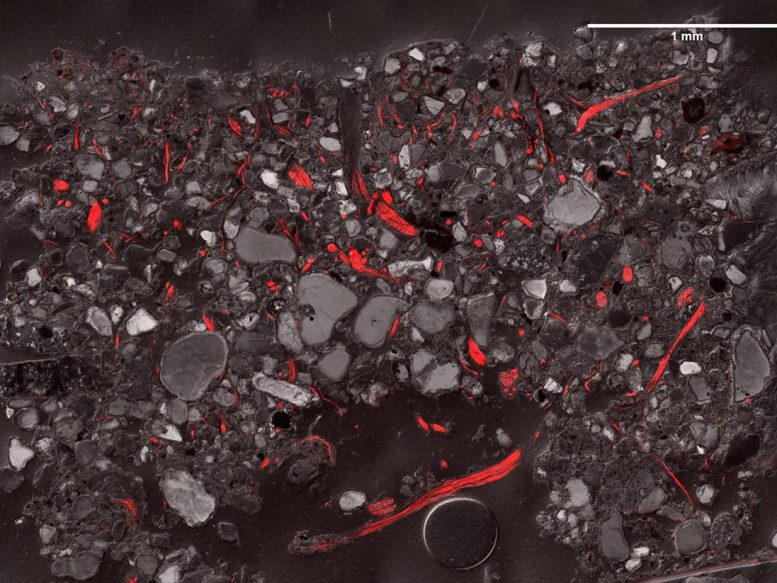
Using a novel method to detect microbial activity in biological soil crusts, or biocrusts, after they are wetted, a research team led by Penn State has gleaned insights in a recent study that illuminate the crucial role microbes play in forming a living skin over many semi-arid ecosystems around the world. The tiny organisms — and the microbiomes they create — are threatened by climate change.
The researchers recently published their findings in the journal Frontiers of Microbiology.
“Biocrusts currently cover approximately 12% of Earth’s terrestrial surface, and we expect them to decrease by about 25% to 40% within 65 years due to climate change and land-use intensification,” said team leader Estelle Couradeau, Penn State assistant professor of soils and environmental microbiology. “We hope this work can pave the way to understanding the microbial functions supporting biocrust resilience to the rapidly changing climate patterns and more frequent droughts.”
Biological soil crusts are assemblages of organisms that form a perennial, well-organized surface layer in soils. They are widespread, occurring on all of the continents wherever a shortage of water limits the growth of common plants, allowing light to reach bare soil. But there is still sufficient water to support the growth of microorganisms that perform valuable ecosystem services such as taking carbon and nitrogen from the air and fixing them in the soil, recycling nutrients and holding soil particles together, which helps prevent dust.
That soil-stabilizing function — which reduces erosion by providing the means for soil to clump and not break down into dust — is extremely important, according to Couradeau. Her research group, now in Penn State’s College of Agricultural Sciences, has been intensively studying biocrusts for a decade.
“Most dust is generated in drylands, and studies suggest that the presence of biocrusts in drylands greatly reduce the amount of dust that would otherwise make its way into the atmosphere,” she said. “We think losing biocrusts would cause a 5% to 15% increase in global dust emission and deposition — which would affect the climate, environment, and human health.”
Microbial Adaptation to Drylands
In the semi-arid regions where biocrusts exist, the organisms — tiny mosses, lichens, green algae, cyanobacteria, other bacteria, and fungi — may experience just a few rain or snow events a year, explained Ryan Trexler, a doctoral degree candidate in the Intercollege Graduate Degree Program in ecology and in biogeochemistry, who spearheaded the research.
“When the soil is dry, for the most part, the microbes in the soil are dormant, not doing much,” he said. “But as soon as they sense water, they’re resuscitated very quickly, within seconds to minutes. And they are actively making chlorophyll and fixing carbon and nitrogen until the soil is dry again — and then the microbes go dormant again. They go through cycles of activity every time it rains.”
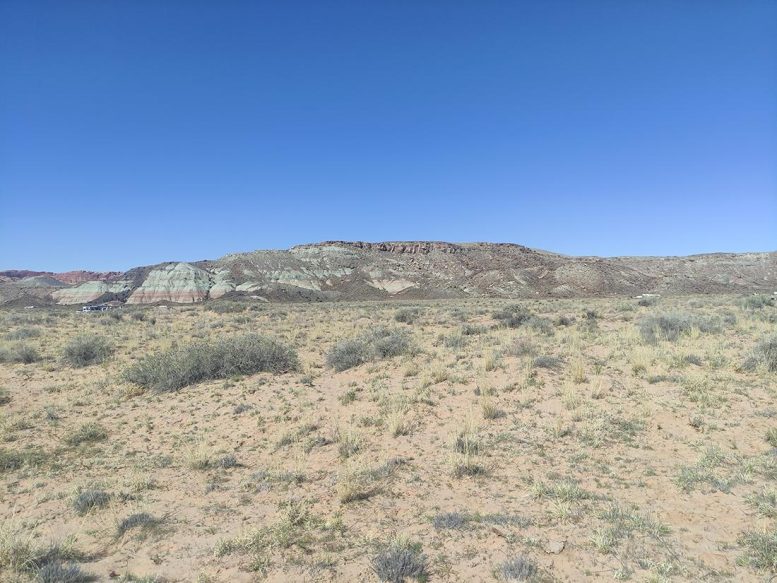
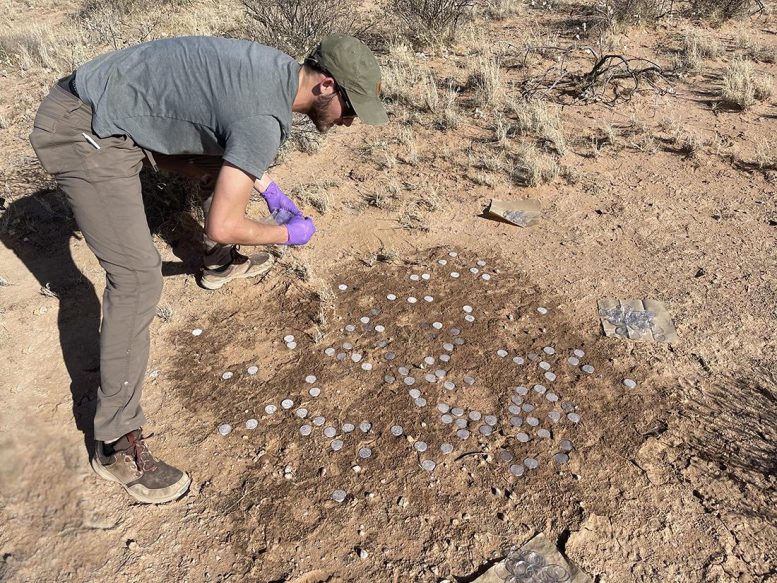
To study biocrusts, the researchers took samples from three plots of undisturbed, cyanobacteria-dominated biocrusts located on the Colorado Plateau near Moab, Utah. Biocrust samples were taken in the fall following rain that wetted the soil sufficiently to activate the microbes. The samples were subsequently dried and stored in the dark and then rewetted much later in the research.
“We sampled what we call ‘a cold desert,’ because it’s very arid, but in the winter, it sometimes snows,” Trexler said. “So, it’s not as hot as many other arid places, but still plants cannot thrive there because there’s not enough water. And so, the only community that we find in soils at the site are microbial.”
A Cutting-Edge Approach to Microbial Research
To determine which microorganisms are active within soil communities, the researchers coupled bioorthogonal non-canonical amino acid tagging — known as BONCAT — with fluorescence-activated cell sorting. BONCAT is a powerful tool for tracking protein synthesis on the level of single cells within communities and whole organisms, while fluorescence-activated cell sorting sorts cells based on whether they are producing new proteins.
The researchers combined these processes with shotgun metagenomic sequencing, which allowed them to comprehensively sample all genes in all organisms present in biocrust samples. They applied this method to profile the diversity and potential functional capabilities of both active and inactive microorganisms in a biocrust community after being resuscitated by a simulated rain event. The researchers found that their novel approach can discern active and inactive microorganisms in wetted biocrusts.
Reference: “BONCAT-FACS-Seq reveals the active fraction of a biocrust community undergoing a wet-up event” by Ryan V. Trexler, Marc W. Van Goethem, Danielle Goudeau, Nandita Nath, Rex R. Malmstrom, Trent R. Northen and Estelle Couradeau, 26 June 2023, Frontiers in Microbiology.
DOI: 10.3389/fmicb.2023.1176751
The active and inactive components of the biocrust community differed in species richness and composition at both four hours and 21 hours after the wetting event, the researchers reported.
Contributing to the research were Marc Van Goethem, Lawrence Berkeley National Laboratory, and King Abdullah University of Science and Technology, Jeddah, Saudi Arabia; Danielle Goudeau, Nandita Nath, Trent Northen, and Rex Malmstrom, Lawrence Berkeley National Laboratory, U.S. Department of Energy Joint Genome Institute.
The U.S. Department of Energy supported this research.
Never miss a breakthrough: Join the SciTechDaily newsletter.
Follow us on Google and Google News.