
Close Menu
    Facebook X (Twitter) Instagram
    SciTechDaily
    • Biology
    • Chemistry
    • Earth
    • Health
    • Physics
    • Science
    • Space
    • Technology
    Facebook X (Twitter) Pinterest YouTube RSS
    SciTechDaily
    Home»Science»Unprecedented Fossil Find: Pompeii-Like Burial Preserves Trilobites in Stunning 3D Detail
    Science

    Unprecedented Fossil Find: Pompeii-Like Burial Preserves Trilobites in Stunning 3D Detail

    By American Association for the Advancement of ScienceJuly 10, 2024No Comments3 Mins Read
    Facebook Twitter Pinterest Telegram LinkedIn WhatsApp Email Reddit
    Share
    Facebook Twitter LinkedIn Pinterest Telegram Email Reddit
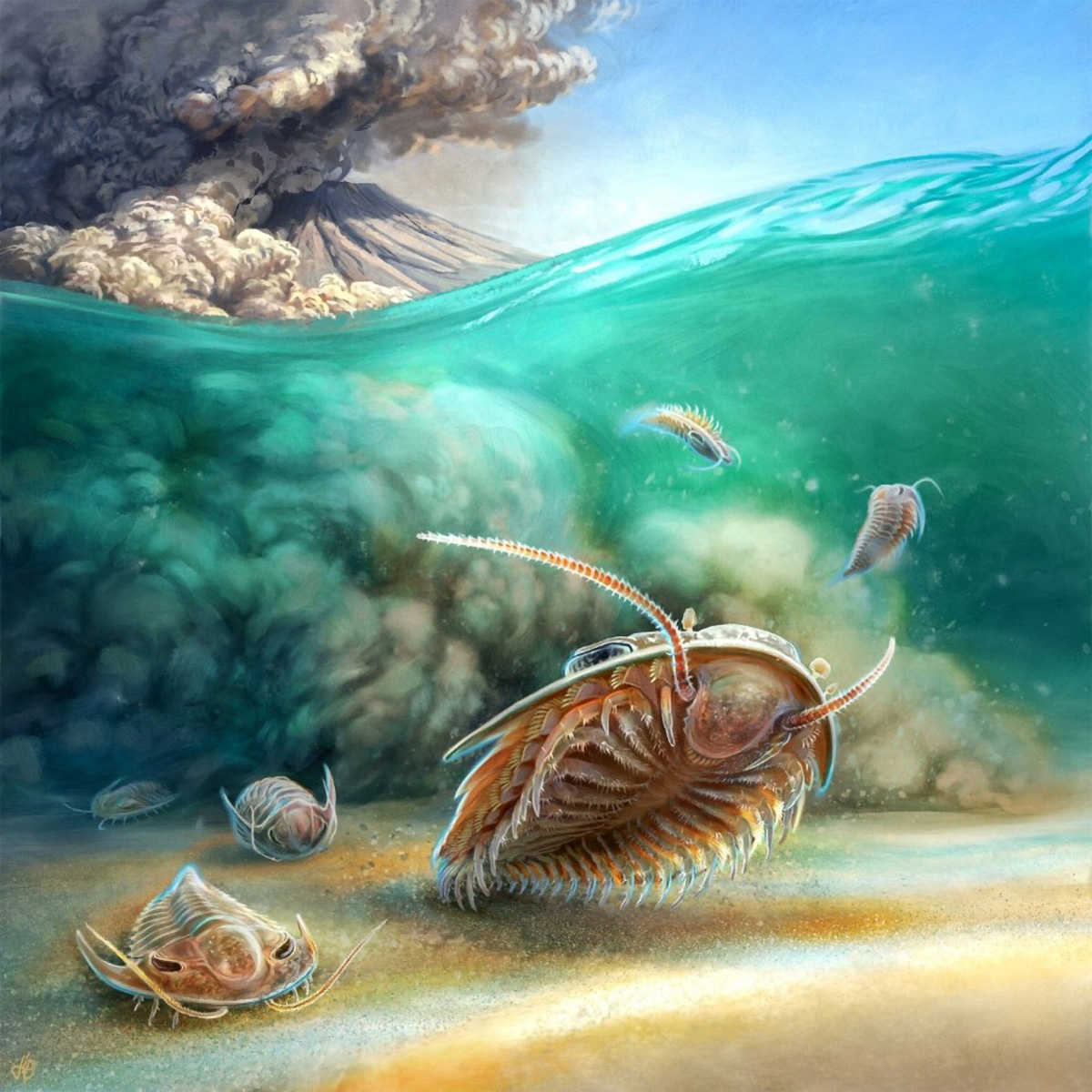
    Artistic Reconstruction of Two Species of Trilobite Volcanic Flow
    Artistic reconstruction of two species of trilobite an instant before burial in a flow of volcanic ash 510 million years ago. Credit: Prof. A. El Albani, Univ. Poitiers

    Recent findings from Cambrian-age trilobite fossils in Morocco, preserved in volcanic ash, have unveiled new anatomical details using advanced imaging, highlighting the potential for discovering soft-bodied anatomical structures in similar geological settings.

    Thanks to being rapidly entombed in volcanic ash – in a “Pompeii-like” process – Cambrian-age trilobites’ anatomy is more discernable than ever, via exquisitely preserved fossils. The fossils uncovered in Morrocco are reported in a new study that reveals microscopic details including of trilobite appendages and the trilobite digestive system.

    Trilobites are perhaps the most well-known creatures that lived during the Cambrian Period. These extinct marine arthropods’ hard exoskeleton lends itself to high fossilization potential, facilitating the identification of more than 22,000 trilobite species and a robust fossil record spanning the early Cambrian to the Permian extinction.
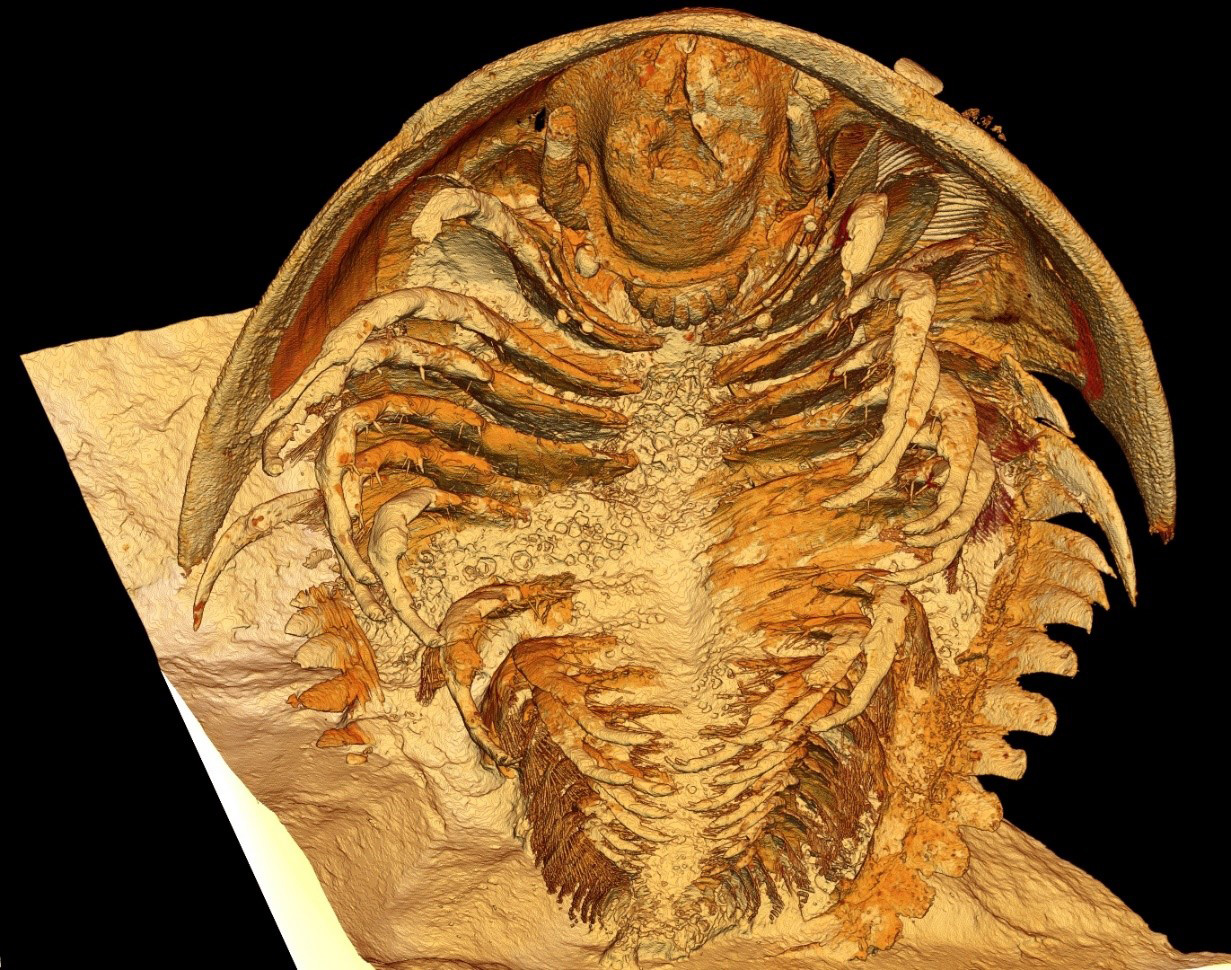
    Microtomographic Reconstruction of the Trilobite Gigoutella mauretanica in Ventral View
    Microtomographic reconstruction of the trilobite Gigoutella mauretanica in ventral view. Credit: Arnaud Mazurier, IC2MP, Univ. Poitiers

    Discoveries in Moroccan Fossils

    While this bounty of fossils has led to great insight into the external morphology of these animals, knowledge of their anatomy, particularly their rarely preserved soft tissue appendages and internal organs, is greatly limited. Here, Abderrazak El Albani and colleagues report several exceptionally well-preserved and anatomically complete Cambrian-age trilobite fossils from the Tatelt formation in Morrocco. According to El Albani et al., the trilobites were fossilized through rapid ash burial from a single pyroclastic flow event that swept through a shallow marine environment.
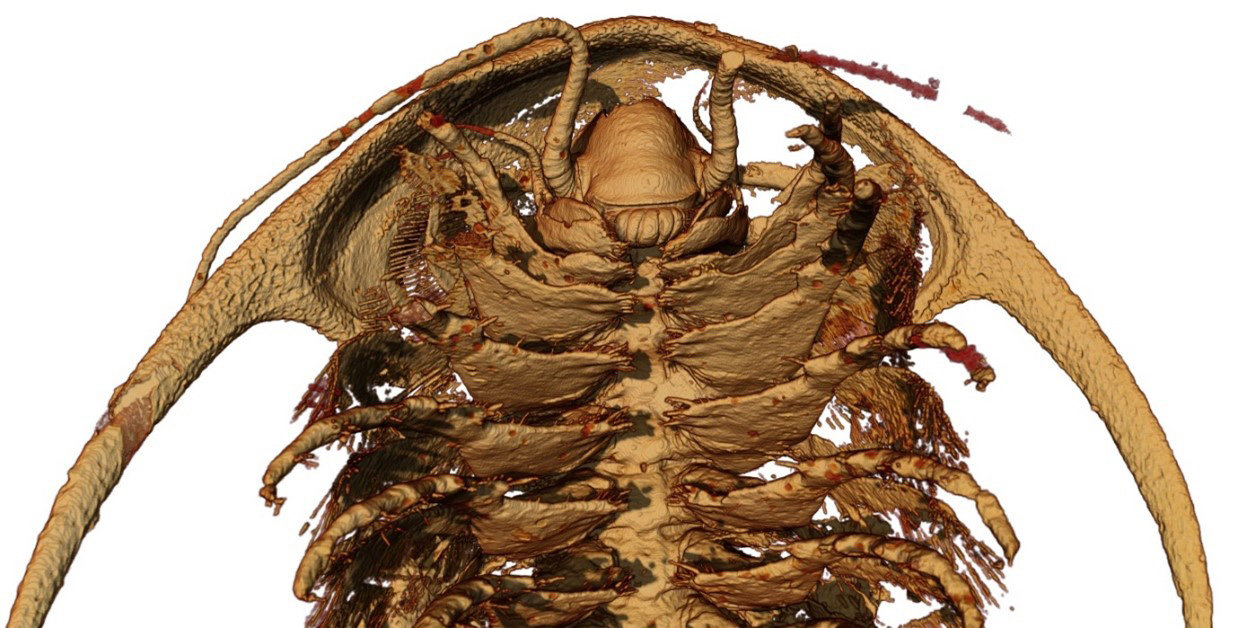
    Microtomographic Reconstruction of the Head and Anterior Trunk Limbs of the Trilobite Protolenus
    Microtomographic reconstruction of the head and anterior trunk (“body”) limbs of the trilobite Protolenus (Hupeolenus) in ventral view. Credit: Arnaud Mazurier, IC2MP, Univ. Poitiers

    This scenario led to their instantaneous burial and pristine, 3D preservations of both the exoskeleton and soft anatomy contained therein. Using microtomographic X-ray imaging, the authors were able to observe anatomical features, including the trilobites’ articulated and undistorted exoskeleton, antennae, post-antennal appendages, digestive system, and other soft tissues.

    El Albani et al. also describe previously unknown anatomical features, such as their novel feeding structures, a slit-like mouth opening, and specialized head appendages that form a complex feeding apparatus around the mouth. Moreover, the findings suggest that other volcanic ash deposits in marine settings, such as that entombed the Tatelt trilobites, may have significant potential for preserving soft-bodied creatures or anatomy with fine details, highlighting the potential for further discoveries in similar deposits.

    Reference: “Rapid volcanic ash entombment reveals the 3D anatomy of Cambrian trilobites” by Abderrazak El Albani, Arnaud Mazurier, Gregory D. Edgecombe, Abdelfattah Azizi, Asmaa El Bakhouch, Harry O. Berks, El Hafid Bouougri, Ibtissam Chraiki, Philip C. J. Donoghue, Claude Fontaine, Robert R. Gaines, Mohamed Ghnahalla, Alain Meunier, Alain Trentesaux and John R. Paterson, 27 June 2024, Science.
    DOI: 10.1126/science.adl4540

    Never miss a breakthrough: Join the SciTechDaily newsletter.
    Follow us on Google and Google News.

    American Association for the Advancement of Science Fossils Paleontology Popular
    Share. Facebook Twitter Pinterest LinkedIn Email Reddit

    Related Articles

    Scientists Discover a New Kind of Extinct Flying Reptile

    Pannoniasaurus inexpectatus, The First Freshwater Mosasaur Discovered

    Smilodon’s Distinctive Fangs Still Puzzling to Paleontologists

    Fossils Reveal Headbutts May Have Been Used as a Dinosaur Courtship Behavior

    Jaw Structures of Fossils Seems to Suggest That Three Homo Species Roamed Africa Concurrently

    Prehistoric Fossilized Eocene Epoch Turtles Died Locked In Coitus

    Cretaceous Period Sankofa Pyrenaica Fossilized Eggs Are Unusually Shaped

    Microraptor Feathers Were Black With Iridescent Sheen

    Hundreds of Lost Fossils From the Darwin Collection Rediscovered by the British Geological Survey

    Leave A Reply Cancel Reply

    • Facebook
    • Twitter
    • Pinterest
    • YouTube

    Don't Miss a Discovery

    Subscribe for the Latest in Science & Tech!

    Trending News

    Largest-Ever Study Finds Medicinal Cannabis Ineffective for Anxiety, Depression, PTSD

    250-Million-Year-Old Egg Solves One of Evolution’s Biggest Mysteries

    Living With Roommates Might Be Changing Your Gut Microbiome Without You Knowing

    Century-Old Cleaning Chemical Linked to 500% Increased Risk of Parkinson’s Disease

    What if Your Memories Never Happened? Physicists Take a New Look at the Boltzmann Brain Paradox

    One of the Universe’s Largest Stars May Be Getting Ready To Explode

    Scientists Discover Enzyme That Could Supercharge Ozempic-Like Weight Loss Drugs

    Popular Sweetener Linked to DNA Damage – “It’s Something You Should Not Be Eating”

    Follow SciTechDaily
    • Facebook
    • Twitter
    • YouTube
    • Pinterest
    • Newsletter
    • RSS
    SciTech News
    • Biology News
    • Chemistry News
    • Earth News
    • Health News
    • Physics News
    • Science News
    • Space News
    • Technology News
    Recent Posts
    • Amazonian Chocolate Could Become the Next Superfood, Scientists Say
    • Challenging the Narrative: New Study Shows U.S. Life Expectancy Is Rising Across All States
    • Mystery Illness Kills 5 in Burundi As Doctors Scramble for Answers
    • Bone-Strengthening Discovery Could Reverse Osteoporosis
    • The Most Elusive Number in Physics Just Got Even More Mysterious
    Copyright © 1998 - 2026 SciTechDaily. All Rights Reserved.
    • Science News
    • About
    • Contact
    • Editorial Board
    • Privacy Policy
    • Terms of Use

    Type above and press Enter to search. Press Esc to cancel.