
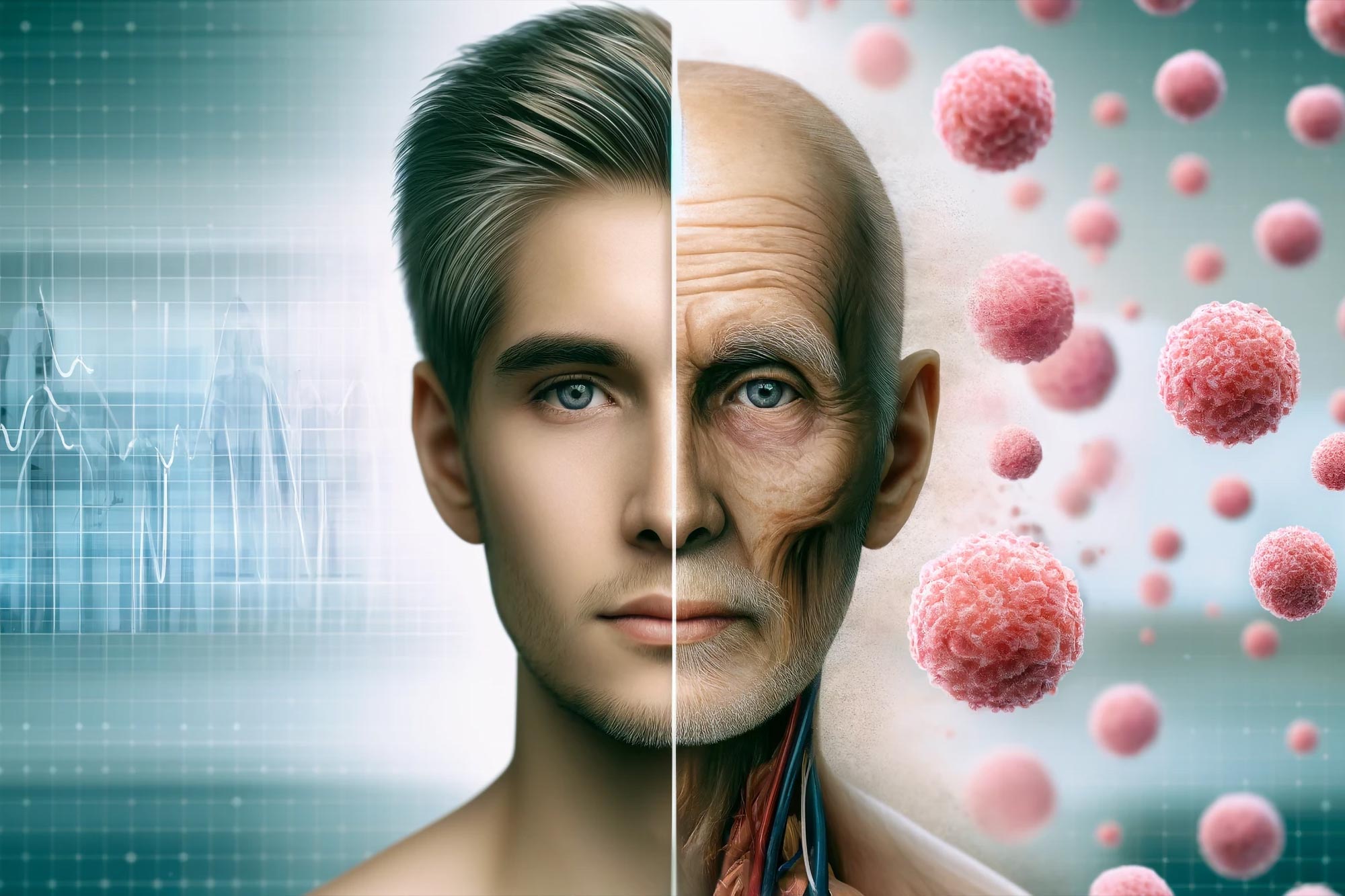
Study finds accelerated aging tied to increased early-onset cancer risk, urging research into preventive measures tailored to biological age.
Accelerated aging was more common in recent birth cohorts and was associated with increased incidence of early-onset solid tumors, according to research presented at the American Association for Cancer Research (AACR) Annual Meeting 2024, held April 5-10.
“Multiple cancer types are becoming increasingly common among younger adults in the United States and globally,” said Ruiyi Tian, MPH, a graduate student in the lab of Yin Cao, ScD, MPH at Washington University School of Medicine in St. Louis. “Understanding the factors driving this increase will be key to improve the prevention or early detection of cancers in younger and future generations.”
Tian and colleagues hypothesized that increased biological age, indicative of accelerated aging, may contribute to the development of early-onset cancers, often defined as cancers diagnosed in adults younger than 55 years. In contrast to chronological age—which measures how long a person has been alive—biological age refers to the condition of a person’s body and physiological processes and is considered modifiable, Tian explained.
“Unlike chronological age, biological age may be influenced by factors such as diet, physical activity, mental health, and environmental stressors,” she added. “Accumulating evidence suggests that the younger generations may be aging more swiftly than anticipated, likely due to earlier exposure to various risk factors and environmental insults. However, the impact of accelerated aging on early-onset cancer development remains unclear.”
To examine the association between biological age and cancer risk in younger individuals, Tian and colleagues examined data of 148,724 individuals housed in the U.K. Biobank database. They calculated each participant’s biological age using nine biomarkers found in blood: albumin, alkaline phosphatase, creatinine, C-reactive protein, glucose, mean corpuscular volume, red cell distribution width, white blood cell count, and lymphocyte proportion. Individuals whose biological age was higher than their chronological age were defined as having accelerated aging.
Tian and colleagues first evaluated accelerated aging across birth cohorts and found that individuals born in or after 1965 had a 17% higher likelihood of accelerated aging than those born between 1950 and 1954. They then evaluated the association between accelerated aging and the risk of early-onset cancers. They found that each standard deviation increase in accelerated aging was associated with a 42% increased risk of early-onset lung cancer, a 22% increased risk of early-onset gastrointestinal cancer, and a 36% increased risk of early-onset uterine cancer. Accelerated aging did not significantly impact the risk of late-onset lung cancer (defined here as cancer diagnosed after age 55), but it was associated with a 16% and 23% increased risk of late-onset gastrointestinal and uterine cancers, respectively.
“By examining the relationship between accelerating aging and the risk of early-onset cancers, we provide a fresh perspective on the shared etiology of early-onset cancers,” Tian said. “If validated, our findings suggest that interventions to slow biological aging could be a new avenue for cancer prevention, and screening efforts tailored to younger individuals with signs of accelerated aging could help detect cancers early.”
Future research from Tian and colleagues will aim to uncover the mechanisms driving accelerated aging and early-onset cancers to develop precision cancer prevention strategies.
A limitation of the study is that all participants were from the United Kingdom, which may limit the generalizability of the findings to populations with different genetic backgrounds, lifestyles, and environmental exposures. Tian noted that validation in diverse populations is needed.
The study was supported by the National Institutes of Health. Tian declares no conflicts of interest.
Never miss a breakthrough: Join the SciTechDaily newsletter.
Follow us on Google and Google News.
2 Comments
Overpopulation has deprived human of natural environment. This natural process will go on behind the scene. Whether nature is good or bad for you, it is right in its own right.
Is this possibly related to the PFAS problem?