
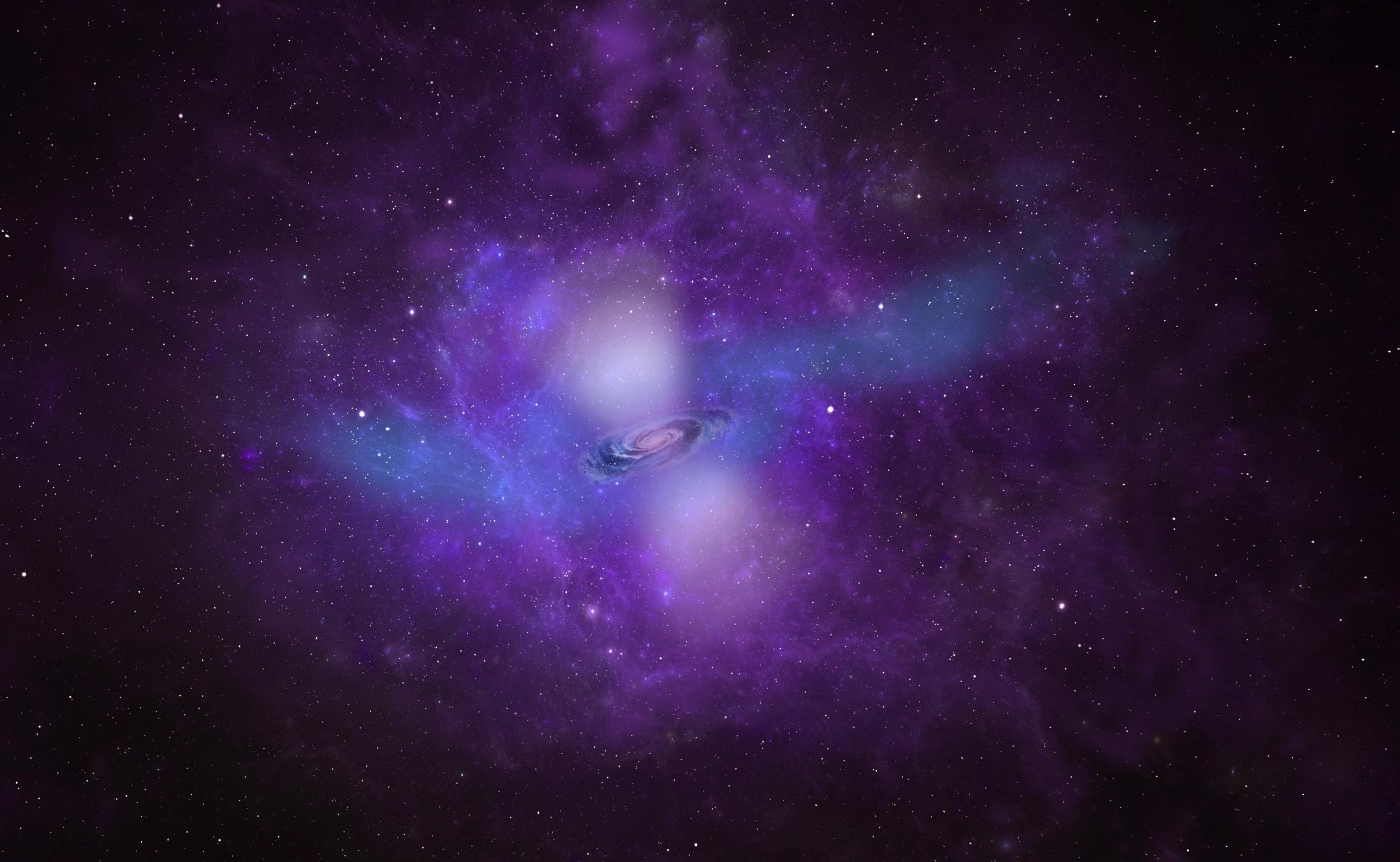
Researchers using advanced deep imaging techniques have made groundbreaking observations of the circumgalactic medium of a distant galaxy, uncovering the vast halo of gas that surrounds it.
This gas extends far beyond the galaxy’s visible starlight and appears to play a crucial role in galactic evolution by cycling gas between galaxies. This study also suggests that the circumgalactic mediums of our Milky Way and the neighboring Andromeda galaxy are already overlapping and interacting, hinting at complex intergalactic dynamics.
Interstellar Interactions and Discoveries
If this galaxy is typical, then the study, published today (September 6) in Nature Astronomy, indicates that our galaxy is already interacting with its closest neighbor, Andromeda.
Where does a galaxy end and deep space begin? It seems like a simple question until you look more closely at the gas that surrounds galaxies, known as the circumgalactic medium.
Unveiling the Circumgalactic Medium
The halo of gas surrounding the stellar disc accounts for about 70% of the mass of the galaxy – excluding dark matter – but until now has remained something of a mystery. In the past, we have only been able to observe the gas by measuring the light from a background object, such as a quasar, that is absorbed by the gas.
That limits the picture of the cloud to a pencil-like beam.
Advanced Observations Beyond the Galaxy
A new study, however, has observed the circumgalactic medium of a star-bursting galaxy 270 million light years away, using new deep imaging techniques that were able to detect the cloud of gas glowing outside of the galaxy 100,000 light years into space, as far as they were able to look.
To envisage the vastness of that cloud of gas, consider that the galaxy’s starlight – what we would typically view as the disc – extends just 7,800 light years from its center.
The current study observed the physical connection of hydrogen and oxygen from the center of the galaxy far into space and showed that the physical conditions of the gas changed.
“We found it everywhere we looked, which was really exciting and kind of surprising,” says Associate Professor Nikole M. Nielsen, lead author of the paper, and a researcher with Swinburne University, and ASTRO 3D and an Assistant Professor at the University of Oklahoma.
Other authors of the paper came from Swinburne, the University of Texas at Austin, the California Institute of Technology, Pasadena, the University of California, San Diego, and Durham University.
Boundary Between Galaxy and Space
“We’re now seeing where the galaxy’s influence stops, the transition where it becomes part of more of what’s surrounding the galaxy, and, eventually, where it joins the wider cosmic web and other galaxies. These are all usually fuzzy boundaries,” says Dr. Nielsen.
“But in this case, we seem to have found a fairly clear boundary in this galaxy between its interstellar medium and its circumgalactic medium.”
The study observed stars ionizing gas with their photons within the galaxy.
“In the CGM, the gas is being heated by something other than typical conditions inside galaxies, this likely includes heating from the diffuse emissions from the collective galaxies in the Universe and possibly some contribution is due to shocks,” says Dr. Nielsen.
“It’s this interesting change that is important and provides some answers to the question of where a galaxy ends,” she says.
Technological Breakthroughs in Galaxy Observation
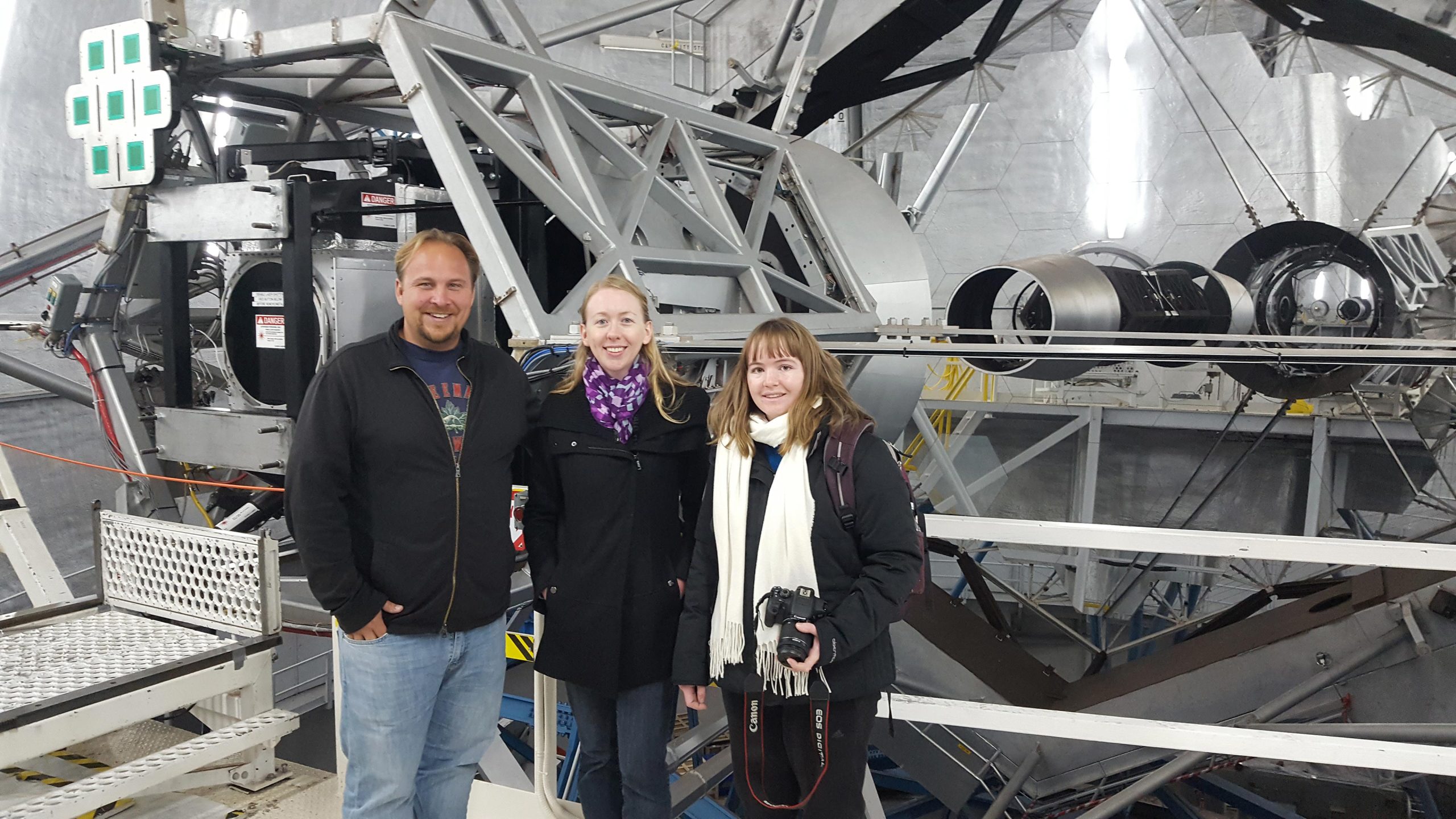
The discovery has been made possible thanks to the Keck Cosmic Web Imager (KCWI) on the 10-meter Keck telescope in Hawaii, which contains an integral field spectrograph and is one of the most sensitive instruments of its kind in operation.
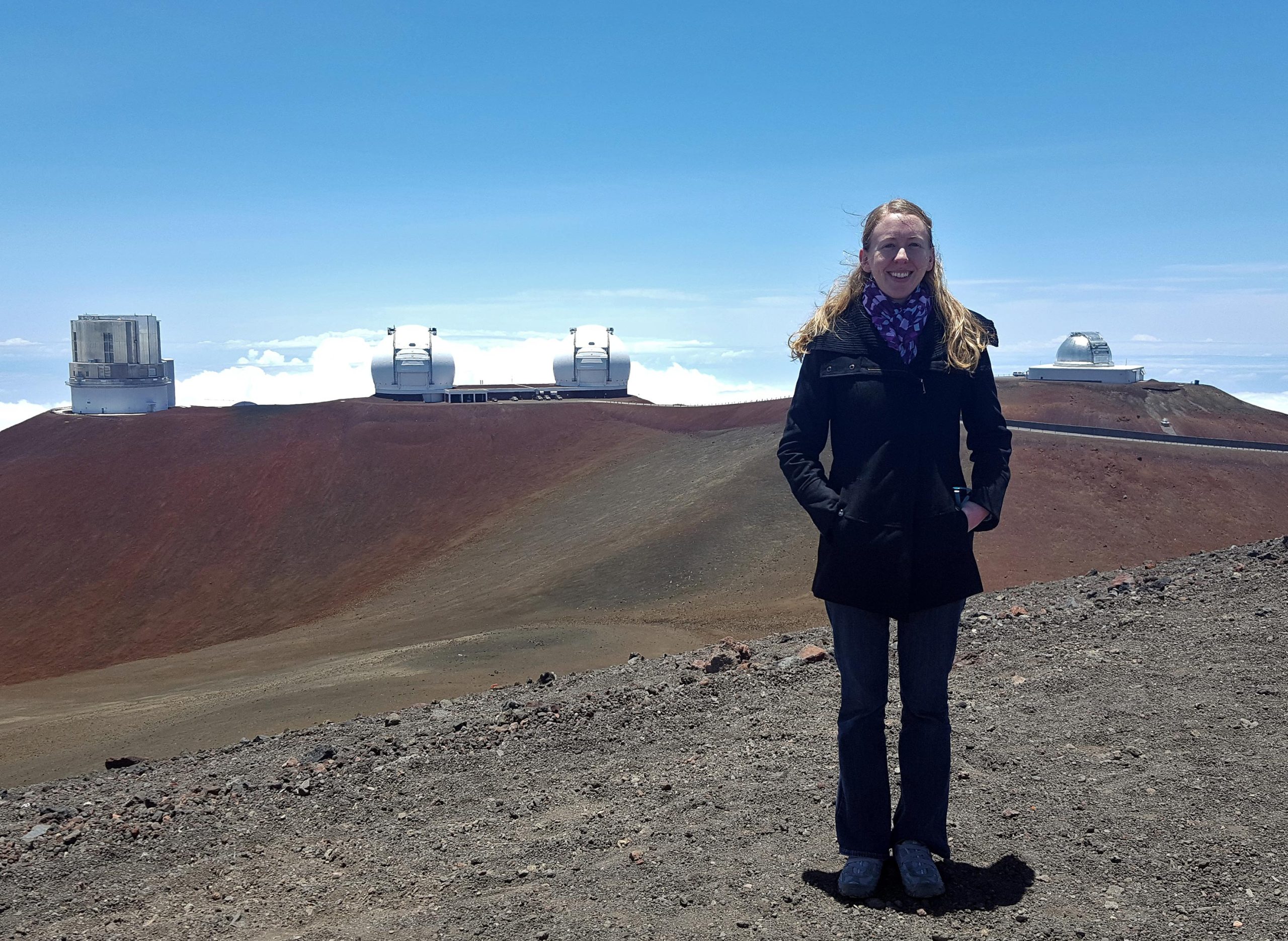
“These one-of-a-kind observations require the very dark sky that is only available at the Keck Observatory on Mauna Kea,” said one of the paper’s authors, Swinburne’s Associate Professor Deanne Fisher.
ASTRO 3D scientists gained access to KCWI through Swinburne University.
“Swinburne’s Partnership with the W. M. Keck Observatory has allowed our team to really push the boundaries of what is possible,” says another author, Associate Professor Glenn Kacprzak. “KCWI has really changed the game on how we can now measure and quantify the diffuse gas around galaxies.”
Thanks to the instrument, rather than making a single observation providing a single spectrum of the gas in the galaxy, scientists can now obtain thousands of spectra simultaneously with one image from KCWI.
“It is the very first time that we have been able to take a photograph of this halo of matter around a galaxy,” says Professor Emma Ryan-Weber, the Director of ASTRO 3D.
The study adds another piece to the puzzle that is one of the big questions in astronomy and galaxy evolution – how do galaxies evolve? How do they get their gas? How do they process that gas? Where does that gas go.
Insights into Galactic Evolution and Interaction
“The circumgalactic medium plays a huge role in that cycling of that gas,” says Dr. Nielsen. “So, being able to understand what the CGM looks like around galaxies of different types – ones that are star-forming, those that are no longer star-forming, and those that are transitioning between the two – we can observe differences in this gas, which might drive the differences within the galaxies themselves, and changes in this reservoir may actually be driving the changes in the galaxy itself.”
The study speaks directly to the ASTRO 3D’s mission. “It helps us understand how galaxies build mass over time,” says Professor Ryan-Weber.
The findings could also hold implications for how different galaxies interact and how they might impact each other.
“It’s highly likely that the CGMs of our own Milky Way and Andromeda are already overlapping and interacting,” says Dr. Nielsen.
Reference: “An emission map of the disk–circumgalactic medium transition in starburst IRAS 08339+6517” by Nikole M. Nielsen, Deanne B. Fisher, Glenn G. Kacprzak, John Chisholm, D. Christopher Martin, Bronwyn Reichardt Chu, Karin M. Sandstrom and Ryan J. Rickards Vaught, 6 September 2024, Nature Astronomy.
DOI: 10.1038/s41550-024-02365-x
Never miss a breakthrough: Join the SciTechDaily newsletter.
Follow us on Google and Google News.
1 Comment
Galaxies are cool! They put out so much light energy, that they can be seen from billions of light years away.
There are TRILLIONS upon TRILLIONS of galaxies, each with BILLIONS of stars, solar systems and planets.
If there is any logic in this universe, there must be some way for us to easily travel to any galaxy just as we would travel from one city to another!