
Close Menu
    Facebook X (Twitter) Instagram
    SciTechDaily
    • Biology
    • Chemistry
    • Earth
    • Health
    • Physics
    • Science
    • Space
    • Technology
    Facebook X (Twitter) Pinterest YouTube RSS
    SciTechDaily
    Home»Earth»Utah’s Hidden Time Capsule: The Dark Canyon Complex
    Earth

    Utah’s Hidden Time Capsule: The Dark Canyon Complex

    By Emily Cassidy, NASA Earth ObservatoryMay 3, 2023No Comments3 Mins Read
    Facebook Twitter Pinterest Telegram LinkedIn WhatsApp Email Reddit
    Share
    Facebook Twitter LinkedIn Pinterest Telegram Email Reddit
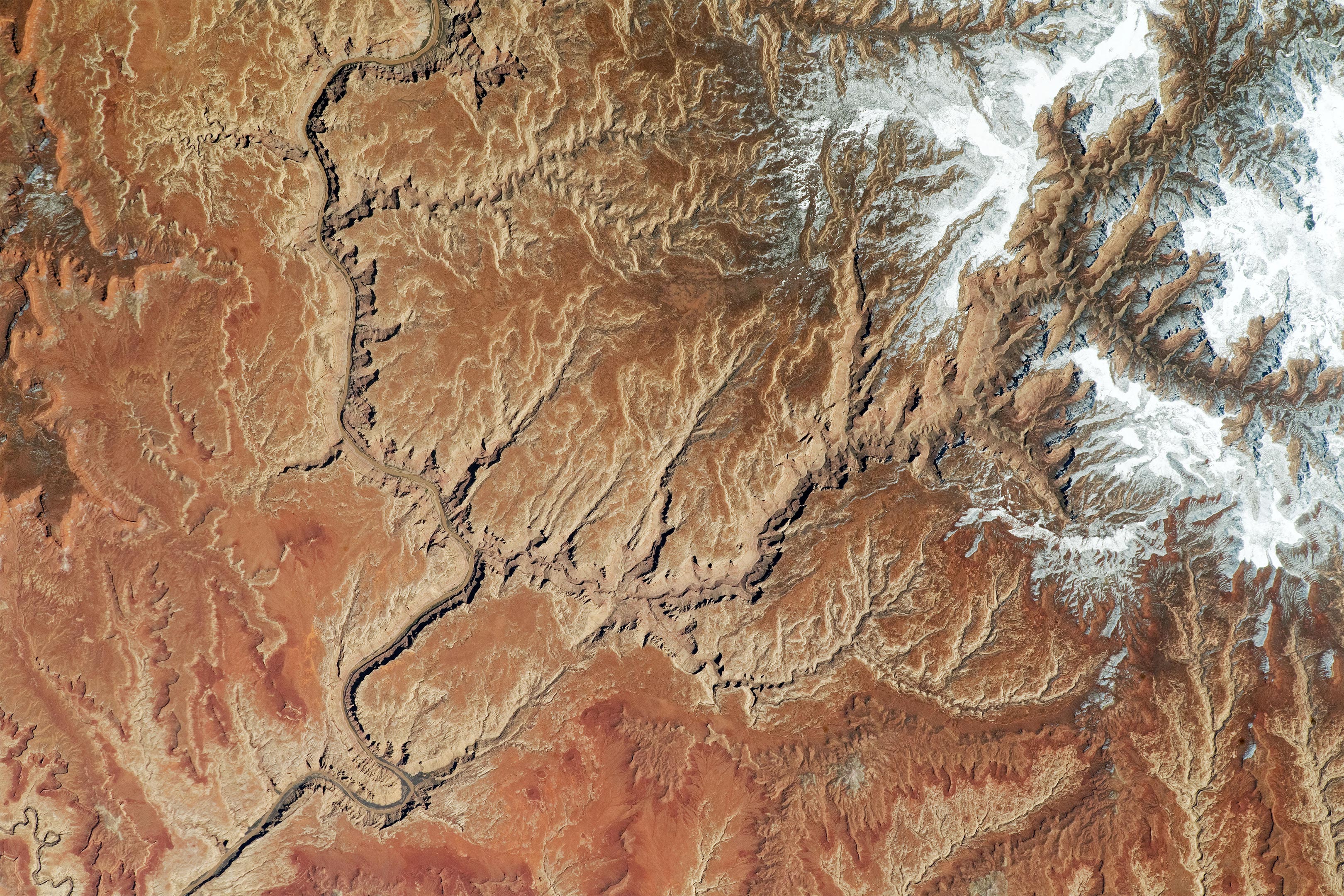
    Utah Dark Canyon Complex
    Astronaut photo, captured by an astronaut on the International Space Station on April 6, 2023, shows the deep canyons that cut through the Colorado Plateau in southeastern Utah.

    Petroglyphs, hanging gardens, and deep canyons make this remote landscape a notable part of Bears Ears National Monument.

    Deep, meandering canyons cut through the Colorado Plateau in southeastern Utah in this photograph, taken by an astronaut on the International Space Station on April 6, 2023. These canyons, known as the Dark Canyon complex, have distinctive geology, ecology, and archeology. They are some of the only intact protected canyons in the United States.

    This rugged and remote landscape has been shaped by erosion. Over thousands of years, the Colorado River and smaller tributaries have eroded winding, steep-walled canyons into the sedimentary rock. Dark Canyon—one of seven canyons within the complex—cuts diagonally across the photo. Within this canyon, sandstone walls tower up to 3,000 feet (900 meters), shading visitors from morning and afternoon sun—hence its name. The canyon’s steep walls expose roughly 250 million years of geologic history and contain deposits from the Permian period. Cockleshell and crinoid stem fossils have been found in the area.

    The Colorado River flows in from Canyonlands National Park, located just 6 miles (10 kilometers) northeast of this view. The confluence of the Green and Colorado rivers in Canyonlands creates powerful rapids downriver. This segment of the river—part of Glen Canyon National Recreation Area—is known as Cataract Canyon and is notorious for its hazardous whitewater rafting conditions.

    Springs, hanging gardens, riparian areas, and mesas provide habitat for a wide range of wildlife around the Dark Canyon complex. Golden eagles, peregrine falcons, and the Mexican spotted owl have been observed in the complex. Dark Canyon itself extends east beyond the photo into a designated wilderness area in the Manti-La Sal National Forest.

    The Dark Canyon complex is part of Bears Ears National Monument, which contains many cultural and archaeological sites. According to a presidential proclamation issued in October 2021, Bears Ears is sacred land to several Tribal Nations and Pueblos. Although Ancestral Puebloan occupation seems to have been somewhat sparser in Dark Canyon compared to canyons farther south, cliff dwellings, petroglyphs, and lithic scatters do exist within this area.

    Astronaut photograph ISS069-E-001017 was acquired on April 6, 2023, with a Nikon D5 digital camera using a 400-millimeter lens and is provided by the ISS Crew Earth Observations Facility and the Earth Science and Remote Sensing Unit, Johnson Space Center. The image was taken by a member of the Expedition 69 crew. The image has been cropped and enhanced to improve contrast, and lens artifacts have been removed. The International Space Station Program supports the laboratory as part of the ISS National Lab to help astronauts take pictures of Earth that will be of the greatest value to scientists and the public, and to make those images freely available on the Internet.

    Never miss a breakthrough: Join the SciTechDaily newsletter.
    Follow us on Google and Google News.

    Geography Geology NASA NASA Earth Observatory Popular
    Share. Facebook Twitter Pinterest LinkedIn Email Reddit

    Related Articles

    600 Million Years Ago, an Asteroid Strike Shook the Planet – And Its Effects May Still Linger

    An Otherworldly Landscape: Bolivian Salt Flats – A Natural Laboratory for Mars Research

    Island Obliterated: Dramatic Changes at Hunga Tonga-Hunga Ha’apai

    Movie Mars on Earth: Wadi Rum as a Stand-In for the Red Planet

    From Russia With Questions: Distinctive Striping Pattern in Siberia Puzzles Researchers

    NASA Scientists Map Beirut Blast Damage – Devastating Explosion Rocked Port Area

    NASA Advanced Rapid Imaging Satellite Maps Blast Damage: Beirut Explosion Aftermath

    NASA Scientists Collect Moon-Like Rocks From Site in Montana

    Shocking Disappearance of Ecuador’s Tallest Waterfall

    Leave A Reply Cancel Reply

    • Facebook
    • Twitter
    • Pinterest
    • YouTube

    Don't Miss a Discovery

    Subscribe for the Latest in Science & Tech!

    Trending News

    What Causes Chronic Pain? Scientists Identify Key Culprit in the Brain

    Semaglutide Shows Surprising Mental Health Benefits in Massive 100,000-Person Study

    This Liquid Snapped Instead of Flowing and Scientists Were Shocked

    Breakthrough Alzheimer’s Drug Rewires the Brain Instead of Just Clearing Plaques

    Scientists Discover Hidden “Footprint of Death” That Could Transform How We Fight Disease

    A Simple Nose Swab Could Detect Alzheimer’s Years Before Symptoms Appear

    Scientists Just Rewrote the Timeline of Complex Life on Earth

    Teenager’s Fossil Find Leads to Discovery of Shark Teeth in 5 Million-Year-Old Whale Skull

    Follow SciTechDaily
    • Facebook
    • Twitter
    • YouTube
    • Pinterest
    • Newsletter
    • RSS
    SciTech News
    • Biology News
    • Chemistry News
    • Earth News
    • Health News
    • Physics News
    • Science News
    • Space News
    • Technology News
    Recent Posts
    • Even “Failed” Diets May Deliver Long-Term Health Gains, Study Finds
    • Childhood Junk Food May Rewire the Brain for Life
    • NIH Scientists Discover Powerful New Opioid That Relieves Pain Without Dangerous Side Effects
    • Breakthrough Study Reveals Why Damaged Nerves Struggle To Heal
    • 20-Year Study Reveals Cholera’s Surprising Weakness
    Copyright © 1998 - 2026 SciTechDaily. All Rights Reserved.
    • Science News
    • About
    • Contact
    • Editorial Board
    • Privacy Policy
    • Terms of Use

    Type above and press Enter to search. Press Esc to cancel.