
A Japanese study has found that one group of people lose vaccine protection more quickly than others, even though they begin with higher antibody levels.
Two healthcare workers receive COVID-19 vaccines on the same day. Both develop strong antibody responses at first, but six months later, one remains protected while the other becomes infected. A new study in Science Translational Medicine may explain why this occurs.
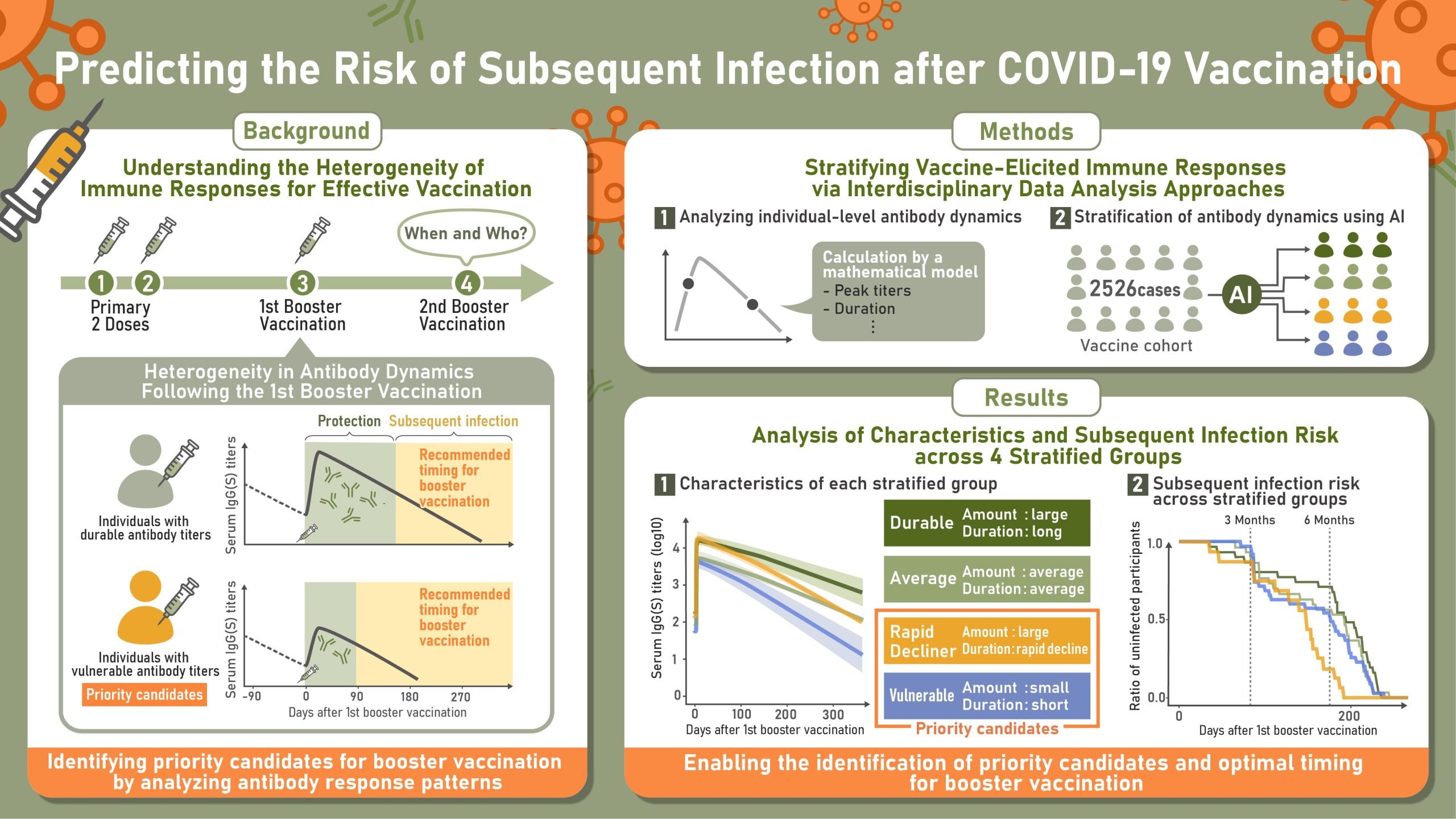
The researchers monitored antibody responses after vaccination and identified four distinct patterns following the first booster. Those with the highest initial antibody levels but the steepest decline were more likely to get infected sooner. Individuals with lower concentrations of IgA(S) antibodies, which help defend the nose and throat, also faced a greater risk. These findings indicate that tracking how antibodies change over time could help pinpoint people who are more susceptible to infection.
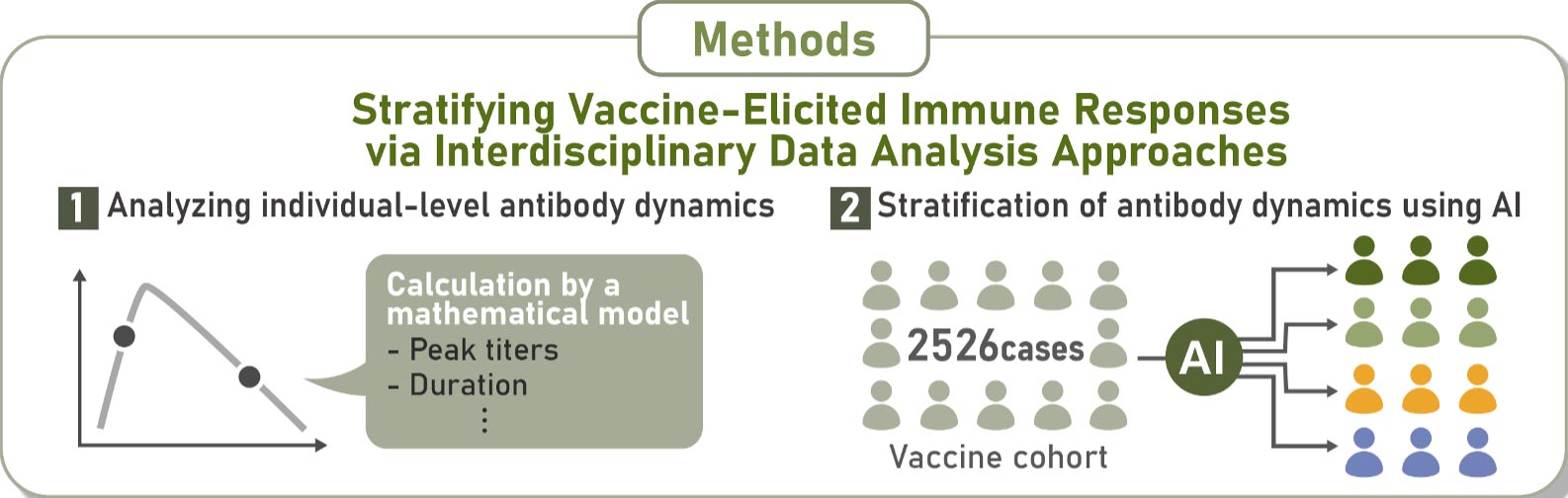
The study, led by scientists at Nagoya University in Japan, followed 2,526 participants over an 18-month period to examine immune responses from the first vaccine dose through subsequent boosters. Using long-term data and AI-driven analysis, the team built a mathematical system to classify immune responses, making them the first to define and characterize a group they called “rapid-decliners.”
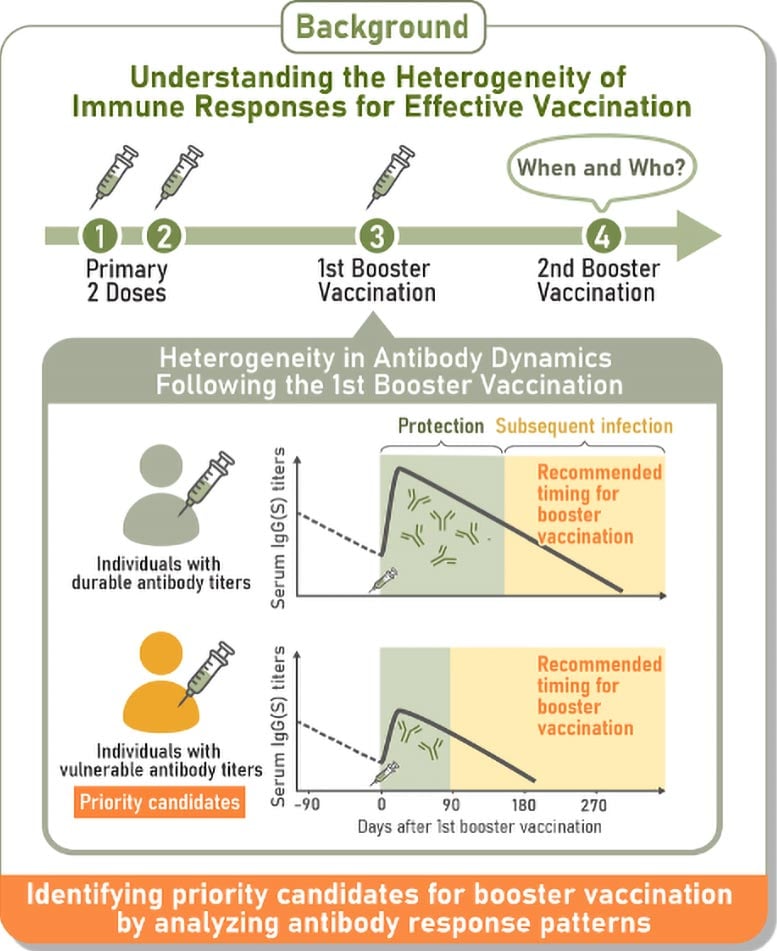
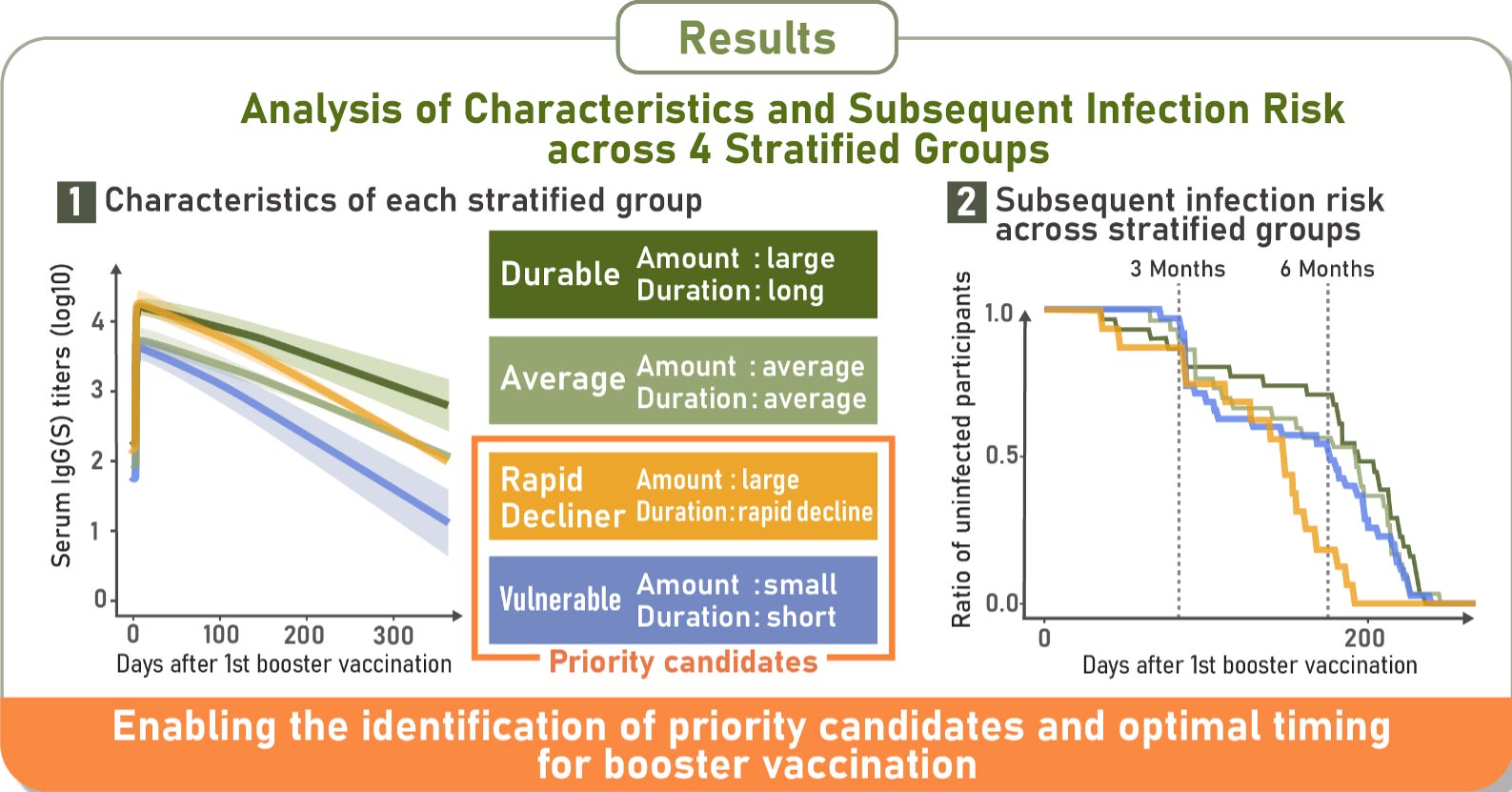
The results showed four consistent immune response types: durable responders, who maintained high antibody levels; rapid-decliners, who began with strong responses but lost them quickly; vulnerable responders, who generated low antibody levels that declined rapidly; and intermediate responders, who fell between these groups.
Immunity that peaks early and then drops
Shingo Iwami, senior author and professor at Nagoya University’s Graduate School of Science, noted that the results for the rapid-decliner group were unexpected. “In spite of their impressive initial immune response, they caught COVID-19 sooner than other groups, while durable responders maintained protection for longer periods. One-time blood tests for IgG antibodies, the antibody type we used for classification, couldn’t detect this risk. Only by tracking changes over months did we see the pattern,” he explained.
A breakthrough or subsequent infection occurs when someone becomes infected after vaccination because the virus bypasses the immunity provided by the vaccine. The researchers discovered that individuals whose antibodies dropped more quickly, whether due to initially low levels or rapid decline (vulnerable responders and rapid-decliners), faced a slightly higher risk of earlier breakthrough infections.
Following booster vaccinations, 29% of participants were classified as durable responders, 28% as vulnerable responders, and 19% as rapid-decliners. The rest showed intermediate responses. Breakthrough infection rates were fairly close between groups, with 5.2% of durable responders and 6% of vulnerable responders, and rapid-decliners affected.
Breakthrough infections linked to IgA(S) antibody levels
The study also revealed that participants who experienced breakthrough infections had lower levels of IgA(S) antibodies in their blood several weeks after vaccination. These antibodies protect the nose and throat and are our first line of defense against respiratory viruses.
Importantly, the researchers found a strong correlation between blood IgA(S) levels and nasal IgA(S) levels, suggesting that blood tests can reliably indicate the strength of immune protection in airways. As a result, measuring blood IgA(S) levels after vaccination may help identify individuals at higher risk for breakthrough infection, especially among vulnerable groups.
While these results provide a foundation for future research, Professor Iwami emphasized the importance of identifying the underlying biological mechanisms responsible for the rapid decline in antibody levels in order to develop more effective vaccination strategies. Previous research points to factors such as age, genetic variation, vaccine-specific characteristics, and environmental influences, including sleep habits, stress levels, and medications being taken at the same time.
“This is the first time we’ve been able to clearly group how people respond to COVID-19 vaccines,” Professor Iwami noted. “Identifying the rapid-decliner pattern is especially important—it helps explain why some people may need boosters sooner than others. This could potentially contribute to better, more personalized vaccination strategies. However, whether antibody testing can be used widely depends on cost, accuracy, and if the benefits are worthwhile compared to current strategies. More research is needed to understand its full potential.”
Reference: “Longitudinal antibody titers measured after COVID-19 mRNA vaccination can identify individuals at risk for subsequent infection” by Hyeongki Park, Naotoshi Nakamura, Sho Miyamoto, Yoshitaka Sato, Kwang Su Kim, Kosaku Kitagawa, Yurie Kobashi, Yuta Tani, Yuzo Shimazu, Tianchen Zhao, Yoshitaka Nishikawa, Fumiya Omata, Moe Kawashima, Toshiki Abe, Yoshika Saito, Saori Nonaka, Morihito Takita, Chika Yamamoto, Hiroshi Morioka, Katsuhiro Kato, Ken Sagou, Tetsuya Yagi, Takeshi Kawamura, Akira Sugiyama, Aya Nakayama, Yudai Kaneko, Risa Yokokawa Shibata, Kazuyuki Aihara, Tatsuhiko Kodama, Akifumi Kamiyama, Tomokazu Tamura, Takasuke Fukuhara, Kenji Shibuya, Tadaki Suzuki, Shingo Iwami and Masaharu Tsubokura, 17 September 2025, Science Translational Medicine.
DOI: 10.1126/scitranslmed.adv4214
Never miss a breakthrough: Join the SciTechDaily newsletter.
Follow us on Google and Google News.
15 Comments
Oh, yeah, now they’re gonna blame the recipients for the “vaccine” not working, instead of blaming the “vaccine” itself.
But, at least this is a tacit admission that the covid “vaccine” was f***ing useless.
Another admission came in the form of “boosters”. A vaccine that works needs no boosters. Especially not the ones that don’t work either.
Surely you don’t think that all medicines work perfectly for all individuals! The median lethal dose (LD50) for toxins varies widely, which is why there isn’t just a single concentration that will kill everyone. When you get a prescription for medicine, the accompanying list of contraindications and side-effects are not experienced by all users. Most are rare. That’s why many animals and people are tested, not just one. The other side of that ‘blame’ coin is why some people don’t get sick when exposed to a pathogen even when they haven’t received a vaccine. The variability is both a curse and a blessing because it insures that some mutation won’t wipe out all those exposed to a new pathogen.
The point is the vaccine had been touted in the mainstream media as the holy grail and be-all-end-all for ending the pandemic, and the powers that be accordingly coerced a great portion of the population into taking it, no matter the risk or the benefit. Nobody was talking about the variability because that would harm the saviour-narrative of the vaccine.
Then everybody invariably had to take a booster, and then another booster. And that sh!t never worked to begin with. That’s why everbody still caught covid anyway. This article is now just an exercise in cope, because pharmaceutical companies have got a lot to answer for.
“The point is the vaccine had been touted in the mainstream media as the holy grail and be-all-end-all for ending the pandemic, …”
The media also shut down reader discussion on the potential problems with the vaccine. That is on the media! That was all done to achieve herd immunity.
Since you apparently have a reading comprehension problem, not being able to get my name right, I’ll be wary of future comments from you.
No worries, Cleon!
Your first four words were more appropriate that the the rest of your logical comment.
So where is the non-vaxed control group that tells us whether the shot is even worth it or not since everyone has natural immunity at this point. Love how that is conveniently left out in this study.
Your logic is absolutely stunning. There are variables.
That wasn’t the promise under which the population was forced to take the vaxx. The promise was that the vaxx will work universally.
And it didn’t and now they’re scrambling for excuses. And dopes like you and the Claude fella over there are buying into their crap. Congratulations.
Vaccine spike antibody levels DO NOT equal infection protection. Antibody-dependent enhancement (ADE) is one of the MANY reasons covid vaccinated people are MORE likely to get covid. Who paid for this study? Pfizer?
Exactly!
All I can conclude from the assorted anti-vax and ant-quarantine comments that I have read in the last 4 years is that there are enough bloody-minded willfully ignorant and also naive fools now on this planet to guarantee that any new minor viral break-out will become a pandemic overnight and that it will then settle down as a global endemic that will continue to damage and kill people (and cost money) remorselessly. Good job that people were more sensible during the heady days of smallpox and that world-wide vaccination through the UN ended that scourge, finally, in 1980.
Now, about those smallpox viruses stored in assorted military laboratories around the world. Yet more proof of crass human stupidity, as is if nuclear weapons were not enough.
Whenever a new vaccine is produced, some believe there is a conspiracy behind the idea to promote the drug companies to sell more products. The history of diseases such as polio, smallpox, and Rubella has shown otherwise, not forgetting mumps. So, there is always someone who will not respond to treatment or show an appropriate response to a vaccine, but that doesn’t mean we should reject the idea of a vaccine or a treatment. Those who reject everything new in medical progress remind me of those who believed in the positive effect of writing a prayer on a piece of paper and making a brew, and by drinking it would get rid of their cancer!!!
.”……..those who believed in the positive effect of writing a prayer on a piece of paper and making a brew, and by drinking it would get rid of their cancer!!!”.
Shhhh! Keep it secret or we’ll run out of paper………….And anyway, I thought that was the cure for the Black Death. Clearly, it worked. Ain’t no Black Death Pandemic running around these days!
There are MORE than just four kinds of vaccine responses. There is a fifth kind who don’t make ANY antibodies at all. That’s my group. Still masking up and sanitizing everything. Sucks. 🙁