
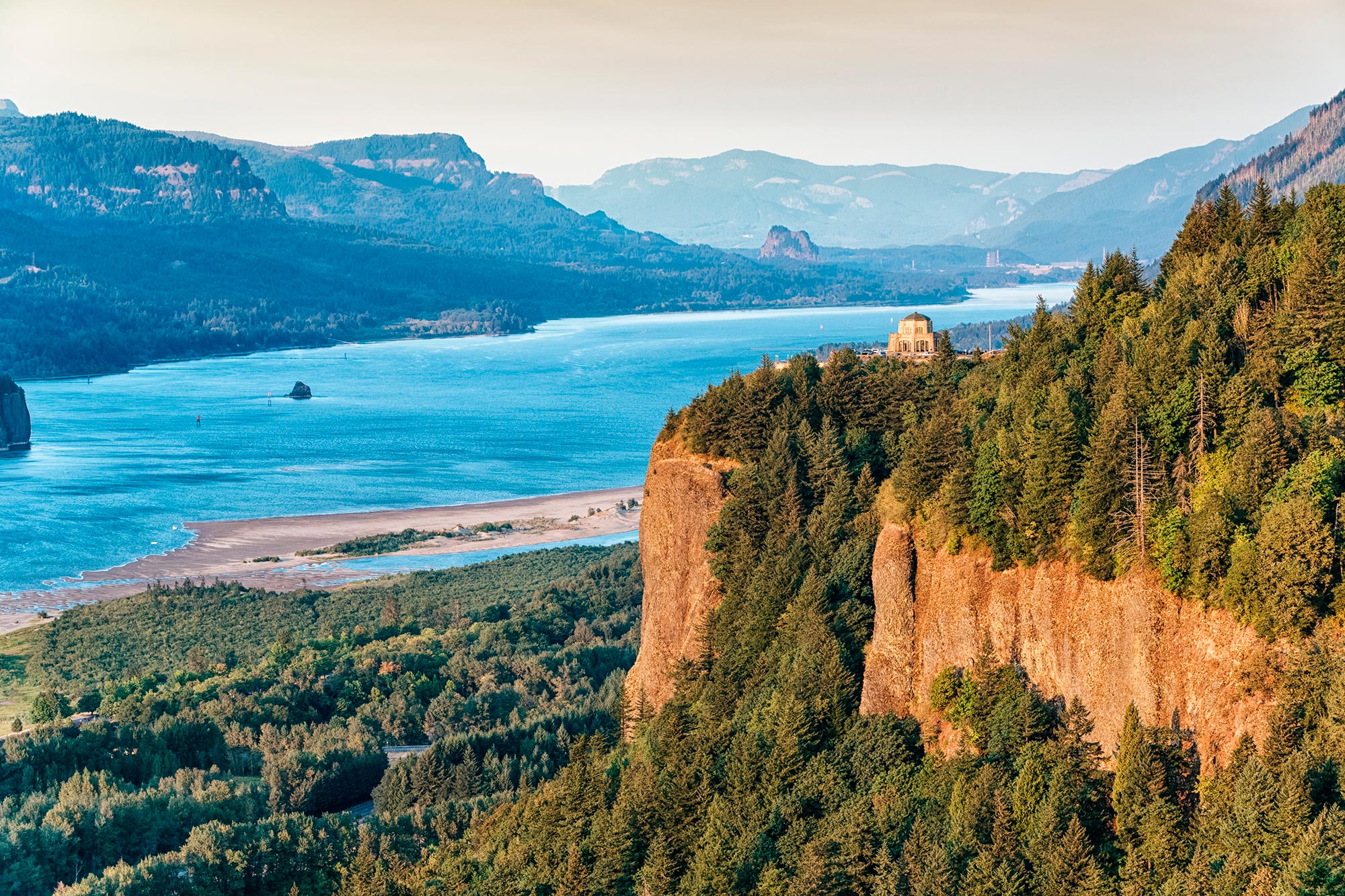
A new study shows that magma and water have jointly sculpted the Columbia River Gorge, with magma still influencing its landscape today.
University of Oregon researchers are adding new details to the geological history of the iconic Columbia River Gorge, a wide river canyon that cuts through the volcanic peaks of the Cascades along the border between Oregon and Washington.
Magma and Water: Shaping Forces of the Gorge
In a new study, UO researchers show how magma and water have acted as opposing forces to shape this landscape, known for its rugged cliffs and stunning waterfalls. Prolonged upwelling of magma beneath the earth’s crust bent the river channel and pushed up cliffs and peaks, as water carved a deep channel between them, the researchers reported on December 20 in the journal Science Advances.
And magma is still influencing the landscape today.
Deeper Understanding of Volcanic Systems
“A lot of people look at volcanic systems and see the volcanoes, the pointy cone-shaped things. But in fact, the volcanoes are just the very top of a vast network of magma transport,” said Leif Karlstrom, a geologist in the College of Arts and Sciences at the UO. “Here, we’re seeing evidence of that deeper system working at the surface.”
The Columbia begins high in the Canadian Rockies of British Columbia. All told, it gathers water from an area of more than 260,000 square miles and carries it to the Pacific Ocean. It’s been flowing in some form for tens of millions of years, though not always along the same path.
Unique Geological Phenomenon
“The gorge is this amazing scenario,” said Nate Klema, who led the study as a doctoral student in Karlstrom’s lab. “The Columbia is the largest river on earth that bisects a volcanic arc,” which is a line of volcanoes associated with a subduction zone, such as the Cascades.
But it’s also tricky to interpret geologically.
Klema has spent his life paddling rivers and experiencing firsthand how they shape landscapes. In the new study, he and Karlstrom combed through many different kinds of geological and geophysical data gathered in the gorge and wove together a story about its origins.
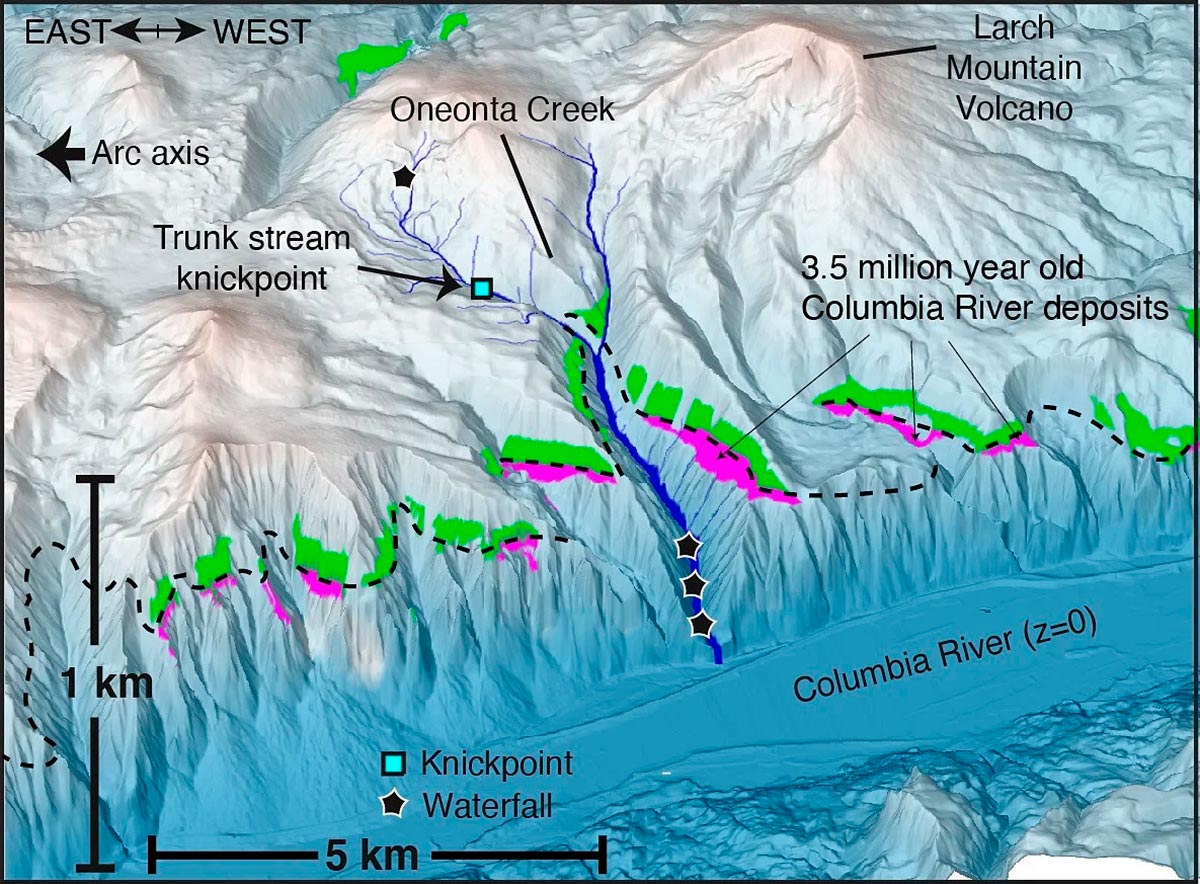
Roughly 3.5 million years ago, a sequence of volcanic flows changed the course of the lower Columbia River, filling the channel it was moving through and diverting the river northwards, where it runs today. Before that diversion, the river channel was essentially flat.
But afterward, it began to arch, as magma welling beneath pushed upward. The uplift, in combination with an accumulation of rocks from volcanic eruptions, helped create the gorge’s rugged topography.
The Role of Magma in Uplift and Formation
Karlstrom, Klema, and their colleagues used many different kinds of data to show how the movement of magma, rather than other tectonic forces, explains the uplift.
“One of the remarkable things after finding this ‘strain marker’ associated with the now-abandoned river channel — a surface of known initial shape that has since been deformed — is that all the other data sets correlated so well,” Karlstrom said. “It is unusual to see such a simple and compelling pattern, and it’s a reason this became a big result.”
Measurements of heat flowing out of the earth, plus maps of the earth’s structure created via seismic waves, both point to magma pooling beneath the crust under the gorge. Other clues, like the locations of geologically recent volcanic vents, provide further evidence that the deep magma helped shape the gorge.
For example, the team showed how the many tributaries flowing into the Columbia from the south side of the gorge have steepened in response to magma-driven deformation. They noted spots where the tributaries suddenly increase their slope in response to the uplift, creating cliffy topography.
Creation of the Gorge’s Iconic Waterfalls
Those cliffs set the stage for the waterfalls that the gorge is famous for, though other more recent events, such as megafloods from the last ice age, have shaped the waterfalls too.
“What we looked at is much larger than an individual waterfall; in each of these tributaries, the entire river system is having to become steeper,” said Klema, who is now a professor at Fort Lewis College in Colorado. “The waterfalls are there because these tributaries have to be so steep to get from their headwaters down to the Columbia.”
Ongoing Influence of Magma
The study also shows how magma is still shaping the gorge and the surrounding landscape today.
A pool of molten magma still lies beneath the gorge, without any volcanoes on top. As the crust beneath the gorge bends, it’s pushed magma off to the sides.
“The Cascades have been building for so long, volcanoes layered on top of volcanoes, as magma continues to work its way up,” Klema said. “One implication is that there will be more volcanoes in the future, more layering of material on top of what’s already there.
Reference: “The magmatic origin of the Columbia River Gorge, USA” by Nathaniel Klema, Leif Karlstrom, Charles Cannon, Chengxin Jiang, Jim O’Connor, Ray Wells and Brandon Schmandt, 20 December 2023, Science Advances.
DOI: 10.1126/sciadv.adj3357
This research was supported by a National Science Foundation Career Award.
Never miss a breakthrough: Join the SciTechDaily newsletter.
Follow us on Google and Google News.