
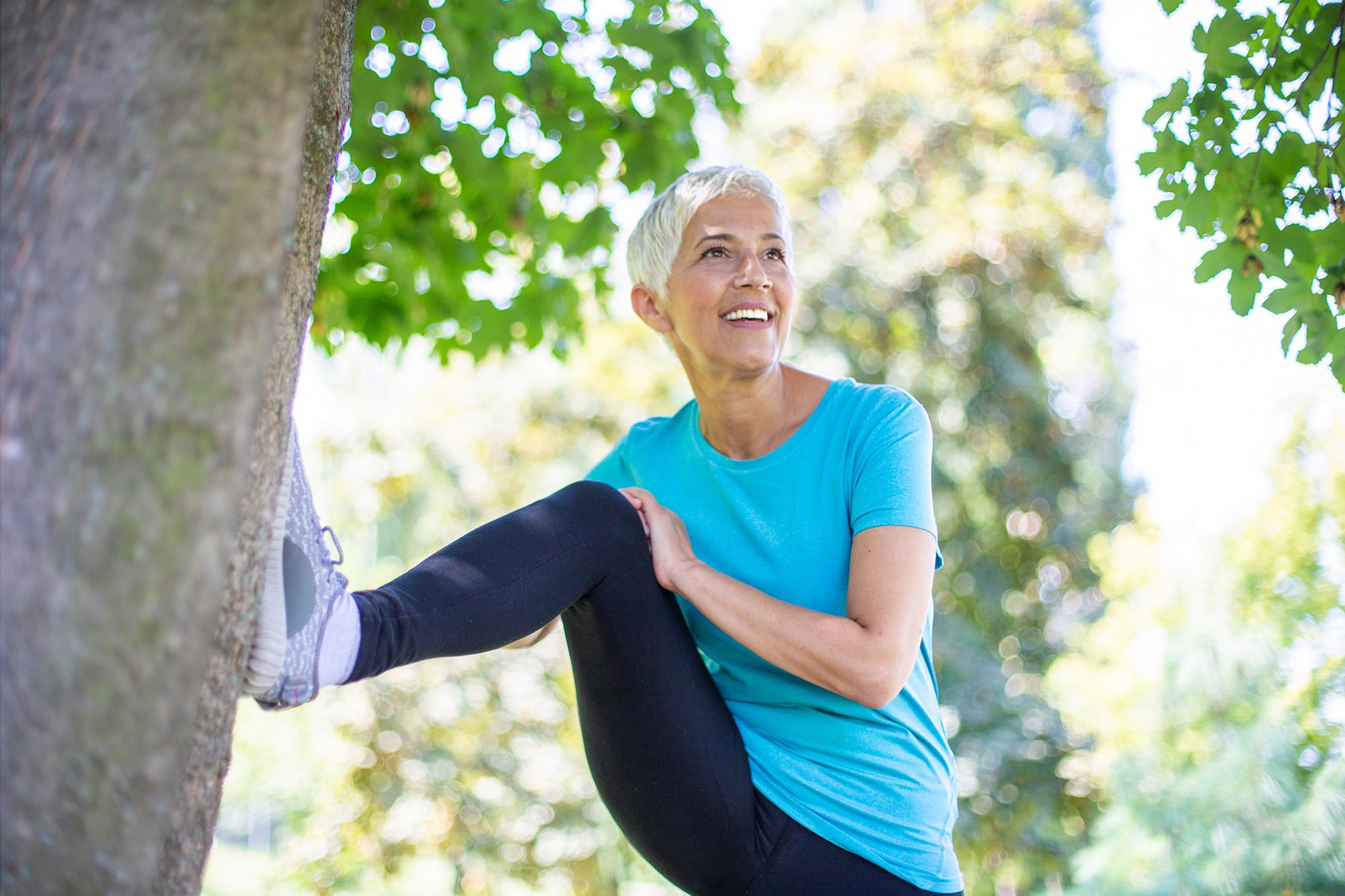
Research reveals that middle-aged individuals with higher flexibility, measured by the Flexindex, show reduced mortality risks.
This study, involving over 3,000 participants, found that better flexibility is linked to a significant decrease in death rates, underlining the importance of including flexibility exercises in regular fitness routines to potentially extend life expectancy.
Flexibility exercises are often included in the exercise regimens of athletes and exercisers. New research published today (August 21) in the Scandinavian Journal of Medicine & Science in Sports suggests that levels of flexibility may affect survival in middle-aged individuals.
Flexindex: A New Measure of Flexibility
After analyzing data on 3,139 people (66% men) aged 46–65 years, investigators obtained a body flexibility score, termed Flexindex. This score was derived from a combination of the passive range of motion in 20 movements (each scored 0–4) involving 7 different joints, resulting in a score range of 0–80.
Flexindex was 35% higher in women compared with men. During an average follow-up of 12.9 years, 302 individuals (9.6%) comprising 224 men and 78 women died. Flexindex exhibited an inverse relationship with mortality risk and was nearly 10% higher for survivors compared with non-survivors in both men and women.
Flexibility’s Impact on Mortality
After taking age, body mass index, and health status into account, men and women with a low Flexindex had a 1.87- and 4.78-times higher risk of dying, respectively, than those with a high Flexindex.
“Being aerobically fit and strong and having good balance have been previously associated with low mortality. We were able to show that reduced body flexibility is also related to poor survival in middle-aged men and women,” said corresponding author Claudio Gil S. Araújo, MD, PhD, of the Exercise Medicine Clinic – CLINIMEX, in Rio de Janeiro, Brazil.
The Importance of Flexibility in Aging
He added that as flexibility tends to decrease with aging, it may be worth paying more attention to flexibility exercises and routinely including assessments of body flexibility as part of all health-related physical fitness evaluations.
Reference: “Reduced Body Flexibility Is Associated With Poor Survival in Middle-Aged Men and Women: A Prospective Cohort Study” by Claudio Gil S. Araújo, Christina G. de Souza e Silva, Setor K. Kunutsor, Barry A. Franklin, Jari A. Laukkanen, Jonathan Myers, Maria A. Fiatarone Singh, João Felipe Franca and Claudia Lucia B. Castro, 21 August 2024, Scandinavian Journal of Medicine & Science in Sports.
DOI: 10.1111/sms.14708
Never miss a breakthrough: Join the SciTechDaily newsletter.
Follow us on Google and Google News.
5 Comments
Those who are healthier may be more flexible. This study does not address causation, only correlation. This means you cannot say that stretching to become more flexible will extend life expectancy. But it may mean that one’s level of flexibility may be an indicator of health conditions that affect longevity.
I stretch every morning for 20-30 minutes. Also, don’t forget self-massage wherever you can reach. Stretching alone isn’t a complete solution.
People lose flexibility due to the accumulation of mild scar tissue (microfibers). Microfibers form as a result of stress and tension. Common forms of stress are lung infections and inflammations (bronchitis, pneumonia, allergies, chronic colds), wearing a school backpack (8 studies have confirmed that wearing a school backpack reduces lung capacity up to 40%–we have found this reduction becomes permanent after 3-4 years) and sports impacts that all reduce lung capacity and brain oxygen. Falls, car and bike accidents, family stress (abusive parents), job stress, long hours behind a desk, lifting weights, sports impacts all reduce overall flexibility. Microfibers, like all scar tissue, cannot be released by stretching, but are released with Somax Microfiber Reduction.
I am a medical anthropologist and do research on the impacts of tight clothing on the body. When considering things that reduce lung capacity, you should add wearing bras. Tight clothing around the chest interferes with circulation and chest expansion. According to the International Bra-Free Study, when women stop wearing bras they experience that they can breathe easier, since it’s easier to expand their chest without a tight bra band around them. Plus, their breast pain and cysts go away, and their breasts lift and tone, among other things. See my article, Bras Cause More than Breast Cancer – Preliminary Results of the International Bra-Free Study. https://www.academia.edu/40226963/Bras_Cause_More_than_Breast_Cancer_Preliminary_Results_of_the_International_Bra_Free_Study
Staying flexible & stretching is a blessing.Yoga & taekwondo taught me the benefit of exercise & breathing.
Due to injuries, cut down some exercise positions Bu yoga is amazing.Stretching is wonderful.Engaing breath & moving slowly on the rope or on the wall. Antigravity yoga helps to stretch my back.Stiffness from my neck disappears.My students feel blessed to stretch on the wall or Bar.
Your articles are amazing.THANKS