
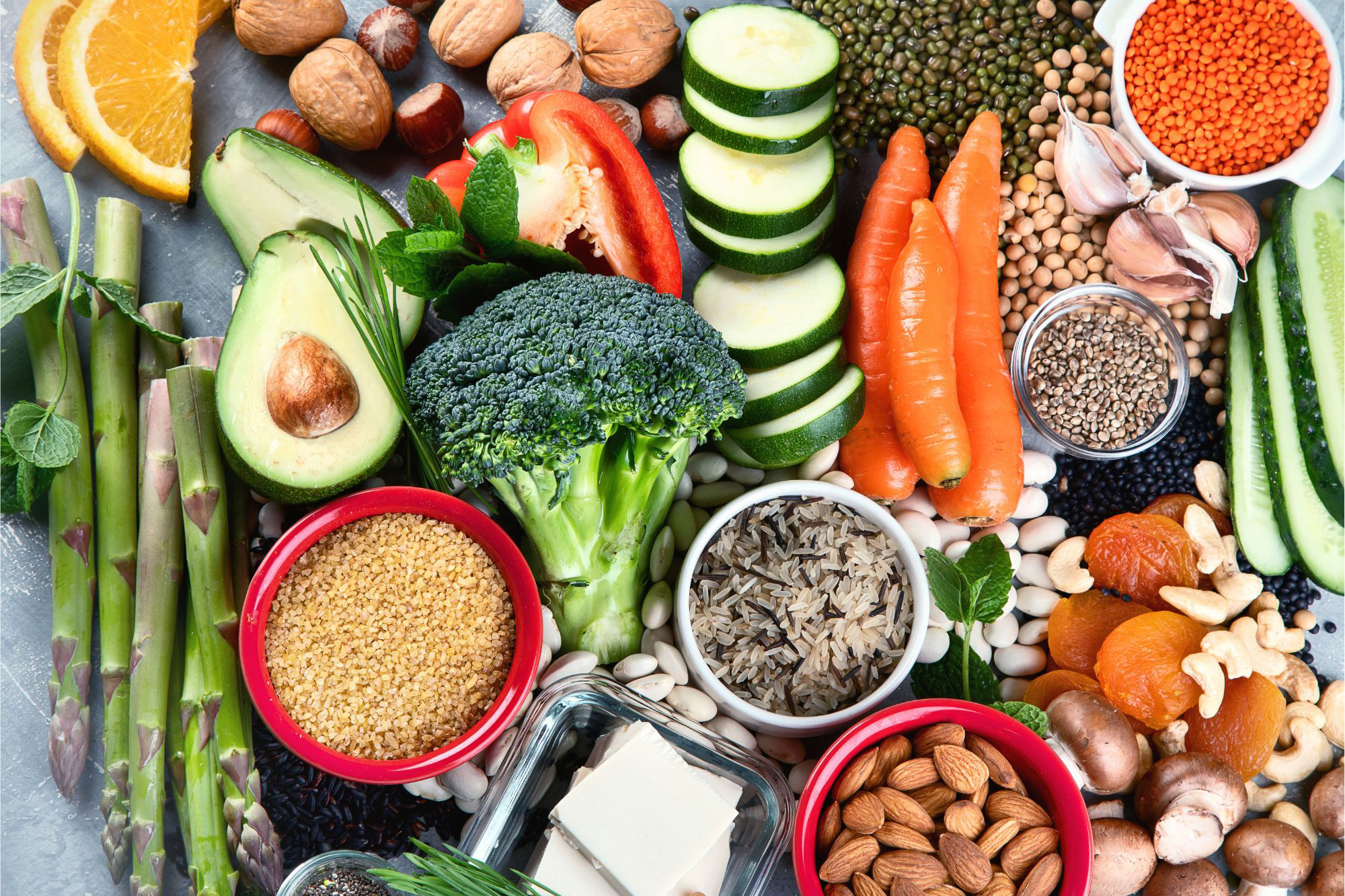
Pure vegetarian diets may not offer as much protection against certain neurological diseases in the elderly.
According to a new study, various vegetarian diets seem to reduce the risk of mortality and related health conditions, with a pesco-vegetarian diet — which includes fish — offering the greatest protection for very elderly individuals.
Researchers at Loma Linda University Health found that vegetarian diets are associated with lower risk for all-cause mortality and many cause-specific mortalities, especially among males and middle-aged subjects. However, slightly higher risks were observed among very elderly vegetarians for neurological conditions such as stroke, dementia, and Parkinson’s Disease. Despite this, the pesco-vegetarian diet continued to offer a small but noticeable advantage over other vegetarian and non-vegetarian diets, even in elderly people.
Neurological Risks in the Elderly
Gary Fraser, MBCHB, PhD, distinguished professor at Loma Linda University School of Public Health and principal investigator of the study, said a vegetarian diet appears to offer protection from the risk of death through middle-aged years, but once it helps people get into their 80s that overall advantage seems to disappear for those adhering to a strict vegetarian diet.
“These increased risks of neurological conditions among vegetarians in their 80s weren’t huge, but something is going on there that we shouldn’t ignore if we wish the vegetarian advantage to continue for all vegetarians in their later years,” Fraser said.
Study Details and Findings
The study was published on August 2 in the American Journal of Clinical Nutrition.
The study used data from the Adventist Health Study-2, a massive cohort of nearly 96,000 people who identify as Seventh-day Adventists and lived in the United States and Canada during the study’s baseline recruitment between 2002 and 2007, with follow-up through 2015. Data from that group has been used for numerous studies on health, disease, and mortality over the years. This study analyzed data from more than 88,000 subjects and approximately 12,500 deaths in the study cohort. Dietary data were collected using a questionnaire and then categorized into five patterns: non-vegetarian, semi-vegetarian, pesco-vegetarian, lacto-ovo-vegetarian, and vegan.
Fraser said his team found that Adventist vegetarians overall had about a 12% less risk of death compared to Adventist non-vegetarians. Study participants with a pesco-vegetarian diet had an 18% less risk of death. Those with a lacto-ovo-vegetarian diet (including dairy and eggs) had a 15% lower risk of death. Vegans overall had a less than 3% decreased risk of death, but male vegans fared much better than non-vegetarians, in contrast to females.
“Overall, this is some of the clearest data that American vegetarians are greater protected from premature death than non-vegetarians,” Fraser said.
Reference: “Cause-specific and all-cause mortalities in vegetarian compared with those in nonvegetarian participants from the Adventist Health Study-2 cohort” by Grace P Abris, David J Shavlik, Roy O Mathew, Fayth M Butler, Jisoo Oh, Rawiwan Sirirat, Lars E Sveen and Gary E Fraser, 2 August 2024, The American Journal of Clinical Nutrition.
DOI: 10.1016/j.ajcnut.2024.07.028
Support for the analysis of the study was provided by Loma Linda University Health’s Research Affairs department. Initial cohort funding support came from grants from the National Cancer Institute and the World Cancer Research Fund.
Never miss a breakthrough: Join the SciTechDaily newsletter.
Follow us on Google and Google News.
1 Comment
I am a medical anthropologist researcher and author. Nutrition studies need to start looking at acrylamide in the food, which is a nerve poison and causes cancer. Acrylamide is high in vegetarian food, and is formed in foods when heating them above 248 degrees F. This is the temperature where the Maillard reaction occurs, which creates the delicious flavor of baked and roasted foods. Coffee, chocolate, bread, french fries, and any carbohydrate food develops acrylamide when heated over that temperature. Any roasted grains have it, even coffee alternatives. Proteins, however, do not form acrylamide when heated, since it is a reaction between sugar and protein at 248 degrees which creates acrylamide.
This problem was discovered in 2002, and has shocked the entire world. Governments everywhere are trying to limit acrylamide in foods. For anyone with a nerve problem, acrylamide can be especially a problem, and people are advised to reduce the acrylamide in their diets. But Big Food is fighting this, and you don’t hear about it in the media.
Here is an article I wrote about this. COOKED TO DEATH: How the acrylamide in food causes nerve damage
and Long-COVID. https://www.academia.edu/87219890/COOKED_TO_DEATH_How_the_acrylamide_in_food_causes_nerve_damage_and_Long_COVID?email_work_card=reading-history