
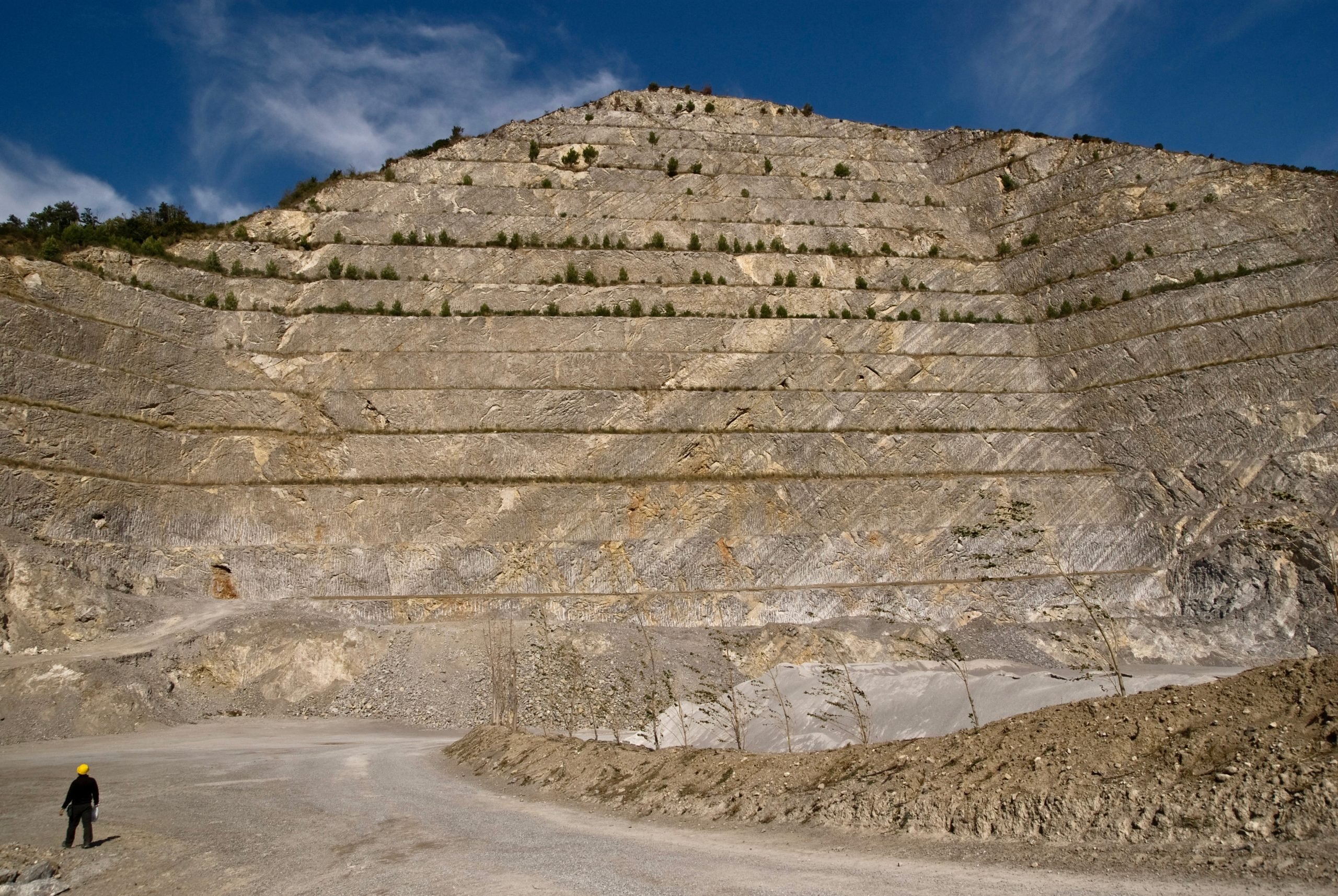
Limestone from the Mercato San Severino area in southern Italy provides evidence of historical oceanic oxygen depletion.
Researchers have uncovered a significant clue within Italian limestone that sheds light on a mass marine life extinction from millions of years ago. This finding could also offer insights into how current oceanic conditions might be affected by oxygen depletion and climate change.
“This event, and events like it, are the best analogs we have in Earth’s past for what is to come in the next decades and centuries,” said Michael A. Kipp, an earth and climate science assistant professor at Duke University. Kipp co-authored a study published on June 24 in the Proceedings of the National Academy of Sciences that measures oxygen loss in oceans leading to the extinction of marine species 183 million years ago.
During the Jurassic Period, when marine reptiles like ichthyosaurs and plesiosaurs thrived, volcanic activity in modern South Africa released an estimated 20,500 gigatons of carbon dioxide (CO2) over 500,000 years. This heated the oceans, causing them to lose oxygen.
The result was the suffocation and mass extinction of marine species.
“It’s an analog, but not a perfect one, to predict what will happen to future oxygen loss in oceans from human-made carbon emissions, and the impact that loss will have on marine ecosystems and biodiversity,” said co-author Mariano Remirez, an assistant research professor at George Mason University.
Estimating Ancient Oxygen Levels
Studying limestone sediment that carries chemicals dating back to the time of the volcanic outburst, researchers were able to estimate the change in oxygen levels in ancient oceans. At one point, oxygen was completely depleted in up to 8% of the ancient global seafloor, an area roughly three times the size of the United States.
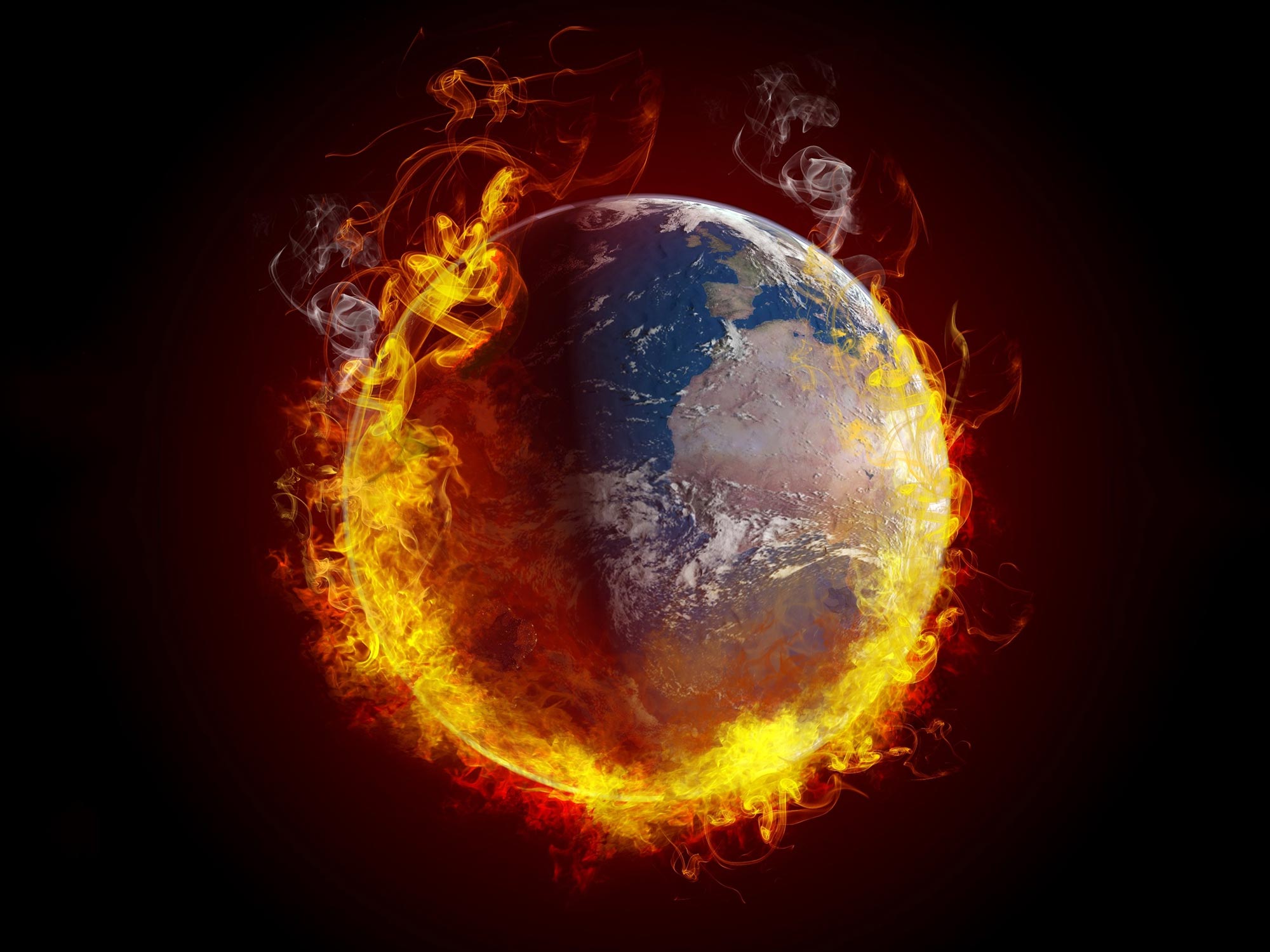
Since the Industrial Revolution began in the 18th and 19th centuries, human activity has released CO2 emissions equivalent to 12% of what was released during the Jurassic volcanism.
But Kipp said that today’s rapid rate of atmospheric CO2 release is unprecedented in history, making it hard to predict when another mass extinction might occur or how severe it might be.
“We just don’t have anything this severe,” Kipp said. “We go to the most rapid CO2-emitting events we can in history, and they’re still not rapid enough to be a perfect comparison to what we’re going through today. We’re perturbing the system faster than ever before.”
“We have at least quantified the marine oxygen loss during this event, which will help constrain our predictions of what will happen in the future,” Kipp said.
Reference: “Carbonate uranium isotopes record global expansion of marine anoxia during the Toarcian Oceanic Anoxic Event” by Mariano N. Remírez, Geoffrey J. Gilleaudeau, Tian Gan, Michael A. Kipp, François L. H. Tissot, Alan J. Kaufman and Mariano Parente, 24 June 2024, Proceedings of the National Academy of Sciences.
DOI: 10.1073/pnas.2406032121
The study was funded by the Duke University.
Never miss a breakthrough: Join the SciTechDaily newsletter.
Follow us on Google and Google News.
3 Comments
“This [CO2] heated the oceans, causing them to lose oxygen.”
Volcanoes release more than just carbon dioxide. They release several gases that result in forming sulfuric, hydrochloric, hydrofluoric, and carbonic acids, which might actually ‘acidify’ the oceans (versus just decreasing the alkalinity). If the magmas intrude coal beds, as is known to have happened during the Great Dying (Permian extinction), mercury, sulfur oxides, albedo-increasing sulfates, and toxic, volatile hydrocarbons (known as coal tars), can be released. If large numbers of various life forms are killed by the emissions and/or acidic water and decreased sunlight, their bodies provide food for bacteria that release CO2 as oxygen is consumed. That is, death of living organisms, as happens today with algal blooms, results in a depletion of dissolved oxygen. We are confronted with a ‘chicken or egg’ problem, which the authors don’t even acknowledge as a possibility because they are so focused on the 12% anthropogenic equivalence of the South African vulcanism.
Science is not served well when researchers are so blinded by the reigning paradigms that they ignore alternative working hypotheses. I’m suspicious that T. C. Chamberlain’s “Method of Multiple Working Hypotheses” is no longer required reading in woke ‘Earth Science’ curricula.
“But Kipp said that today’s rapid rate of atmospheric CO2 release is unprecedented in history, making it hard to predict when another mass extinction might occur or how severe it might be.”
I don’t think that Kipp thought this through before making his claim. The authors have just gone to the trouble of characterizing the Jurassic extinction, which demonstrates that something even more extreme than what is happening today happened at LEAST once before, meaning that it isn’t “unprecedented.” Arm waving is always trumped by facts and logic.
Oh, it’s now “crisis” again? An article before it was just “change”.
And what would “climate crisis” even mean? Is it like marital crisis? Does counseling help?