

You’ve probably heard that you should drink eight glasses of water every day — that’s about half a gallon (2 liters) of fluid. This claim has become widely accepted, but is it actually just a myth? This article looks at where this recommendation originated and how much water we really should be drinking each day.
The Making of a Myth
The idea that we should all drink eight glasses of water per day has been around for decades but when you think about it, it doesn’t make much sense. Surely a 6-year-old primary schooler, no matter how rambunctious, doesn’t need the same amount as a 25-year-old roofer. You may therefore not be surprised to learn that this so-called “rule” has no basis in science.[1] So where does it come from anyway?
The idea that we should consume large quantities of water can be traced back to Vincent Priessnitz,[2] an Austrian peasant farmer who gained notoriety after getting into a bad accident and healing himself using wet bandages and drinking large quantities of water. He went on to popularize the hydrotherapy “nature-cure” movement[3] in the early 19th century. Cold water — drinking it, bathing in it, using compresses impregnated with it — was recommended to treat a whole host of illnesses. Priessnitz’s patients were advised to drink a whopping 12 to 30 glasses a day.
The more recent notion that we should drink eight glasses a day is often accredited to Dr. Irwin Stillman’s popular 1960s diet, although the U.S. Food and Nutrition Board came up with it first: in 1945, the Board published recommendations that U.S. citizens should drink 1 ml per calorie of food consumed. For a person who consumed about 2,000 calories a day, this translated to eight 8-ounce glasses. Nonetheless, Stillman’s 1967 book, “The Doctor’s Quick Weight Loss Diet,” was a much bigger hit, and his diet,[4] a low-fat version of the Atkins diet, required that the dieter drink at least eight 10-ounce glasses of water per day to reduce the level of ketones in their blood.
The next big name on the scene was American nutritionist Frederick John Stare, who co-wrote the 1974 book “Nutrition for Good Health” in which he stated that the average adult should drink “somewhere around six to eight glasses per 24 hours, and this can be in the form of coffee, tea, milk, soft drinks, beer, etc. Fruits and vegetables are also good sources of water.” Somehow, the latter part of his statement was lost.
Health Benefits of Water
Up to 60 percent of your body weight is made up of water.[5] Every one of your cells, tissues, and organs needs water to work properly. Unsurprisingly, then, there are several benefits to keeping well-hydrated, including:
- Reduced risk of certain cancers and coronary disease: drinking lots of water may decrease the risk of bladder cancer,[6] colorectal cancer,[7] and heart disease.[8]
- Better cognitive performance: some studies report better visual attention[9] and working memory[10] performance after increasing water intake.
- Better mood: keeping hydrated can reduce symptoms of fatigue, confusion, anger, and depression.[11]
- Reduced severity of headaches: drinking more water has been shown to reduce the intensity, frequency, and duration of headaches[12] in people who are prone to getting them.
- Improved kidney and bladder function: increasing water consumption may help to prevent the recurrence of kidney stones[13] in people with a tendency to form them, and decrease the number of bladder infections[14] in people with a history of such infections.
- Constipation relief and prevention: drinking enough water may help to prevent and relieve constipation.[15]
- Improvement in skin health: drinking more water can reduce skin dryness and roughness, and increase extensibility and elasticity.[16]
- Better physical performance: not drinking enough during exercise can increase fatigue and reduce motivation.[17]
- Weight loss: drinking enough water may help you lose weight[18] if the water replaces higher-caloric beverages, such as soda, or makes you feel “full” before meals.
However, although a growing body of evidence supports the importance of adequate hydration in maintaining good health, more research[19] is needed before any specific claims can be made.
Factors Affecting Optimal Intake
Daily water needs are highly individual; eight glasses a day may be more than enough for some people, but too little for others. Generally speaking, a person needs to drink enough water to replace the fluids they lose through breathing, sweating, urinating, and defecating. This will depend on a variety of factors:
- Exercise. Any activity that makes you sweat requires you to drink more. You should drink water before, during, and after your workout.
- Body weight. Bigger people need to drink more water.[20]
- Overall health. Your body will lose fluids if you have a fever, are vomiting, or have diarrhea. People who have (had) bladder infections and kidney stones should also have a higher fluid intake.[21]
- Environment. Hot or humid weather that makes you sweat requires additional hydration. Dehydration also occurs at high altitudes. To compound the problem, cold weather also suppresses your thirst, even when your body needs fluids.[22]
- Pregnancy and breastfeeding. People who are pregnant or breastfeeding need more fluids to stay hydrated.
Sources of Water
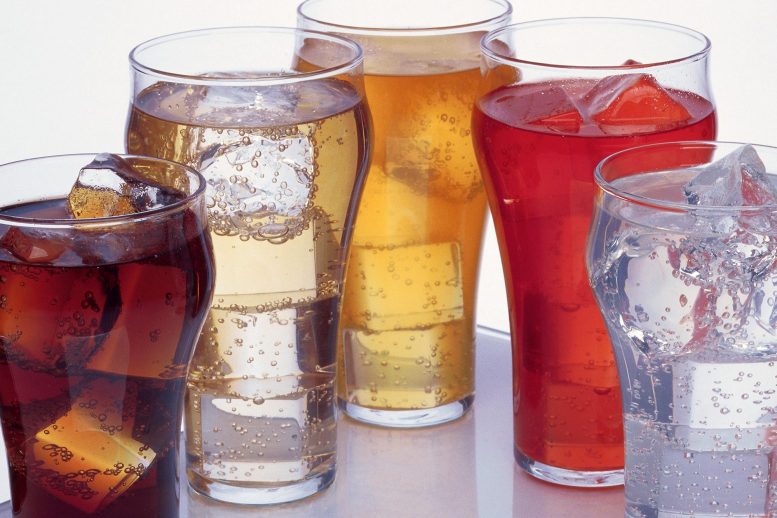
As already stated by Frederick Stare, water is not your only option for staying hydrated. Beverages like milk, fruit juice, and sodas count, too — although you should keep an eye on the sugar content of your drinks because the long-term health effects of solely consuming sodas are not good. Additionally — and contrary to popular belief — caffeinated beverages like coffee and tea can also contribute to your fluid intake when they’re consumed in moderation.[23] Sadly, however, although mild alcoholic drinks like beer can count toward your hydration needs, booze is your worst option[24] because it suppresses a hormone called vasopressin that helps you retain water.
Many foods also contain significant amounts of water. Fruit and vegetables are particularly rich in water. For example, watermelon is 91 percent water and cucumber is 95 percent water, and foods like meat, fish, and eggs also have a relatively high water content. An egg is 76 percent water, and a pork chop is 38.5 percent. People who don’t eat water-rich foods need to drink more[25] than those who do.
Finally, small amounts of metabolic water[26] are also produced within your body when you metabolize nutrients. Approximately 3 g of metabolic water is released for each gram of glycogen that is broken down in the body.

To Drink or Not To Drink?
In principle, you’ll know when you need to hydrate because you’ll feel thirsty. This should happen during the very earliest stages of dehydration, when you’ve lost about 2 percent of your body weight in water (and, actually, most experts define dehydration as starting when you have lost 3 percent or more of your body weight). The more dehydrated you are, the thirstier you will feel.
But there is generally no need to drink when you don’t feel like it. Drinking when you don’t feel thirsty requires greater physical effort[27] than drinking when you do. Brain imaging studies have also shown that drinking more water than you need feels unpleasant.[28] Your brain will do its best to discourage “social polydipsia” — chronic overdrinking due to “the urban myth of consuming eight 8-ounce glasses of water per day for good health”[29] — because this could modify your internal plumbing by distending your bladder or dilating your ureter, or, in the worst-case scenario, cause renal failure.[30]
That said, drinking excess water is generally not dangerous. Most of the time, you will simply get rid of it in your urine. This is thanks to your kidneys, whose main function is to make sure that your water losses equal your water intake. They can make adjustments in response to any upset in the water balance, either underhydration or overhydration, within 40 seconds.[31] If they don’t and you end up drinking too much, you will start retaining water and you will accumulate more and more of it until you start to see your feet swelling. In this very unlikely event, see a doctor.
The main takeaway of all of this is that if you’re feeling thirsty, have a drink. Or eat some watermelon. If not, don’t. And relax. There are no hard targets for you to meet.
Related: How Much Water Should I Drink? We Asked 5 Experts
References:
- journals.physiology.org/doi/full/10.1152/ajpregu.00365.2002
- en.wikipedia.org/wiki/Vincenz_Priessnitz
- naturecure.org.in/hydrotherapy/
- livestrong.com/article/83808-stillmans-diet/
- usgs.gov/special-topics/water-science-school/science/water-you-water-and-human-body
- doi.org/10.1056/NEJM199905063401803
- doi.org/10.1002/(sici)1097-0215(19990812)82:4<484::aid-ijc3>3.0.co;2-a
- doi.org/10.1093/aje/155.9.827
- doi.org/10.1017/S0007114513004455
- doi.org/10.1016/j.appet.2016.11.011
- doi.org/10.1007/s00421-012-2506-6
- doi.org/10.1016/j.jocn.2020.05.034
- pubmed.ncbi.nlm.nih.gov/33459627/
- jamanetwork.com/journals/jamainternalmedicine/fullarticle/2705079
- doi.org/10.1016/j.jped.2017.01.005
- doi.org/10.1111/srt.12454
- doi.org/10.1016/j.jshs.2014.09.004
- doi.org/10.20960/nh.02746
- doi.org/10.3390/nu11010070
- doi.org/10.1370/afm.1951
- newsnetwork.mayoclinic.org/discussion/womens-wellness-drink-water-to-fight-those-utis/
- au.thorzt.com/Article/153/dehydration-risks-may-increase-with-cold-weather
- journals.lww.com/acsm-essr/Fulltext/2007/07000/Caffeine,_Fluid_Electrolyte_Balance,_Temperature.8.aspx
- journals.physiology.org/doi/abs/10.1152/ajpregu.1982.242.5.R522
- healthline.com/nutrition/19-hydrating-foods#TOC_TITLE_HDR_20
- chegg.com/learn/biology/nutrition/metabolic%20water
- pnas.org/doi/full/10.1073/pnas.1613929113
- pnas.org/doi/full/10.1073/pnas.1403382111
- jmedicalcasereports.biomedcentral.com/articles/10.1186/1752-1947-6-376
- ajp.psychiatryonline.org/doi/abs/10.1176/ajp.140.7.915
- journals.physiology.org/doi/abs/10.1152/ajprenal.1992.262.6.F989
Never miss a breakthrough: Join the SciTechDaily newsletter.
Follow us on Google and Google News.
4 Comments
My doctor has also told me drinking too much water can flush one’s B vitamins inordinately. Just mentioning that for any water-happy imbibers – be sure all your B’s are sufficient, they affect a lot of functions.
Also, weren’t there some researchers discovered to have been paid a million dollars by bottled water companies in return for claiming we all need 8 glasses a day every day?
“PEOPLE who are pregnant or breastfeeding need more fluids to stay hydrated.”
I take it then that men, as well as women who are not pregnant, can safely ignore this advice.
Had the author said “women,” one character would have been saved in typing, and the advice would have been more specific. What communication value is there in using a generic class as the subject when the object of the sentence only applies to a minority of the members? The good news is that fads come and go.
The only reason I am writing Clyde is I noted the same. You are more succinct than I. Final note a friend who is over weight diabetes just been told to cut his water intake by about 20% he saw his legs and asked how much he drank.
He stated he drank about 18 bottles of 10 -12 ounces a day. The swelling has been a concern for some time now. He’s about 100 – 120 pounds over. As far as fads go you could be dead before it goes. Does anyone remember the radio station down south eastern area had a contest on how much water you could drink and the one guy died ? They had NO idea that could happen. Oh! they paid dearly.
Im a healthy child who is overweight but I drink 4 literes of water, is that unhealthy or normal for an overweight person?