
Close Menu
    Facebook X (Twitter) Instagram
    SciTechDaily
    • Biology
    • Chemistry
    • Earth
    • Health
    • Physics
    • Science
    • Space
    • Technology
    Facebook X (Twitter) Pinterest YouTube RSS
    SciTechDaily
    Home»Space»We Asked a NASA Scientist: Why Can You See the Moon During the Day? [Video]
    Space

    We Asked a NASA Scientist: Why Can You See the Moon During the Day? [Video]

    By NASAJanuary 8, 20223 Comments3 Mins Read
    Facebook Twitter Pinterest Telegram LinkedIn WhatsApp Email Reddit
    Share
    Facebook Twitter LinkedIn Pinterest Telegram Email Reddit
    Daytime Moon
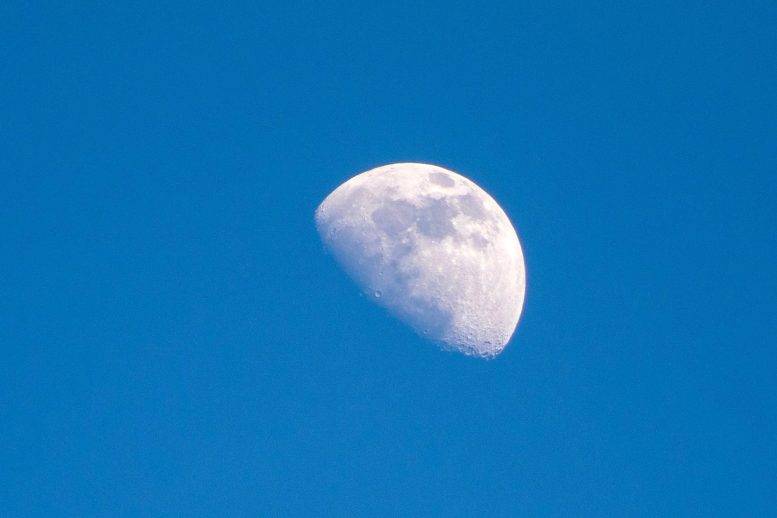
    Visible both day and night, the Moon shines due to reflected sunlight. Its visibility varies with its phases, with the full Moon being the most apparent when it fully reflects sunlight opposite the Sun.

    Why can you see the Moon during the day? Easy, because it’s there! It may seem odd to look up at the daytime sky and see the Moon but it’s perfectly natural. Planetary geologist Sarah Noble breaks it down so you know when to look up.

    We think of the Moon as a nighttime object because it’s often shown that way to us in books and movies. Even the weatherman uses the Sun as a symbol for day and the Moon for night. But the Moon actually spends almost as much time in the daytime sky as the night. You just have to look a little harder to see it.

    Let’s think about why we can see the Moon at night at all. Unlike our Sun, the Moon doesn’t create its own light. We can only see it because light from the Sun is reflecting off of its surface. The same is true during the day, and unlike the stars which are also still up there during the day but we can’t see them because the sky is too bright, the Moon actually shines bright enough that you can see it day or night as long as it’s in the right part of the sky.

    During a full Moon, the Moon is opposite the Sun in the sky. That’s why we can see the full face of the Moon reflecting sunlight. As the Earth rotates, the Moon rises just as the Sun sets, but just on that one day of the month. In the days before a full Moon, if you look in the eastern sky, you can find the almost full Moon rising before the sun sets. And the days after a full Moon, you can look in the western sky and find the Moon setting after the Sun has come up.

    Over the last year, I’ve actually made a game of timing my daily bike ride to see if I can spot it in the daytime sky. But it will keep you on your toes. It sets about 50 minutes later each day as it marches through its phases. So, keep your eyes peeled and keep looking up. Maybe you can spot it, too.

    We Asked a NASA Expert Video Series

    • Why is Venus Called Earth’s Evil Twin?
    • Is NASA Really Crashing a Spacecraft Into an Asteroid?
    • Is NASA Aware of Any Earth-Threatening Asteroids?
    • When Was the Last Time an Asteroid Hit Earth?
    • How Did Perseverance Mars Rover Pick Its Landing Spot?
    • What if an Asteroid Was Going To Hit Earth?
    • Did Mars Ever Look Like Earth?
    • What Are Lagrange Points?
    • What Are the Trojan Asteroids?
    • Is There Oxygen on Mars?
    • Does NASA Know About All the Asteroids?
    • Do Aliens Exist?
    • Is There Weather on Mars?
    • Will an Asteroid Ever Hit Earth?
    • Is Mars Habitable?
    • Could Microbes Survive a Trip to Mars?

    Never miss a breakthrough: Join the SciTechDaily newsletter.
    Follow us on Google and Google News.

    Astronomy Moon NASA Popular
    Share. Facebook Twitter Pinterest LinkedIn Email Reddit

    Related Articles

    Don’t Miss: Mars and the Wolf Moon Align in Epic Sky Spectacle

    Mars Ablaze: Witness Retrograde, Opposition, and a Cosmic Dance With the Moon

    Last Chance To See a Supermoon in 2024 – What Makes This “Beaver” Moon Special

    Tonight’s Must-See: The Hunter’s Moon Shines As 2024’s Brightest Supermoon

    Look Up! A Blue Supermoon Will Light Up the Sky

    Don’t Miss the Strawberry Moon in June’s Night Sky!

    NASA’s Artemis Moon Telescope Could Explore the Cosmos in Unprecedented Detail

    NASA’s GRAIL Mission Solves a Lunar Mystery Almost as Old as the Moon Itself

    Hubble Data Reveals a New Neptune Moon

    3 Comments

    1. G on January 8, 2022 10:15 pm

      The moon, being metal for the most part, acts like a giant reflective surface. Like a mirror reflects light from your surrounding, so does the moon…just in a massive scale.:D

      Reply
      • Bill Nye the Science Bitch on February 16, 2022 3:06 pm

        that is not true, at all

        Reply
    2. M on January 10, 2022 7:59 am

      This is embarrassing guys. You have a chance to ask nasa something and you go with a question out of a 3rd grade classroom. Come back next week and we will reveal how big bird learned the English language.

      Reply
    Leave A Reply Cancel Reply

    • Facebook
    • Twitter
    • Pinterest
    • YouTube

    Don't Miss a Discovery

    Subscribe for the Latest in Science & Tech!

    Trending News

    The Universe Is Expanding Too Fast and Scientists Can’t Explain Why

    “Like Liquid Metal”: Scientists Create Strange Shape-Shifting Material

    Early Warning Signals of Esophageal Cancer May Be Hiding in Plain Sight

    Common Blood Pressure Drug Shows Surprising Power Against Deadly Antibiotic-Resistant Superbug

    Scientists Uncover Dangerous Connection Between Serotonin and Heart Valve Disease

    Scientists Discover a “Protector” Protein That Could Help Reverse Hair Loss

    Bone-Strengthening Discovery Could Reverse Osteoporosis

    Scientists Uncover Hidden Trigger Behind Stem Cell Aging

    Follow SciTechDaily
    • Facebook
    • Twitter
    • YouTube
    • Pinterest
    • Newsletter
    • RSS
    SciTech News
    • Biology News
    • Chemistry News
    • Earth News
    • Health News
    • Physics News
    • Science News
    • Space News
    • Technology News
    Recent Posts
    • Scientists Overcome Major Quantum Bottleneck, Potentially Transforming Teleportation and Computing
    • Quantum Physics’ Strangest Problem May Hold the Key to Time Itself
    • Scientists Create “Liquid Gears” That Spin Without Touching
    • The Simple Habit That Could Help Prevent Cancer
    • Forgotten Medicinal Plant Shows Promise in Fighting Dangerous Superbugs
    Copyright © 1998 - 2026 SciTechDaily. All Rights Reserved.
    • Science News
    • About
    • Contact
    • Editorial Board
    • Privacy Policy
    • Terms of Use

    Type above and press Enter to search. Press Esc to cancel.