
A sudden hypoxic event off Panama killed half the coral and reshaped reef ecosystems. Microbes bounced back quickly, but larger organisms suffered longer.
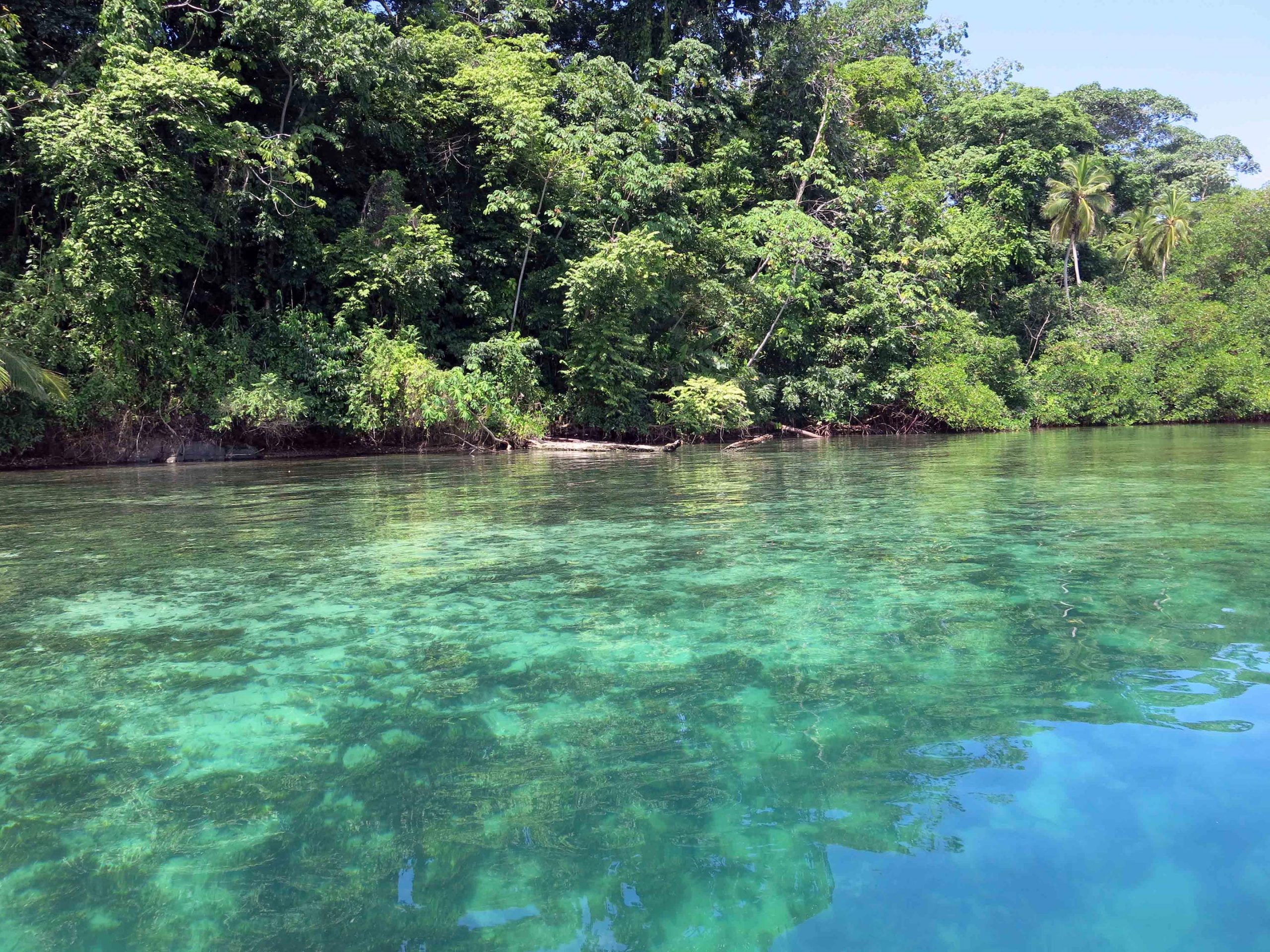
In September of 2017, Woods Hole Oceanographic Institution postdoctoral scholar Maggie Johnson was conducting an experiment with a colleague in Bocas del Toro off the Caribbean coast of Panama. After sitting on a quiet, warm open ocean, they snorkeled down to find a peculiar layer of murky, foul-smelling water about 10 feet below the surface, with brittle stars and sea urchins, which are usually in hiding, perching on the tops of coral.
This unique observation prompted a collaborative study explained in a new paper published on July 26, 2021, in Nature Communications analyzing what this foggy water layer is caused by, and the impact it has on life at the bottom of the seafloor.
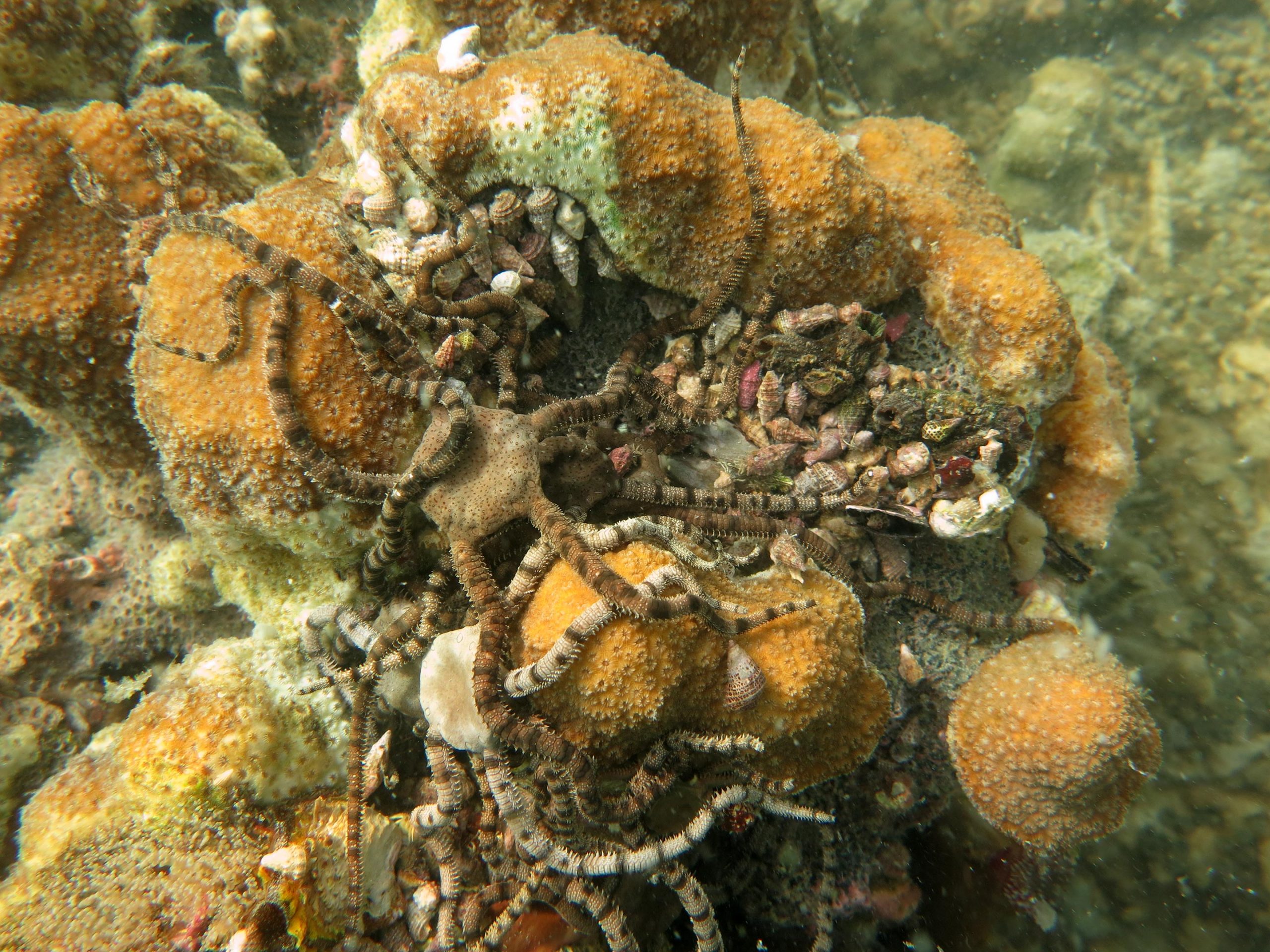
“What we’re seeing are hypoxic ocean waters, meaning there is little to no oxygen in that area. All of the macro-organisms are trying to get away from this deoxygenated water, and those that cannot escape essentially suffocate. I have never seen anything like that on a coral reef,” said Johnson.
The study looks closely at the changes occurring in both coral reef and microbial communities near Bocas del Toro during sudden hypoxic events. When water drops below 2.8mg of oxygen per liter, it becomes hypoxic. More than 10% of coral reefs around the world are at high risk for hypoxia (Altieri et al. 2017- tropical dead zones and mass mortalities on coral reefs).
A glimpse at the bottom of the seafloor in shallow waters off the coast in Bocos del Toro after a hypoxic event occurs. Hypoxic ocean waters are those with little to no oxygen, which research suggests is caused by stagnant, warm waters and nutrient pollution. Brittle sea stars, which usually are in hiding, perch on top of coral to attempt to escape from the deoxygenated environment. Credit: Maggie Johnson © Woods Hole Oceanographic Institution
“There is a combination of stagnant water from low wind activity, warm water temperatures, and nutrient pollution from nearby plantations, which contributes to a stratification of the water column. From this, we see these hypoxic conditions form that start to expand and infringe on nearby shallow habitats,” explained Johnson.
Investigators suggest that loss of oxygen in the global ocean is accelerating due to climate change and excess nutrients, but how sudden deoxygenation events affect tropical marine ecosystems is poorly understood. Past research shows that rising temperatures can lead to physical alterations in coral, such as bleaching, which occurs when corals are stressed and expel algae that live within their tissues. If conditions don’t improve, the bleached corals then die. However, the real-time changes caused by decreasing oxygen levels in the tropics have seldom been observed.
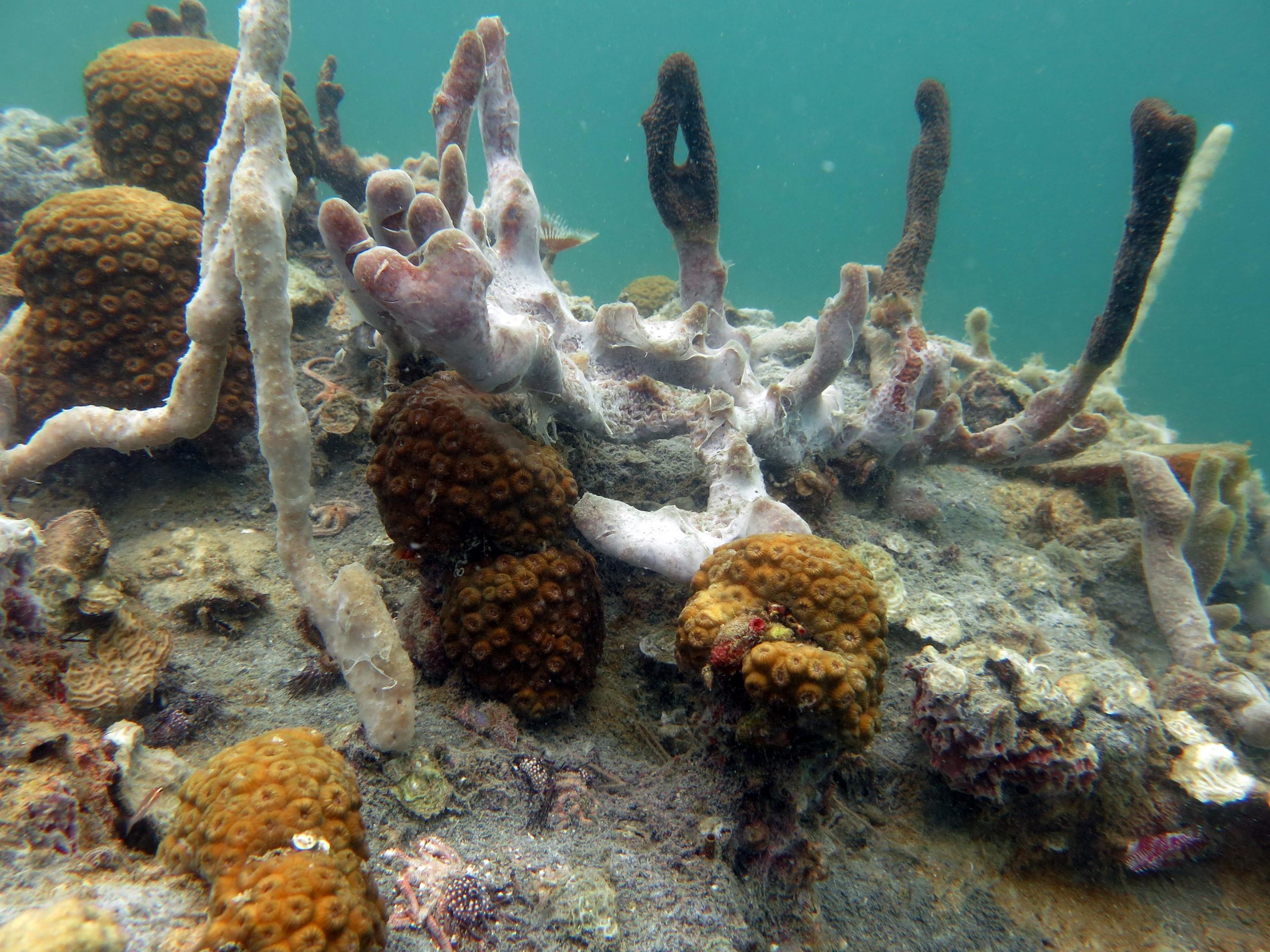
At a local scale, hypoxic events may pose a more severe threat to coral reefs than the warming events that cause mass bleaching. These sudden events impact all oxygen-requiring marine life and can kill reef ecosystems quickly.
Investigators reported coral bleaching and mass mortality due to this occurrence, causing a 50% loss of live coral, which did not show signs of recovery until a year after the event, and a drastic shift in the seafloor community. The shallowest measurement with hypoxic waters was about 9 feet deep and about 30 feet from the Bocas del Toro shore.
What about the 50% of coral that survived? Johnson and her fellow investigators found that the coral community they observed in Bocas del Toro is dynamic, and some corals have the potential to withstand these conditions. This discovery sets the stage for future research to identify which coral genotypes or species have adapted to rapidly changing environments and the characteristics that help them thrive.
A glimpse at the bottom of the seafloor in shallow waters off the coast in Bocos del Toro after a hypoxic event occurs. Hypoxic ocean waters are those with little to no oxygen, which research suggests is caused by stagnant, warm waters and nutrient pollution. Brittle sea stars, which usually are in hiding, perch on top of coral to attempt to escape from the deoxygenated environment. Brittle sea stars, which usually are in hiding, perch on top of coral to attempt to escape from the deoxygenated environment. Credit: Maggie Johnson © Woods Hole Oceanographic Institution
Microbial Resilience and Recovery
Investigators also observed that the microorganisms living in the reefs restored to a normal state within a month, as opposed to the macro-organisms, like the brittle stars, who perished in these conditions. By collecting sea water samples and analyzing microbial DNA, they were able to conclude that these microbes did not necessarily adjust to their environment, but rather were “waiting” for their time to shine in these low-oxygen conditions.
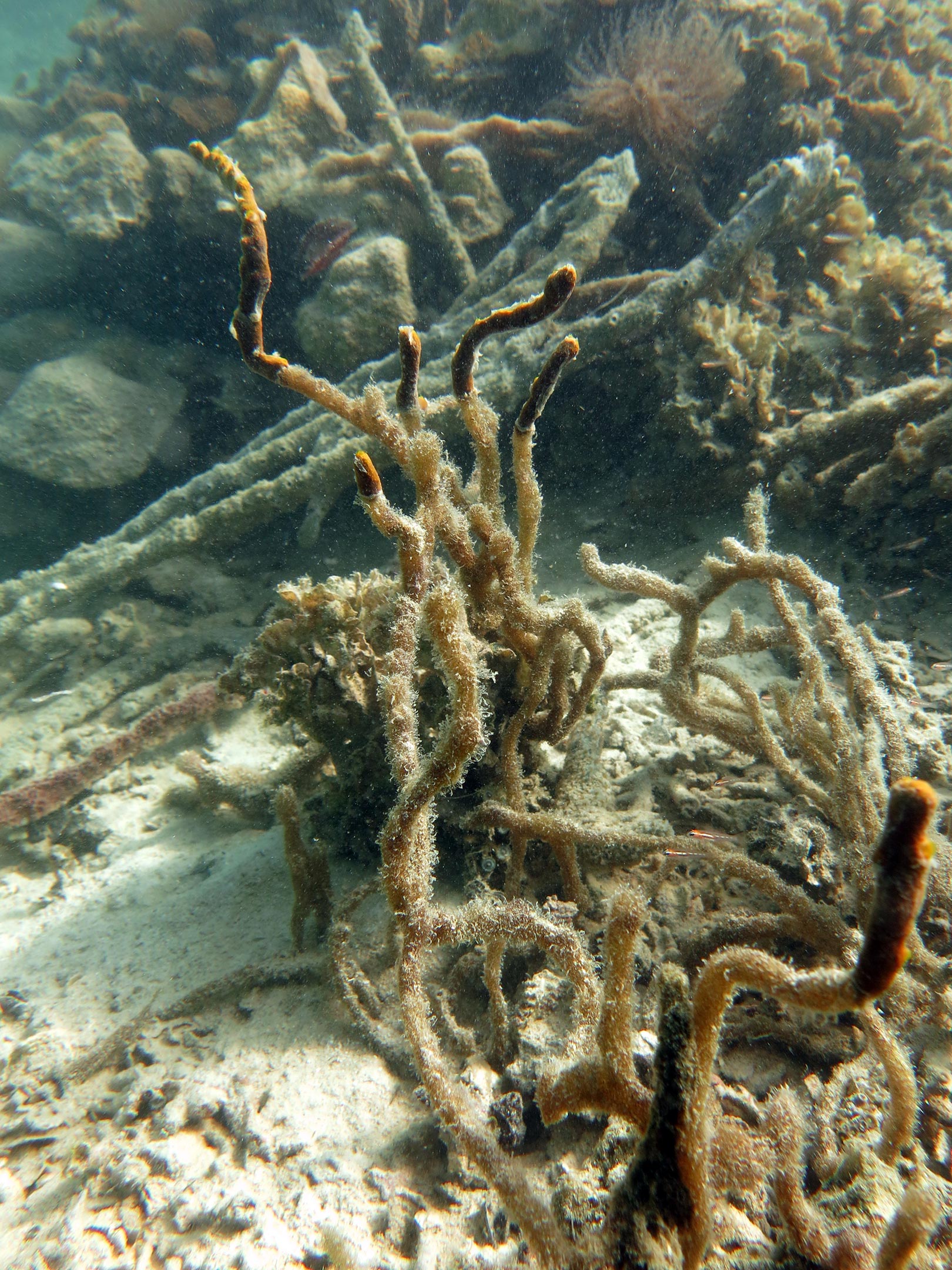
“The take home message here is that you have a community of microbes; it has a particular composition and plugs along, then suddenly, all of the oxygen is removed, and you get a replacement of community members. They flourish for a while, and eventually hypoxia goes away, oxygen comes back, and that community rapidly shifts back to what it was before due to the change in resources. This is very much in contrast to what you see with macro-organisms,” said Jarrod Scott, paper co-author and postdoctoral fellow at the Smithsonian Tropical Research Institute in the Republic of Panama.
The Human Factor in Coral Hypoxia
Scott and Johnson agree that human activity can contribute to the nutrient pollution and warming waters which then lead to hypoxic ocean conditions. Activities such as coastal land development and farming can be better managed and improved, which will reduce the likelihood of deoxygenation events occurring.
The study provides insight to the fate of microbe communities on a coral reef during an acute deoxygenation event. Reef microbes respond rapidly to changes in physicochemical conditions, providing reliable indications of both physical and biological processes in nature.
The shift the team detected from the hypoxic microbial community to a normal condition community after the event subsided suggests that the recovery route of reef microbes is independent and decoupled from the benthic macro-organisms. This may facilitate the restart of key microbial processes that influence the recovery of other aspects of the reef community.
Reference: “Rapid ecosystem-scale consequences of acute deoxygenation on a Caribbean coral reef” by Maggie D. Johnson, Jarrod J. Scott, Matthieu Leray, Noelle Lucey, Lucia M. Rodriguez Bravo, William L. Wied and Andrew H. Altieri, 26 July 2021, Nature Communications.
DOI: 10.1038/s41467-021-24777-3
Additional authors on the paper include:
Matthieu Leray: Smithsonian Tropical Research Institute, Republic of Panama
Noelle Lucey Smithsonian Tropical Research Institute, Republic of Panama
Lucia M. Rodriguez Bravo: Smithsonian Tropical Research Institute, Republic of Panama & Facultad de Ciencias Marinas, Universidad Autónoma de Baja California, Ensenada, Mexico
William L. Wied: Smithsonian Tropical Research Institute, Republic of Panama & Department of Biological Sciences, Center for Coastal Oceans Research, Florida International University, FL
Andrew H. Altieri: Smithsonian Tropical Research Institute, Republic of Panama & Department of Environmental Engineering Sciences, University of Florida, Gainesville, FL,
Never miss a breakthrough: Join the SciTechDaily newsletter.
Follow us on Google and Google News.
1 Comment
“Investigators SUGGEST that loss of oxygen in the global ocean is accelerating due to CLIMATE CHANGE and excess nutrients, …”
Without data to support the ‘suggestion,’ it is academic hand waving. There appears to be an upper limit on tropical-ocean surface-water temperatures resulting from increased evaporation and consequent cool rain. What does appear to be happening is an increase in surface air temperatures of about 0.1 deg C per decade, with much of that probably an anomaly from the Urban Heat Island effect. See the thermal imagery at:
https://scitechdaily.com/heating-up-in-tokyo-challenging-temperatures-confront-athletes-competing-in-the-olympic-games/
Most of the air and ground temperature increases occur at night and in the Winter. Water heats more slowly than air, plants, and rocks. (Again, see the thermal imagery linked above) Thus, while mid-latitude waters may be warming measurably, it is a fraction of the air warming (Climate Change!), and is probably inconsequential with respect to the impact on dissolved oxygen.