

A recent study has uncovered discrepancies between simulated predictions and actual observations of solar flare dynamics, notably in the timing of chromospheric emissions, suggesting a need for revising the standard solar flare model.
This revelation calls into question the current understanding of energy transport during these celestial events, hinting at potential alternative mechanisms such as magnetosonic waves or conductive transport.
Solar Flares and the Standard Model
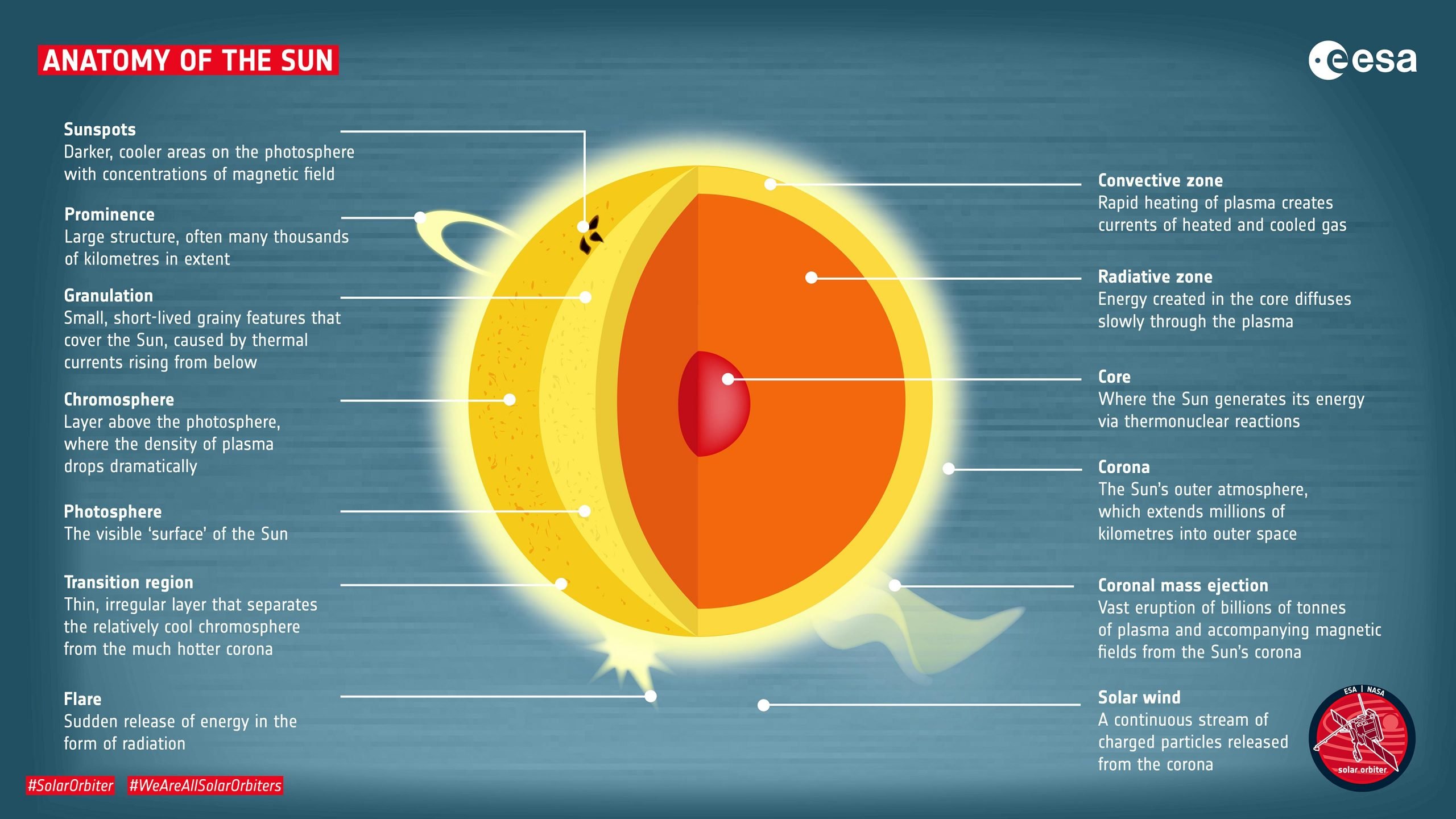
Solar flares are extremely intense events that occur in the Sun’s atmosphere, lasting from several minutes to a few hours. According to the standard flare model, the energy driving these explosions is transported by accelerated electrons traveling from the corona’s magnetic reconnection region to the chromosphere.
When these electrons collide with the chromospheric plasma, they release their energy, heating and ionizing the plasma. This interaction also produces intense radiation across multiple bands of the electromagnetic spectrum. The areas where this energy is released are called solar flare “footpoints,” which typically occur in magnetically connected pairs.
New Study Challenges Existing Solar Flare Model
A recent study set out to test the validity of the standard model by comparing results of computer simulations based on the model with observational data provided by the McMath-Pierce telescope during the solar flare SOL2014-09-24T17:50. The study focused on measuring time lags between infrared emissions from two paired chromospheric sources in the flare. An article on the study was published in the journal Monthly Notices of the Royal Astronomical Society.

Discrepancies in Solar Flare Footpoint Timing
“We found a significant difference between the observational data from the telescope and the behavior predicted by the model. In the observational data, the paired footpoints appeared as two very bright regions of the chromosphere. Because the incident electrons exited the same region of the corona and followed similar trajectories, the two spots should have brightened almost simultaneously in the chromosphere according to the model, but the observational data showed a delay of 0.75 seconds between them,” said Paulo José de Aguiar Simões, first author of the article and a professor affiliated with the Radio Astronomy and Astrophysics Center (CRAAM) at Mackenzie Presbyterian University’s Engineering School (EE-UPM) in São Paulo, Brazil.
A lag of 0.75 sec may seem irrelevant, but the researchers calculated that the maximum delay according to the model should be 0.42 sec considering all possible geometric configurations. The actual number was almost 80% higher. “We used a sophisticated statistical technique to infer the time lags between footpoint pairs, and estimated uncertainties for these values by the Monte Carlo method. Furthermore, the results were tested by electron transport simulations and radiative-hydrodynamic simulations. By deploying all these resources, we were able to construct different scenarios for the electrons’ time of flight between the corona and the chromosphere and the infrared radiation production time. All scenarios based on the simulations displayed far smaller time lags than the observational data,” Simões said.
Investigating Alternative Causes of Time Lags
One of the scenarios tested was for spiraling and magnetic trapping of electrons in the corona. “Using electron transport simulations, we explored scenarios that involved magnetic asymmetry between flare footpoints. We expected the electron chromosphere penetration time lag to be proportional to the difference in magnetic field intensity between footpoints, which would also increase the difference in the number of electrons reaching the chromosphere owing to the magnetic trapping effect. However, our analysis of X-ray observational data showed footpoint intensities to be very similar, pointing to similar amounts of electrons deposited in these regions and ruling this out as the cause of the observed emission time lags,” he said.
The radiative-hydrodynamic simulations also showed that ionization and recombination timescales in the chromosphere were too short to explain the lags. “We simulated the infrared emission timescale. We calculated electron transport to the chromosphere, electron energy deposition, and its effects on the plasma: heating; expansion; ionization and recombination of hydrogen and helium atoms; and radiation produced at the site, which has the effect of releasing excess energy. Infrared radiation is produced as a result of the increase in electron density in the chromosphere due to the ionization of hydrogen, which is originally in a neutral state in the plasma. The simulations showed that ionization and infrared emissions occur almost instantly owing to penetration by the accelerated electrons, and therefore can’t explain the lag of 0.75 sec between footpoint emissions,” Simões said.
Need for Model Reformulation
In sum, none of the processes simulated in accordance with the model proved capable of explaining the observational data. The conclusion drawn by the researchers was obvious to some extent: the standard model of solar flares needs to be reformulated, as required by the scientific method.
“The time lag observed between chromospheric sources challenges the standard model of energy transport by electron beam. The longer delay suggests other energy transport mechanisms may be involved. Mechanisms such as magnetosonic waves or conductive transport, among others, may be necessary to account for the observed delay. These additional mechanisms should be taken into consideration to achieve a full understanding of solar flares,” Simões said.
Reference: “Precise timing of solar flare footpoint sources from mid-infrared observations” by Paulo J A Simões, Lyndsay Fletcher, Hugh S Hudson, Graham S Kerr, Matt Penn and Karla F Lopez, 26 June 2024, Monthly Notices of the Royal Astronomical Society.
DOI: 10.1093/mnras/stae1511
FAPESP supported the study via two projects (13/24155-3 and 22/15700-7).
Never miss a breakthrough: Join the SciTechDaily newsletter.
Follow us on Google and Google News.
1 Comment
The time lag observed between chromospheric sources challenges the standard model of energy transport by electron beam. The longer delay suggests other energy transport mechanisms may be involved. Additional mechanisms should be taken into consideration to achieve a full understanding of solar flares.
VERY GOOD.
When physics is passionate about studying imaginary particles and things, it is no longer much different from theology.
Scientific research guided by correct theories can help people avoid detours, failures, and exaggeration. The physical phenomena observed by researchers in experiments are always appearances, never the natural essence of things. The natural essence of things needs to be extracted and sublimated based on mathematical theories via appearances , rather than being imagined arbitrarily.
Everytime scientific revolution, the scientific research space brought by the new paradigm expands exponentially. Physics should not ignore the analyzable physical properties of topological vortices.
(1) Traditional physics: based on mathematical formalism, experimental verification and arbitrary imagination.
(2) Topological Vortex Theory: Although also based on mathematics (such as topology), it focuses more on non intuitive geometry and topological structures, challenging traditional physical intuition.
Topological Vortex Theory points out the limitations of the Standard Model in describing the large-scale structure of the universe, proposes the need to consider non-standard model components such as dark matter and dark energy, and suggests that topological vortex fields may be key to understanding these phenomena. Topological vortex theory heralds innovative technologies such as topological electronics, topological smart batteries, topological quantum computing, etc., which may bring low-energy electronic components, almost inexhaustible currents, and revolutionary computing platforms, etc.
Topology tells us that topological vortices and antivortices can form new spacetime structures via the synchronous effect of superposition, deflection, or twisting of them. Mathematics does not tell us that there must be God particles, ghost particles, fermions, or bosons present. When physics and mathematics diverge, arbitrary imagination will make physics no different from theology. Topological vortex research reflections on the philosophy and methodology of science help us understand the nature essence of science and the limitations of scientific methods. This not only has guiding significance for scientific research itself, but also has important implications for science education and popularization.
Today, so-called official (such as PRL, Nature, Science, PNAS, etc.) in physics stubbornly believes that two sets of cobalt-60 rotating in opposite directions can become two sets of objects that mirror each other, is a typical case that pseudoscience is rampant and domineering.
Please witness the exemplary collaboration between theoretical physicists and experimentalists (https://scitechdaily.com/microscope-spacecrafts-most-precise-test-of-key-component-of-the-theory-of-general-relativity/#comment-854286). Let us continue to witness together the dirtiest and ugliest era in the scientific and humanistic history of human society. The laws of nature will not change due to misleading of certain so-called academic publications or endorsements from certain so-called scientific awards.