
Reflecting sunlight can protect a neighborhood from scorching temperatures, but surrounding neighborhoods could suffer as a result.
A climate adaptation strategy designed to cool cities could unintentionally make nearby areas hotter, according to a new modeling study by Yu Cheng and Kaighin McColl.
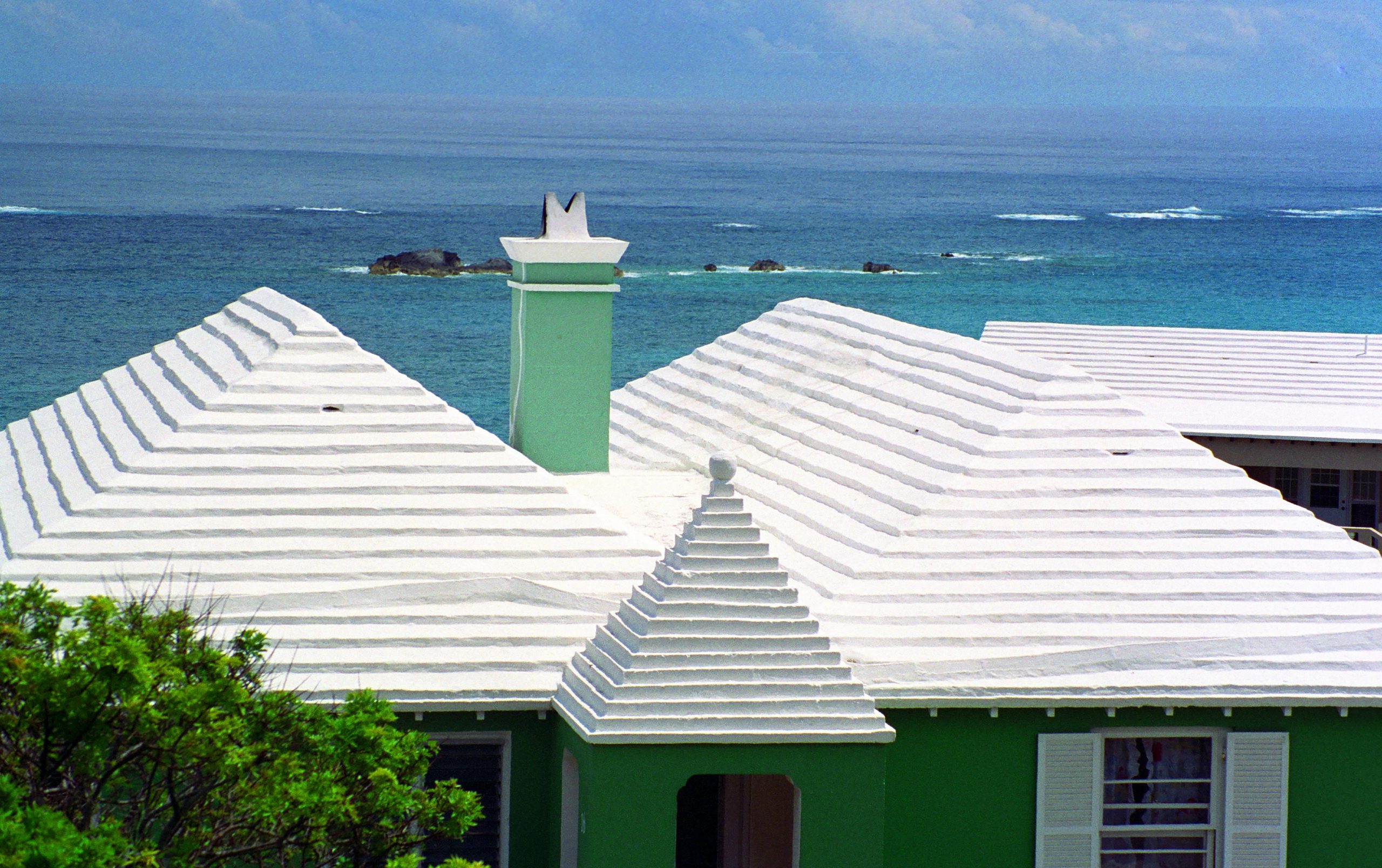
This strategy, known as land radiative management (LRM), involves techniques like painting roofs and sidewalks white to reflect sunlight and reduce heat absorption. While this effectively lowers temperatures within the LRM zone, it also disrupts weather patterns, reducing rainfall both inside and outside the zone.
Unintended Consequences on Local Climate
This poses a challenge for neighboring areas. Rainfall keeps soil moist, and as moisture evaporates, it cools the surrounding air. When precipitation decreases, less evaporation occurs, leading to higher temperatures. Inside the LRM zone, the cooling effect from sunlight reflection outweighs the warming caused by reduced soil moisture. However, neighboring areas don’t benefit from the reflective cooling but still experience the warming from lower rainfall. As a result, surrounding areas get hotter—and the heating effect is about 1–4 times as great as the cooling effect within the LRM zone.
If LRM is used within high-income areas bordering low-income areas, the technique could worsen climate inequity, the researchers warn.
Scale and Effectiveness of LRM
But if it’s applied over the right scale, LRM may still be beneficial. When used on areas smaller than about 1 kilometer across, LRM is unlikely to affect precipitation and cause unintended warming, the authors speculate. And if the technique is used over areas greater than 10 kilometers (6 miles) across, it will probably result in a much greater area experiencing cooling than warming, potentially making the trade-off worthwhile.
Reference: “Unexpected Warming From Land Radiative Management” by Yu Cheng and Kaighin A. McColl, 19 November 2024, Geophysical Research Letters.
DOI: 10.1029/2024GL112433
Never miss a breakthrough: Join the SciTechDaily newsletter.
Follow us on Google and Google News.
4 Comments
Well, that may not be the end of the world, because there’s another paint, much more expensive of course, that can do an up conversion of the impinging near infrared light to whatever the wave length it is that corresponds to green light, and so under the influence of daylight, that paint appears greenish with perhaps a hint of blue. Human nature being as it is though, I would guess that they’d stick with white or switch back to black.
Sounds interesting. What’s it called?
This article is just … inconsistent.
The first complaint is the introduction of dark structure increases the temperature. That has an effect on surroundings.
Reducing the temperature should correct the surrounding impact.
The article isnt saying whether impact on the surroundings are a return to normal or an exception.
So this is just saying that a partial implementation of white roofs in a city is less effective for cooling than a full implementation of white roofs. Amazing insight! No one could have seen that coming.