
Researchers have cultivated human retinas in a laboratory setting, unveiling the process by which a derivative of vitamin A produces the unique cells responsible for humans’ capacity to perceive a vast spectrum of colors. This visual capability is absent in dogs, cats, and various other mammals.
“These retinal organoids allowed us for the first time to study this very human-specific trait,” said author Robert Johnston, an associate professor of biology. “It’s a huge question about what makes us human, what makes us different.”
The findings, published in PLOS Biology, increase understanding of color blindness, age-related vision loss, and other diseases linked to photoreceptor cells. They also demonstrate how genes instruct the human retina to make specific color-sensing cells, a process scientists thought was controlled by thyroid hormones.
Mechanism of Color Sensing
By tweaking the cellular properties of the organoids, the research team found that a molecule called retinoic acid determines whether a cone will specialize in sensing red or green light. Only humans with normal vision and closely related primates develop the red sensor.
Scientists for decades thought red cones formed through a coin toss mechanism where the cells haphazardly commit to sensing green or red wavelengths—and research from Johnston’s team recently hinted that the process could be controlled by thyroid hormone levels. Instead, the new research suggests red cones materialize through a specific sequence of events orchestrated by retinoic acid within the eye.
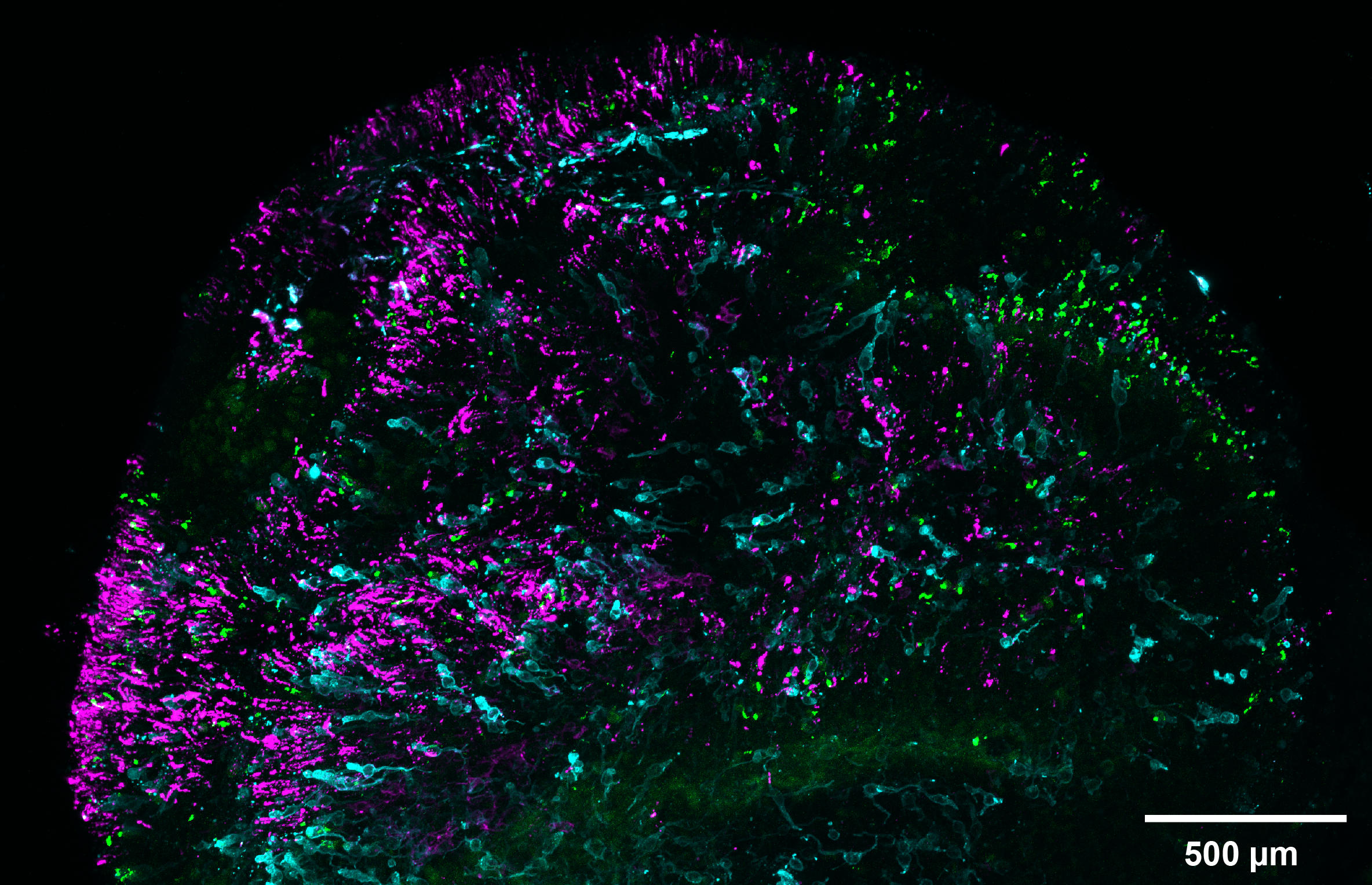
The team found that high levels of retinoic acid in early development of the organoids correlated with higher ratios of green cones. Similarly, low levels of the acid changed the retina’s genetic instructions and generated red cones later in development.
“There still might be some randomness to it, but our big finding is that you make retinoic acid early in development,” Johnston said. “This timing really matters for learning and understanding how these cone cells are made.”
Green and red cone cells are remarkably similar except for a protein called opsin, which detects light and tells the brain what colors people see. Different opsins determine whether a cone will become a green or a red sensor, though the genes of each sensor remain 96% identical. With a breakthrough technique that spotted those subtle genetic differences in the organoids, the team tracked cone ratio changes over 200 days.
“Because we can control in organoids the population of green and red cells, we can kind of push the pool to be more green or more red,” said author Sarah Hadyniak, who conducted the research as a doctoral student in Johnston’s lab and is now at Duke University. “That has implications for figuring out exactly how retinoic acid is acting on genes.”
Variability and Vision
The researchers also mapped the widely varying ratios of these cells in the retinas of 700 adults. Seeing how the green and red cone proportions changed in humans was one of the most surprising findings of the new research, Hadyniak said.
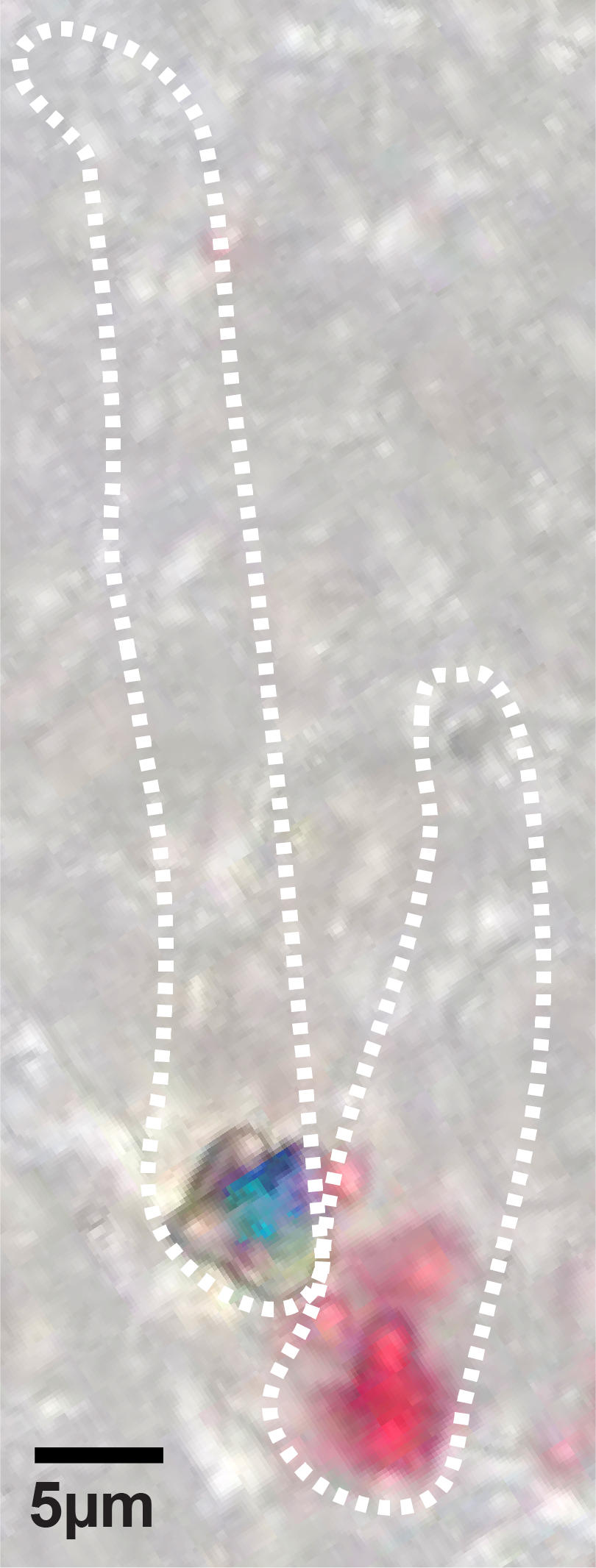
Scientists still don’t fully understand how the ratio of green and red cones can vary so greatly without affecting someone’s vision. If these types of cells determined the length of a human arm, the different ratios would produce “amazingly different” arm lengths, Johnston said.
To build an understanding of diseases like macular degeneration, which causes loss of light-sensing cells near the center of the retina, the researchers are working with other Johns Hopkins labs. The goal is to deepen their understanding of how cones and other cells link to the nervous system.
“The future hope is to help people with these vision problems,” Johnston said. “It’s going to be a little while before that happens, but just knowing that we can make these different cell types is very, very promising.”
Reference: “Retinoic acid signaling regulates spatiotemporal specification of human green and red cones” by Sarah E. Hadyniak, Joanna F. D. Hagen, Kiara C. Eldred, Boris Brenerman, Katarzyna A. Hussey, Rajiv C. McCoy, Michael E. G. Sauria, James A. Kuchenbecker, Thomas Reh, Ian Glass, Maureen Neitz, Jay Neitz, James Taylor and Robert J. Johnston Jr, 11 January 2024, PLOS Biology.
DOI: 10.1371/journal.pbio.3002464
Other Johns Hopkins authors include: Kiara C. Eldred, Boris Brenerman, Katarzyna A. Hussey, Joanna F. D. Hagen, Rajiv C. McCoy, Michael E. G. Sauria, and James Taylor; as well as James A. Kuchenbecker, Thomas Reh, Ian Glass, Maureen Neitz, Jay Neitz of the University of Washington.
Never miss a breakthrough: Join the SciTechDaily newsletter.
Follow us on Google and Google News.