
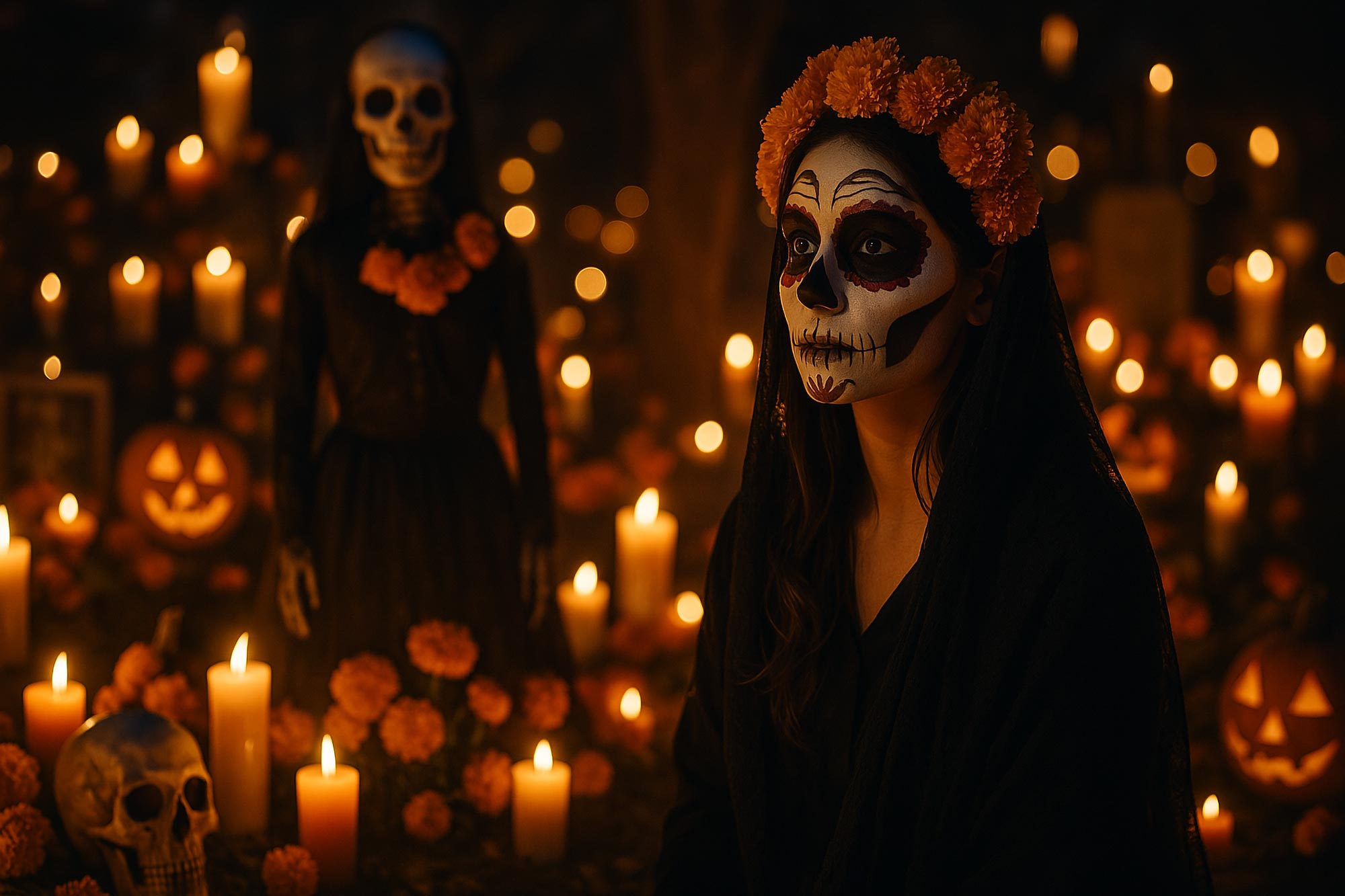
Why are we so captivated by death-themed events like Day of the Dead or Jack the Ripper tours?
A recent study dives into this curious fascination, revealing a complex mix of cultural tradition, thrill-seeking, and psychological exploration. Researchers have developed a bold new framework to study these so-called “dark events,” uncovering how commercialization, emotional impact, and the symbolism of death play into our need to engage with the darker sides of life—in ways that are not only safe, but deeply meaningful.
Why We’re Drawn to Dark Events
Understanding why people are drawn to events centered around death, disaster, and suffering – such as Día de los Muertos, Jack the Ripper walking tours, and Remembrance Sunday – could offer important insights into how society processes trauma, memory, and collective identity, according to researchers from the University of Surrey.
In a study published in Annals of Tourism Research, the team presents a comprehensive framework for analyzing these so-called “dark events.” Their approach draws on a range of disciplines, including thanatology (the study of death and its associated practices), dark tourism, and collective memory studies.
These events span a wide range of experiences – from solemn commemorations and cultural festivals to sports competitions and horror-themed attractions.
What Drives Our Fascination with Darkness?
Dr. James Kennell, co-author of the study and Associate Professor of Events and Hospitality at the University of Surrey, said:
People are fascinated with dark events for several reasons, embedded in psychological, cultural, and sociological aspects of human behavior. There is a natural human curiosity about the darker aspects of life, including death, tragedy, and the macabre. Dark events often provide a safe and controlled environment for people to explore these themes.
The Six Pillars of Dark Event Research
The framework developed in this study advances understanding of the evolving landscape of dark events by identifying six key concepts crucial for researching dark events:
- Commercialization – how dark events are marketed, consumed, and monetized.
- Perspectives from disciplines such as thanatology, dark tourism, and collective memory studies.
- Public sphere engagement – how dark events interact with the public sphere and how they fit in broader societal discourse – including media coverage, politics, public reactions, and the impact on social norms and values.
- Deviant behavior – examines participant motivations, such as thrill-seeking or taboo exploration of violence, criminality, or general harm.
- Experiential aspects – analyzing how dark events evoke emotions such as fear, fascination, or reflection within the participants or audience.
- The presence of death – centers on the symbolic and literal presence of death within dark events, including: non-human death, death symbolism, and actual death.
Curiosity, Culture, and Community
Metod Šuligoj, co-author and Associate Professor of Tourism Studies at the University of Primorska, said:
“The fascination with dark events stems from a complex interplay of curiosity, thrill-seeking behavior, cultural traditions, psychological exploration, and the desire for communal and shared experiences. These events allow individuals to engage with themes of death, disaster, and suffering in ways that are meaningful, educational, and sometimes transformative.”
The full study has been published in the Annals of Tourism Research.
Reference: “Conceptualising dark events: A new framework” by James Kennell and Metod Šuligoj, 1 July 2024, Annals of Tourism Research.
DOI: 10.1016/j.annals.2024.103799
Never miss a breakthrough: Join the SciTechDaily newsletter.
Follow us on Google and Google News.